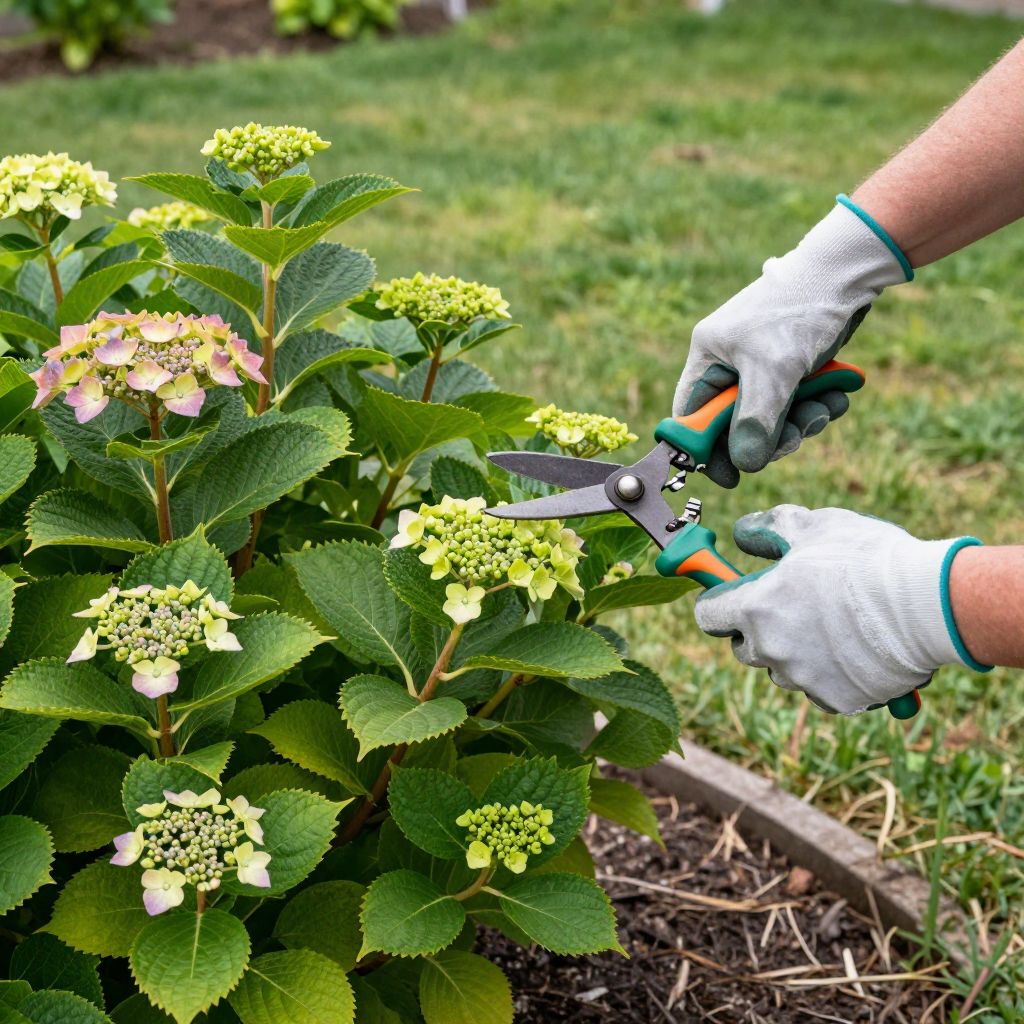
If you’re wondering when to trim hydrangeas, timing matters more than hard pruning. Some hydrangeas bloom on old wood, some on new wood, and a few do both, so the wrong cut at the wrong season can remove this year’s flowers.
The good news is that once you know what type you have, pruning becomes simple. With the right timing, you can shape the plant, remove dead wood, and encourage stronger blooms without sacrificing next season’s display.
When to trim hydrangeas?
The best time to trim hydrangeas depends on the type. Hydrangeas that bloom on old wood are usually pruned right after flowering, while those that bloom on new wood are best cut back in late winter or early spring before growth starts. If you are unsure, do only light cleanup until you identify the plant.
Why pruning timing matters
Hydrangeas set flower buds in different ways. If you prune an old-wood bloomer too late in the season, you may remove the buds that would have opened next summer.
That is why many gardeners see healthy plants with few or no flowers after an overzealous spring cutback. A little knowledge of the bloom cycle prevents that problem.
Old wood vs. new wood
- Old wood: Flower buds form on stems grown the previous year.
- New wood: Flower buds form on the current season’s growth.
- Repeat bloomers: Some types can flower on both old and new growth, but performance varies with climate and winter damage.
How to know what kind of hydrangea you have
Before you trim, identify the plant as best you can. The main garden hydrangeas are not pruned the same way, and the label, flower shape, or bloom time can give you clues.
Common types and pruning timing
- Bigleaf hydrangea (Hydrangea macrophylla): usually blooms on old wood; prune lightly after flowering.
- Oakleaf hydrangea (Hydrangea quercifolia): blooms on old wood; prune soon after bloom if needed.
- Panicle hydrangea (Hydrangea paniculata): blooms on new wood; prune in late winter or early spring.
- Smooth hydrangea (Hydrangea arborescens): blooms on new wood; prune in late winter or early spring.
- Climbing hydrangea (Hydrangea anomala subsp. petiolaris): usually needs only light pruning after flowering, mainly for size control.
If you are not sure, avoid a major cut until you see whether the plant blooms on old or new wood. A conservative approach is safer than losing a season of flowers.
Best timing by season
Late winter to early spring
This is the right time to prune hydrangeas that bloom on new wood, such as panicle and smooth hydrangeas. Cut before strong new growth begins, but after the worst winter weather has passed in your area.
In colder climates, wait until you can clearly see which stems are alive and which are dead. That makes cleanup easier and reduces accidental damage.
Right after flowering
Old-wood bloomers are best trimmed soon after the flowers fade. This gives the plant time to grow new stems and set next year’s buds before autumn.
For many gardeners, this means a light prune in midsummer or early fall, depending on when the plant finishes blooming locally.
Late fall: usually avoid major pruning
Do not do a hard prune in late fall unless you are removing broken, diseased, or dead wood. Fresh cuts can be more vulnerable to winter injury, and on old-wood bloomers you may remove next year’s flower buds.
How to trim hydrangeas correctly
Most hydrangeas do not need severe pruning. Start with cleanup, then decide whether the plant truly needs shaping or reduction.
- Remove dead, damaged, or diseased stems first, cutting back to healthy wood or to the base.
- Cut spent flower heads if you want a tidier look, but avoid cutting too far down on old-wood bloomers.
- Thin crowded stems by removing a few of the oldest canes at the base to improve airflow.
- Shorten overly long stems only as needed, making cuts just above a healthy pair of buds or a strong side branch.
- Step back often to keep the plant balanced and natural-looking.
How much to remove
As a rule, trim lightly unless you know the plant blooms on new wood. For old-wood hydrangeas, removing only the spent flower heads and a few weak stems is often enough. For new-wood types, you can cut stems back more firmly, but avoid removing every stem to the ground unless the plant is overgrown and you know it responds well to that treatment.
Pruning tips for each hydrangea type
Bigleaf hydrangea
Bigleaf hydrangeas often bloom on old wood, so pruning should be minimal. Remove dead stems after winter, then trim spent blooms and any weak or crossing branches after flowering.
If winter damage is common where you live, do not rush to cut back healthy-looking stems in spring. Those stems may hold the flower buds.
Oakleaf hydrangea
Oakleaf hydrangeas also bloom on old wood. They usually need only light shaping after bloom, plus removal of dead wood in late winter or early spring.
Because they can grow into large shrubs, prune only to control size or improve structure.
Panicle hydrangea
Panicle hydrangeas are more forgiving because they bloom on new wood. In late winter or early spring, you can cut stems back to encourage sturdy new growth and larger, more manageable plants.
Even so, avoid extreme pruning every year unless the plant truly needs rejuvenation. Too much cutting can create weak, floppy growth in some gardens.
Smooth hydrangea
Smooth hydrangeas also bloom on new wood and can be cut back in late winter or early spring. Many gardeners prune them hard to keep the shrub compact, especially if stems flop after rain.
If you want a looser, taller plant, reduce the pruning and simply remove the oldest stems and dead wood.
Tools and technique
Use clean, sharp hand pruners for most stems. For thicker canes, loppers are usually better, and a pruning saw may be needed for old, woody stems.
- Wipe blades before and after use, especially if you are removing diseased wood.
- Make clean cuts at a slight angle to shed water.
- Cut just above a bud or branch junction when shortening stems.
- Wear gloves if the shrub is dense or woody.
Clean tools matter. Dull blades crush stems, which slows healing and can invite disease.
Common mistakes to avoid
- Pruning at the wrong time on old-wood hydrangeas.
- Shearing the whole shrub into a ball, which can remove flower buds and create weak growth.
- Cutting too low when you only intended to tidy the plant.
- Removing all stems from a plant that blooms on old wood.
- Ignoring winter dieback and leaving damaged stems that can harbor problems.
What to do if your hydrangea didn’t bloom
If your hydrangea grew well but did not flower, pruning timing is one possible reason, but not the only one. Late frosts, too much shade, too much nitrogen, or winter injury can also reduce bloom.
Check whether the plant gets enough morning sun, whether it was pruned at the wrong time, and whether the buds were damaged by cold. In colder regions, old-wood bloomers are especially vulnerable to winter weather.
Growing conditions that support better flowering
Pruning works best when the plant is already growing in a good site. Hydrangeas generally prefer moist but well-drained soil and a location with morning sun and afternoon shade, especially in warmer climates.
Too much shade can reduce flowering, while hot, dry exposure can stress the plant and weaken bud formation. A layer of compost and mulch can help conserve moisture, but keep mulch a few inches away from the stems.
Aftercare following pruning
After trimming, water deeply if the soil is dry, especially during active growth or hot weather. Hydrangeas recover best when they are not drought-stressed.
If needed, add a light layer of compost around the root zone in spring. Avoid heavy feeding unless your soil test or plant symptoms suggest a nutrient issue, since excess fertilizer can push leafy growth at the expense of flowers.
Quick pruning checklist
- Identify whether your hydrangea blooms on old wood or new wood.
- Prune old-wood types right after flowering.
- Prune new-wood types in late winter or early spring.
- Remove dead, damaged, or diseased stems first.
- Keep pruning light unless the plant is a new-wood bloomer or badly overgrown.
- Use sharp, clean tools and make careful cuts.
Conclusion
When to trim hydrangeas comes down to one key question: does your plant bloom on old wood or new wood? Once you know that, you can prune at the right time, protect the flower buds, and keep the shrub healthy and attractive.
If you’re still unsure, start with light cleanup only, then observe when your hydrangea blooms. For more practical plant care guidance, read about pruning basics for home shrubs and hydrangea care throughout the season.