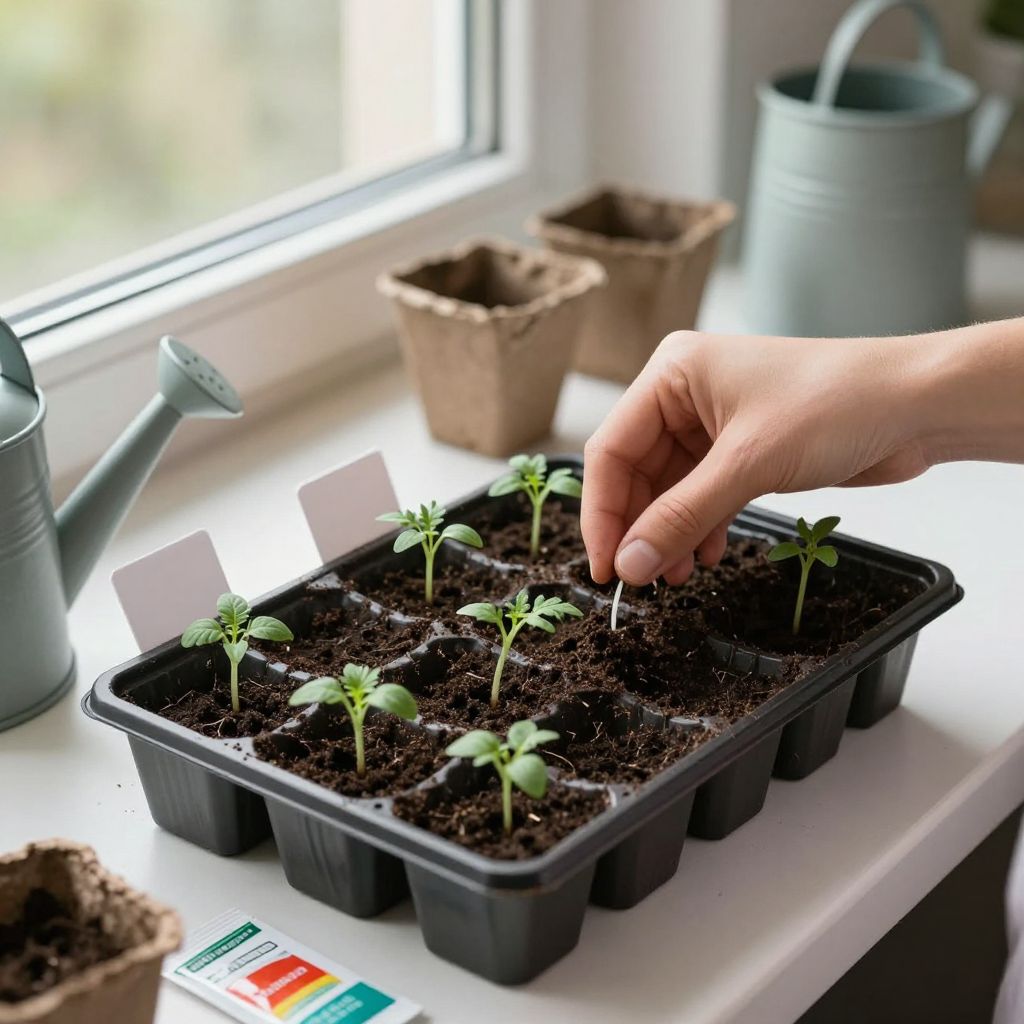
Wondering when to start tomato seeds indoors so your seedlings are ready at the right time? The best timing depends on your last expected frost date, your tomato variety, and how long your indoor setup can support healthy growth before transplanting.
Start too early and you may end up with tall, rootbound seedlings. Start too late and you may miss the best outdoor planting window. The goal is to raise sturdy transplants that are ready to move outside when weather and soil are warm enough.
When to start tomato seeds indoors?
In most climates, start tomato seeds indoors about 6 to 8 weeks before your last expected spring frost. In colder regions or for slower-growing varieties, 8 weeks is often better; in warmer climates or with fast-maturing tomatoes, 4 to 6 weeks may be enough. Count backward from your local frost date, then adjust for your indoor light and space.
How to time tomato seed starting for your climate
There is no single calendar date that works everywhere. Your local frost date, spring temperatures, and transplanting conditions matter more than the month on the calendar.
Use your last frost date as the starting point
Find the average date of your last spring frost, then count back the recommended weeks for your tomato variety. This gives you a practical sowing window.
- Cooler climates: often start seeds in late winter to early spring.
- Mild climates: indoor sowing may begin earlier, but outdoor planting still waits for warm nights.
- Short-season areas: starting on time is important so fruit can mature before cold weather returns.
Adjust for variety maturity
Tomatoes with a shorter days-to-maturity period can be started a little later than long-season types. Large heirlooms and beefsteaks often need more time indoors than compact or early varieties.
- Early varieties: often 4 to 6 weeks indoors
- Standard varieties: usually 6 to 8 weeks indoors
- Slow or large-fruited varieties: sometimes 8 to 10 weeks, if you can keep them growing well
If you are unsure, it is usually safer to start a little later than too early. Overgrown seedlings are harder to manage than slightly younger ones.
What tomatoes need indoors to grow well
Healthy seedlings need strong light, steady warmth, and a free-draining seed-starting mix. Without these basics, even perfectly timed seeds can become weak and leggy.
Light is the biggest factor
Tomato seedlings need bright light for 14 to 16 hours a day. A sunny windowsill is often not enough to keep them compact, especially in late winter.
- Use a grow light if possible.
- Keep lights close to the seedlings, usually a few inches above the tops.
- Raise the light as plants grow to prevent stretching.
Warmth helps germination
Tomato seeds germinate best in warm conditions, often around 70 to 80°F. Once seedlings emerge, slightly cooler temperatures and strong light help them grow sturdier.
Use the right soil mix
Choose a fine, sterile seed-starting mix rather than garden soil. It should hold moisture without staying soggy.
- Good drainage: prevents damping off and root problems
- Even moisture: keeps seeds from drying out
- Light texture: helps roots spread easily
Step-by-step: how to start tomato seeds indoors
Once you know your timing, the sowing process is straightforward. A careful start makes later transplanting much easier.
- Fill clean seed trays or small pots with moistened seed-starting mix.
- Sow 2 seeds per cell or pot, about 1/4 inch deep.
- Cover lightly and water gently so the mix stays damp, not saturated.
- Place containers in a warm spot until germination.
- Move seedlings under bright light as soon as they emerge.
- Thin to the strongest seedling if both seeds sprout.
Keep the surface evenly moist during germination. If the mix dries out completely, seedlings may fail to emerge or grow unevenly.
When to pot up seedlings
If seedlings outgrow their cells before outdoor planting time, move them into larger pots. Potting up gives roots more room and helps prevent stress from crowding.
- Transplant when roots fill the cell or the first true leaves are well developed.
- Handle seedlings by the leaves, not the stem.
- Plant them deeper in the new pot to support a stronger root system.
How to avoid common indoor tomato seedling problems
Most tomato seed-starting problems come from too much water, too little light, or starting too early. A few small adjustments can prevent most issues.
Leggy seedlings
Leggy seedlings usually mean the light is too weak or too far away. Move the light closer and increase brightness immediately.
- Rotate trays if one side gets more light than the other.
- Keep seedlings cooler after germination if possible.
- Do not overfeed young plants in an attempt to “fix” stretching.
Overwatering
Too much water can lead to weak stems, fungal problems, and poor roots. Let the surface of the mix dry slightly between waterings, but never let seedlings wilt badly.
Damping off
This seedling disease causes stems to collapse near the soil line. It is more likely in cool, wet, poorly ventilated conditions.
- Use clean containers and fresh seed-starting mix.
- Provide airflow around seedlings.
- Avoid crowding and keep moisture moderate.
When to move tomato seedlings outdoors
Starting seeds indoors is only the first step. Transplanting too early can damage young plants, even if they look vigorous indoors.
Wait for warm conditions
Tomatoes are warm-season plants. They should go outside only after frost risk has passed and nights are reliably mild. Cold soil and chilly nights can stunt growth.
- Harden off seedlings for 7 to 10 days before planting out.
- Increase outdoor exposure gradually, starting with shade and shelter.
- Protect plants from wind, strong sun, and cold nights during the transition.
Look for transplant-ready seedlings
Seedlings are ready when they are sturdy, not spindly, and have several sets of true leaves. They should fit comfortably in their pots without becoming rootbound.
Common mistakes to avoid
A few timing mistakes can make tomato seed starting harder than it needs to be. Avoid these common problems for healthier plants and better harvests.
- Starting too early: leads to oversized seedlings that need constant care.
- Starting too late: delays harvest and can shorten the season.
- Using weak light: causes stretching and poor stem strength.
- Planting in heavy soil: slows roots and increases disease risk.
- Skipping hardening off: can shock seedlings when they move outdoors.
Can you start tomato seeds indoors in spring or late winter?
Yes, and in many regions late winter is the ideal time. The key is not the season itself, but how many weeks remain before your outdoor planting window opens. If you missed the usual sowing time, you can still start tomatoes indoors, especially for shorter-season varieties.
If you are starting late, choose faster-maturing tomatoes and give seedlings excellent light so they catch up quickly. If you are starting very early, be prepared to pot up seedlings and manage growth carefully so they do not become rootbound.
Quick checklist for successful tomato seed starting
- Find your local last frost date.
- Count back 6 to 8 weeks for most tomatoes.
- Use a sterile seed-starting mix.
- Provide strong light for 14 to 16 hours daily.
- Keep the mix warm and evenly moist.
- Pot up if seedlings outgrow their cells.
- Harden off before transplanting outdoors.
For more practical seasonal guidance, you may also want to read related gardening advice on seed starting and transplanting timing so you can match your tomato seedlings to your local growing season.