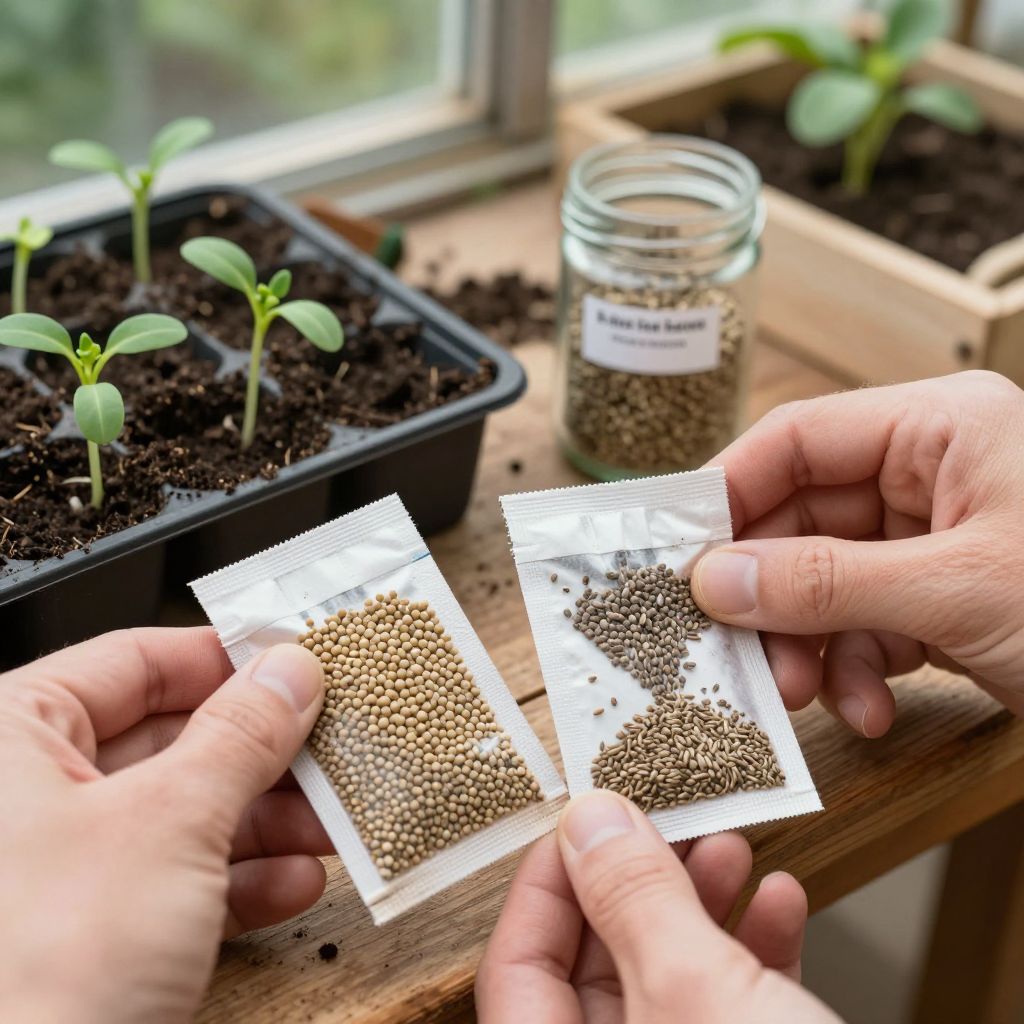
Do seeds expire? In many cases, yes—though not always in the way food does. Seeds gradually lose viability over time, and how fast that happens depends on the plant, how the seeds were stored, and the growing conditions you give them.
If you have an old seed packet in the garage or leftover seeds from last season, you may still be able to grow strong plants. The key is knowing how to test seed freshness, when to sow, and how to improve germination when seeds are older.
Do seeds expire?
Yes, seeds expire in the sense that their germination rate declines over time. Some seeds remain viable for years, while others lose vigor quickly. Cool, dry, dark storage slows aging, but old seeds may still sprout more slowly or unevenly, so it is smart to test them before planting a full bed.
How long seeds stay viable
There is no single expiration date for all seeds. Different plant families age at different rates, and storage conditions matter just as much as age.
Seeds that often last longer
- Beans
- Peas
- Tomatoes
- Brassicas such as cabbage and kale
- Lettuce, if stored well
Seeds that often lose viability faster
- Onions
- Parsnips
- Sweet corn
- Parsley
- Many allium seeds in general
Storage matters more than the calendar alone. Seeds kept in a hot shed or humid basement may decline much faster than seeds stored in a sealed container in a cool indoor space.
What affects seed life the most?
Seed longevity is strongly influenced by moisture, heat, and light. The drier and cooler the storage environment, the better the odds that seeds will remain viable.
1. Moisture
Humidity is one of the biggest enemies of stored seed. Moisture can trigger mold growth or start the germination process too early, which damages the seed.
2. Temperature
Warm storage speeds up aging. A steady cool temperature is better than repeated swings from hot to cold.
3. Light exposure
Light can shorten storage life for some seeds, especially if packets are left in sunny windows or clear containers.
4. Seed quality at harvest
Seeds harvested too early, from stressed plants, or from diseased fruit may not store as well as fully mature, healthy seed.
How to tell if old seeds are still good
You do not need to guess. A simple germination test can tell you whether old seeds are worth planting, and it helps you decide how thickly to sow.
- Count out 10 seeds.
- Place them between damp paper towels or on moist seed-starting mix.
- Keep them warm according to the crop’s needs.
- Check daily and keep the medium evenly moist, not soggy.
- Count how many sprout within the normal germination window for that crop.
If 7 out of 10 sprout, that is about 70% germination. If only 2 or 3 sprout, the seed is still usable for a small trial, but you should sow more heavily or replace it.
Signs seeds may be too old
- Very low or no germination in a test
- Moldy, soft, or discolored seeds
- Seeds that crumble or feel hollow
- Uneven sprouting with weak seedlings
Best ways to store seeds so they last longer
Good storage can add years to seed life. The goal is to keep seeds dry, cool, and protected from light and pests.
- Keep seeds in their original packets or labeled envelopes.
- Place packets in an airtight container.
- Add a desiccant packet if you live in a humid climate.
- Store the container in a cool indoor location, not a damp shed.
- Avoid frequent opening, which lets in moisture.
Label everything clearly. Include the seed type and the year you bought or saved it. Old unlabeled packets are easy to waste because you cannot tell what they are or how old they may be.
Should you plant expired seeds?
Sometimes yes. “Expired” does not always mean dead. Many older seeds will still germinate, just at a lower rate, so you can often use them for backup planting, succession sowing, or a small test batch.
When old seeds are worth trying
- The packet is only a few years old and was stored well
- The crop is known to keep well, such as beans or tomatoes
- You have room to sow extra seeds
- You are willing to thin seedlings later
When to replace them
- You need reliable, even germination
- The seed is from a short-lived crop like onion
- The seeds were exposed to heat or moisture
- The germination test was poor
How to improve germination with older seeds
Older seeds often need a little extra help. The main goal is to create stable, favorable conditions without overwatering or burying them too deeply.
- Use fresh seed-starting mix. Old potting mix can hold too much moisture or harbor disease.
- Sow at the right depth. As a general rule, plant seeds only as deep as their diameter unless the packet says otherwise.
- Keep moisture even. Drying out once can stop germination completely.
- Provide steady warmth. Many seeds sprout better in consistently warm conditions.
- Increase sowing density. Plant more seeds per cell or row if germination is uncertain.
For indoor seed starting, use clean trays, drainage holes, and a bright location or grow light. For outdoor sowing, wait for suitable soil temperature and workable soil, because cold, wet ground can rot weak old seed before it sprouts.
Common mistakes when using old seeds
Many seed-starting problems are not caused by age alone. They happen because the planting conditions are off.
- Overwatering can rot seeds before they germinate.
- Planting too deeply can prevent weak seedlings from reaching the surface.
- Using cold soil slows or stops sprouting.
- Expecting full germination from very old seed leads to empty rows.
- Ignoring seed-specific needs can cause poor results even with fresh seed.
Saving your own seed for future planting
If you want seeds that last, start with healthy parent plants and let the seed mature fully. Only save seed from open-pollinated plants if you want offspring that are more likely to resemble the parent plant.
Basic seed-saving tips
- Choose healthy, disease-free plants.
- Let seed dry fully before storing.
- Clean off plant debris and chaff.
- Store in paper envelopes or breathable packets first, then place in a sealed container if needed.
- Keep different varieties separated and labeled.
Some crops are easier for beginners to save than others. Beans, peas, tomatoes, and many flowers are often straightforward, while biennials and cross-pollinated crops may need more care to keep varieties true.
What to do if your seeds are old but you still want to plant them
If you are unsure whether seeds are expired, do a quick test before committing your whole garden space. That way you can adjust your sowing rate, replace weak seed, or start a backup batch indoors.
A simple plan
- Check the packet date and storage history.
- Run a small germination test.
- Compare the results to the crop’s normal sprouting time.
- Sow extra seed if germination is moderate.
- Replace the seed if germination is very poor.
For direct-sown crops, scatter a few extra seeds in each spot and thin later. For transplants, sow more cells than you need so you can choose the strongest seedlings.
Conclusion: use age as a guide, not a guess
Seeds do expire, but many remain usable longer than gardeners expect. The best approach is to store them well, test older seed before planting, and adjust your sowing rate based on the results. If you find an old packet today, set aside 10 seeds for a germination test before you trust the whole batch.
For more practical seed-starting help, you may also want to read about starting seeds indoors and how to store garden seeds properly.