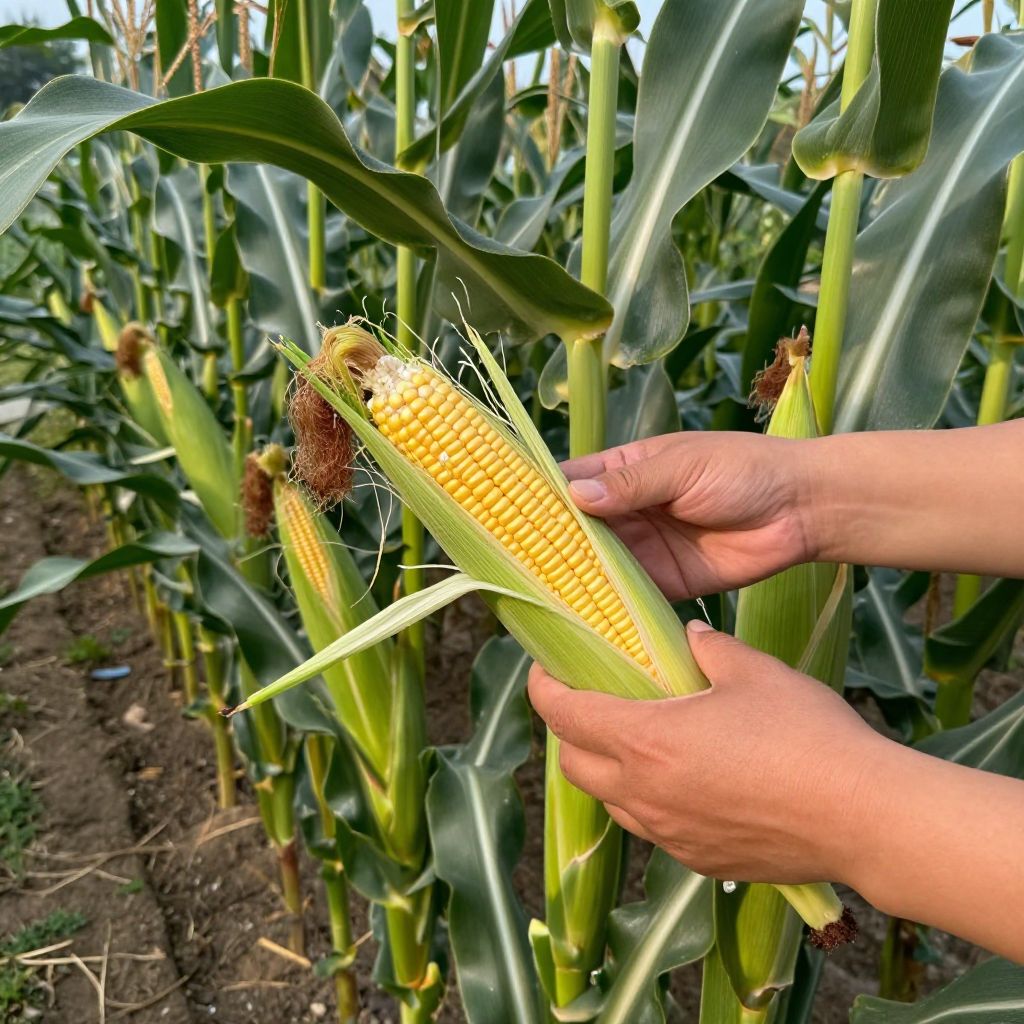
If you’re wondering when to harvest corn, the best answer is: pick it at the milk stage, when the kernels are full, tender, and release a milky juice when punctured. Sweet corn changes quickly, so timing matters more than the calendar. Harvest too early and it tastes watery; wait too long and it turns starchy and tough.
The good news is that corn gives you several clear signs when it’s ready. With a little checking and a quick harvest plan, you can pick ears at peak sweetness and avoid common mistakes that reduce flavor.
When to harvest corn?
Harvest corn when the ears feel well filled, the silks have turned brown and dry, and a kernel test shows milky juice rather than clear liquid. For sweet corn, this is usually about 18–24 days after silks first appear, but weather, variety, and growing conditions can shift that timing.
How to tell corn is ready to pick
Use several signs together instead of relying on just one. Corn ripens unevenly, and the best harvest window can be short, especially in warm weather.
1. Check the silks
The silks at the tip of the ear should be brown, dry, and starting to crisp up. Fresh green silks usually mean the ear is still developing.
2. Feel the ear
A ready ear usually feels firm and full from tip to base. If the tip is narrow or the ear feels underfilled, give it more time.
3. Peel back a small section of husk
Look at the kernels near the top. They should be plump and arranged in tight rows. If they look flat or dented, the ear is not ready yet.
4. Do the milk test
Press a kernel with your fingernail. If a white, milky liquid comes out, the corn is ready. If the liquid is clear, it needs more time. If nothing comes out and the kernel feels hard, it is overmature.
Why timing matters so much
Sweet corn has a narrow harvest window because sugar in the kernels begins converting to starch soon after maturity. That means flavor drops quickly after peak ripeness, especially in hot weather.
If you want the best taste, harvest and cook soon after picking. Even a few hours can make a difference in sweetness, so plan to pick when you can use the ears the same day.
Typical harvest timing by corn type
Different types of corn mature at different rates, so the right harvest stage depends on what you planted.
- Sweet corn: Pick at the milk stage for the best eating quality.
- Popcorn: Leave ears on the plant until husks are dry and kernels are hard.
- Flint or ornamental corn: Harvest when ears are mature and husks are dry, depending on how you plan to use them.
- Baby corn: Harvest very early, before pollination, while ears are still small and tender.
If you are growing sweet corn for the table, the milk-stage test is the one to trust most.
Step-by-step: how to harvest corn correctly
- Check the ears early in the day, when plants are cool and turgid.
- Test a few ears, especially the ones that look most developed.
- Grasp the ear firmly and twist downward and sideways until it snaps off the stalk.
- Leave the husk on until you are ready to cook or store the corn briefly.
- Harvest every 1–2 days during peak ripening, because many varieties mature in waves.
Do not pull upward hard on the ear. Twisting is usually cleaner and reduces damage to the plant.
How often should you check corn near harvest time?
Once the first ears are close to ready, check your patch every day or two. In warm conditions, sweet corn can move from perfect to overripe very quickly.
If you planted several rows or staggered plantings, harvest may come in stages. That is normal and often helpful for extending the picking season.
What affects harvest time?
Weather and temperature
Cool weather slows maturity, while heat speeds it up. A hot spell can shorten the harvest window and make corn lose sweetness faster after picking.
Variety
Some sweet corn varieties mature earlier than others. Read the seed packet or plant tag for the expected days to maturity, but treat that as a guide rather than a promise.
Planting date and local climate
Corn planted early in a cool spring may take longer to mature than corn planted later in warm soil. Local frost dates, summer heat, and rainfall all influence timing.
Pollination quality
Poor pollination can leave ears with gaps or poorly filled tips. If the ear is patchy, that is a sign the plant may not have been fully pollinated, not necessarily that it is ready.
Common mistakes when harvesting corn
- Picking too early: Kernels are small and watery, and flavor is weak.
- Waiting too long: Kernels become tough, starchy, or doughy.
- Judging by ear size alone: Large ears are not always ripe, and smaller ears can be ready first.
- Ignoring the milk test: This is one of the most reliable checks for sweet corn.
- Leaving ripe ears too long on the plant: Birds, insects, and weather can damage them.
What to do after harvesting corn
Sweet corn tastes best soon after harvest because sugars begin changing to starch after picking. If you cannot cook it right away, keep the ears cool and shaded.
- Refrigerate the ears as soon as possible.
- Leave husks on until you are ready to prepare them.
- Avoid stacking ears in direct sun after picking.
- Use sweet corn within a day or two for the best flavor.
If you are storing popcorn or dry corn, let the ears finish drying properly first. Dry corn should feel hard and fully mature before storage.
How to know if corn is overripe
Overripe sweet corn often has kernels that feel hard, look dented, or no longer release milky juice. The kernels may also taste less sweet and more starchy.
If you accidentally let a few ears go too far, they may still be usable for soups, chowders, or drying, but they will not have the same fresh-eating quality as corn picked at peak ripeness.
Practical tips for a better harvest next time
- Plant corn in blocks or multiple adjacent rows so pollination is more reliable.
- Stagger plantings if your season is long enough, so not all ears mature at once.
- Watch the first silks closely; harvest timing starts there.
- Mark the date when silks appear to help estimate the harvest window.
- Check the patch daily once the earliest ears are close.
Good pollination, even watering, and full sun all help ears develop evenly, which makes harvest timing easier and the crop more consistent.
Conclusion
When to harvest corn comes down to one simple test: brown silks, full ears, and milky kernels. Check your plants closely as they near maturity, harvest in the cool part of the day, and use the corn quickly for the sweetest flavor. If you’re growing more than one planting, start testing the earliest ears now so you don’t miss the perfect window.
For more practical crop timing help, you may also want to read about how to tell when vegetables are ready to harvest and basic vegetable garden maintenance tips.