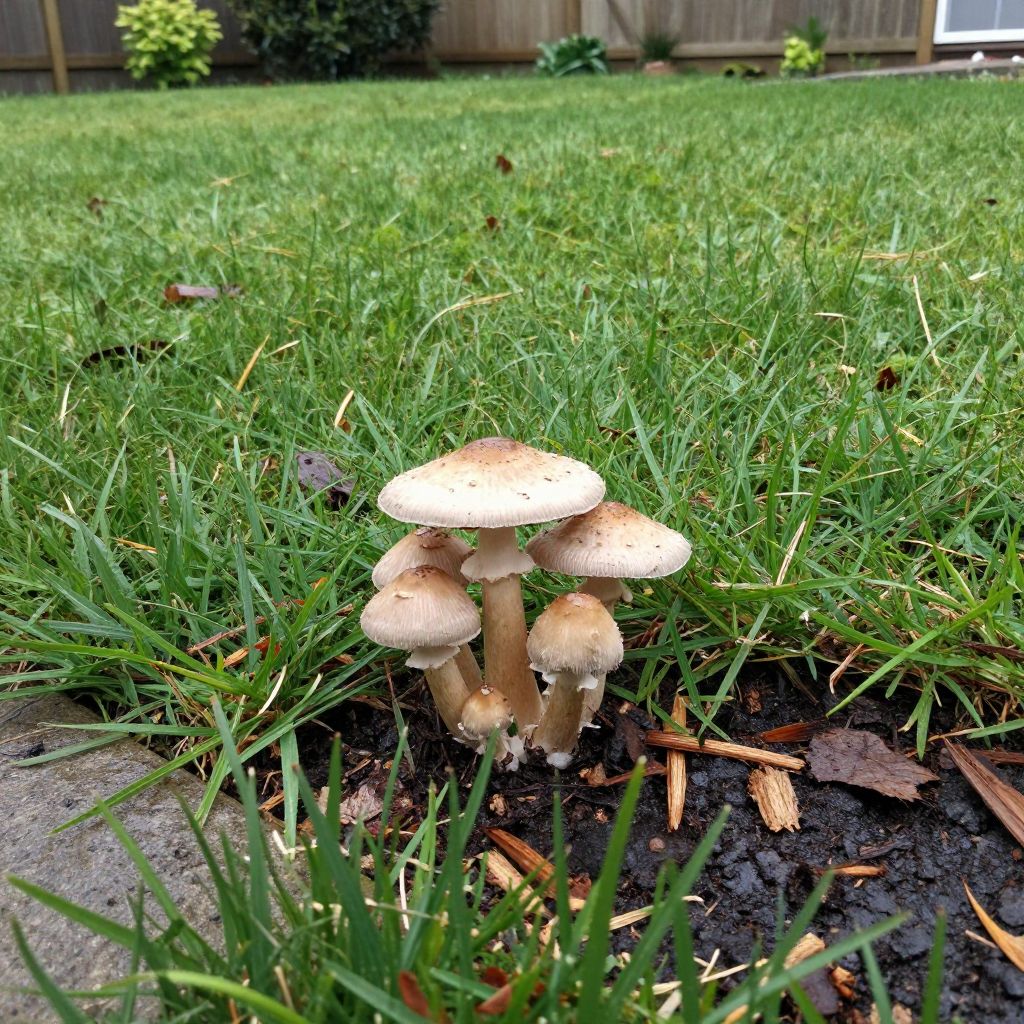
Why are mushrooms growing in my yard? In most cases, it means your soil is moist, rich in organic matter, and full of decomposing roots, mulch, or buried wood. Mushrooms are the visible fruiting bodies of fungi already living in the soil, and they usually appear when conditions are cool, damp, and shaded.
They are often harmless and even beneficial, but a sudden flush can also point to overwatering, poor drainage, or decaying material underground. The key is to identify why they’re there before deciding whether to leave them alone, remove them, or fix a moisture problem in the yard.
Why are mushrooms growing in my yard?
Mushrooms grow in your yard because fungi are breaking down organic matter such as mulch, dead roots, buried lumber, thatch, or compost-rich soil. Wet weather, shade, compacted soil, and poor drainage encourage them to fruit. The mushrooms themselves are usually temporary; the underlying fungus is what keeps living in the soil.
Common reasons mushrooms appear in lawns and beds
1. Moist soil after rain or frequent watering
Mushrooms often pop up after several wet days, especially in spring and fall. If your lawn stays damp for long periods, fungi have the moisture they need to form mushrooms.
This is especially common in shaded areas, low spots, and places where sprinklers run too long or too often.
2. Decomposing wood or roots underground
If mushrooms keep returning in the same spot, there may be buried tree roots, old stumps, construction debris, or wood chips below the surface. Fungi feed on that material and fruit when conditions are right.
In many yards, the mushrooms are a sign that the fungus is doing the useful work of breaking down buried organic matter.
3. Thick thatch or heavy mulch
A thick layer of grass thatch or mulch can hold moisture and provide food for fungi. This is common in mulched landscape beds, around shrubs, and in lawns that have not been dethatched for a while.
Mulch itself is not a problem when used correctly, but very deep layers can create the damp, sheltered conditions mushrooms like.
4. Compacted or poorly drained soil
When water cannot move through the soil well, the surface stays damp longer. Compaction from foot traffic, heavy equipment, or clay-heavy soil can all contribute.
Mushrooms may be a clue that your yard needs better drainage, aeration, or less frequent irrigation.
5. Rich organic soil
Healthy garden beds with compost, decaying leaves, and organic mulch often support fungal life. That does not mean something is wrong.
In many cases, mushrooms are simply part of a living soil system that is actively recycling organic matter.
Are yard mushrooms bad for your lawn or plants?
Usually, no. Most mushrooms in lawns and garden beds are not harming grass, shrubs, or trees directly. In fact, many fungi help decompose organic matter and improve soil structure over time.
The main concerns are safety, appearance, and the possibility that the mushrooms signal excess moisture, buried wood, or decay near plant roots.
When mushrooms are worth paying attention to
- You have pets or children who might touch or eat them.
- They appear repeatedly in one area and the soil stays soggy.
- You notice declining turf, dead patches, or soft ground nearby.
- Mushrooms are growing from a tree base, stump, or landscape timber.
Important: Do not eat any mushroom from your yard unless it has been identified with certainty by a local expert. Many edible and toxic species look similar.
What to do when mushrooms show up
Step 1: Remove the mushrooms if needed
If you want them gone for appearance or safety, pick or mow them before they release spores. Wear gloves if you prefer, and place them in the trash or compost only if you are comfortable doing so.
Removing the visible mushrooms does not remove the fungus underground, but it can reduce the number you see.
Step 2: Check the moisture level
Feel the soil 2 to 4 inches deep. If it is constantly wet or sticky, cut back watering and look for drainage issues. Lawns and beds generally do better with deep, less frequent watering than with daily shallow watering.
If the area is naturally shaded or low-lying, it may dry slowly even when you water correctly.
Step 3: Improve drainage where possible
For small problem spots, core aeration can help lawns breathe and drain better. In beds, avoid piling mulch too thickly and make sure water is not pooling around plant crowns.
If the area stays waterlogged after rain, consider regrading, adding organic matter to improve soil structure, or redirecting runoff from nearby downspouts.
Step 4: Reduce buried food sources
If mushrooms keep returning in the same place, inspect for buried wood, old roots, or construction scraps. These are common hidden food sources for fungi.
When possible, remove the material or dig it out. If the source is a large buried stump or root system, the mushrooms may continue until the wood fully decomposes.
Step 5: Thin excessive mulch or thatch
Keep mulch at a practical depth, usually about 2 to 3 inches for most beds, and pull it back slightly from stems and trunks. In lawns, remove excessive thatch if it is forming a spongy layer on the soil surface.
Good airflow and a less saturated surface make mushrooms less likely to fruit.
How to tell if the mushrooms are from a bigger problem
Signs the issue is mostly cosmetic
- Mushrooms appear after rain and disappear in dry weather.
- The lawn or plants otherwise look healthy.
- The mushrooms are scattered, not concentrated around a tree base or stump.
- Soil drains reasonably well and does not stay soggy for days.
Signs you may have an underlying drainage or decay issue
- Water pools in the same area after every rain.
- The soil smells sour or anaerobic.
- Grass is thinning, yellowing, or dying in patches.
- A tree or shrub nearby shows dieback, loose bark, or root stress.
- Mushrooms repeatedly emerge from a stump, root flare, or buried wood.
If you see those warning signs, focus on the cause rather than just removing mushrooms. The fungus is often telling you something useful about the site.
How to reduce mushrooms long term
Adjust watering habits
Water only when the soil begins to dry out, and water deeply enough to reach the root zone. Avoid frequent light watering, which keeps the surface damp and encourages fungal fruiting.
Morning watering is usually better than evening watering because foliage and soil surfaces dry faster during the day.
Improve light and airflow
Shady, still areas stay wet longer than sunny, breezy ones. If possible, prune overgrown shrubs or lower tree branches to increase airflow and light penetration.
Do not remove major limbs without a good reason, but modest thinning can help a damp area dry more quickly.
Maintain healthy soil without overdoing organic material
Compost and mulch are valuable, but too much of either can keep the surface moist for long periods. Use them thoughtfully and refresh only as needed.
In lawns, avoid burying grass under thick layers of leaves or mulch, which can create ideal mushroom habitat.
Fix drainage problems at the source
For persistent wet areas, the best solution is often structural: improve grading, install a drain, redirect runoff, or choose plants that tolerate moist soil. Repeated fungicide use is not a lasting fix for yard mushrooms.
Fungicides usually do not solve the problem because they do not remove the buried organic matter or correct excess moisture.
Should you worry about pets, kids, or wildlife?
Yes, if anyone might eat the mushrooms. Many yard mushrooms are harmless, but some are toxic, and identification is not always easy. Teach children not to touch or taste them, and pick mushrooms promptly in play areas.
If a pet has eaten a mushroom and shows vomiting, drooling, lethargy, or unusual behavior, contact a veterinarian right away.
When mushrooms are actually a good sign
In many gardens, mushrooms indicate active soil life. They are part of the natural process that turns leaves, wood, and mulch into usable organic matter.
If the area drains well and your plants look healthy, you may not need to do anything beyond removing the mushrooms for appearance or safety.
Quick troubleshooting checklist
- Identify whether the area is wet, shaded, or mulched heavily.
- Look for buried wood, old roots, or a hidden stump.
- Reduce watering if the soil stays damp for too long.
- Improve drainage or aeration where practical.
- Remove mushrooms before they spread spores if needed.
- Keep children and pets away from unknown mushrooms.
Conclusion
If you’re wondering why are mushrooms growing in my yard, the answer is usually simple: moisture plus decomposing organic matter. Start by checking drainage, watering habits, mulch depth, and any buried wood in the area. Remove the mushrooms if needed, but focus on the conditions that made them appear in the first place.
For more practical yard care guidance, you may also want to read about improving soil drainage in garden beds and how to use mulch correctly around plants.