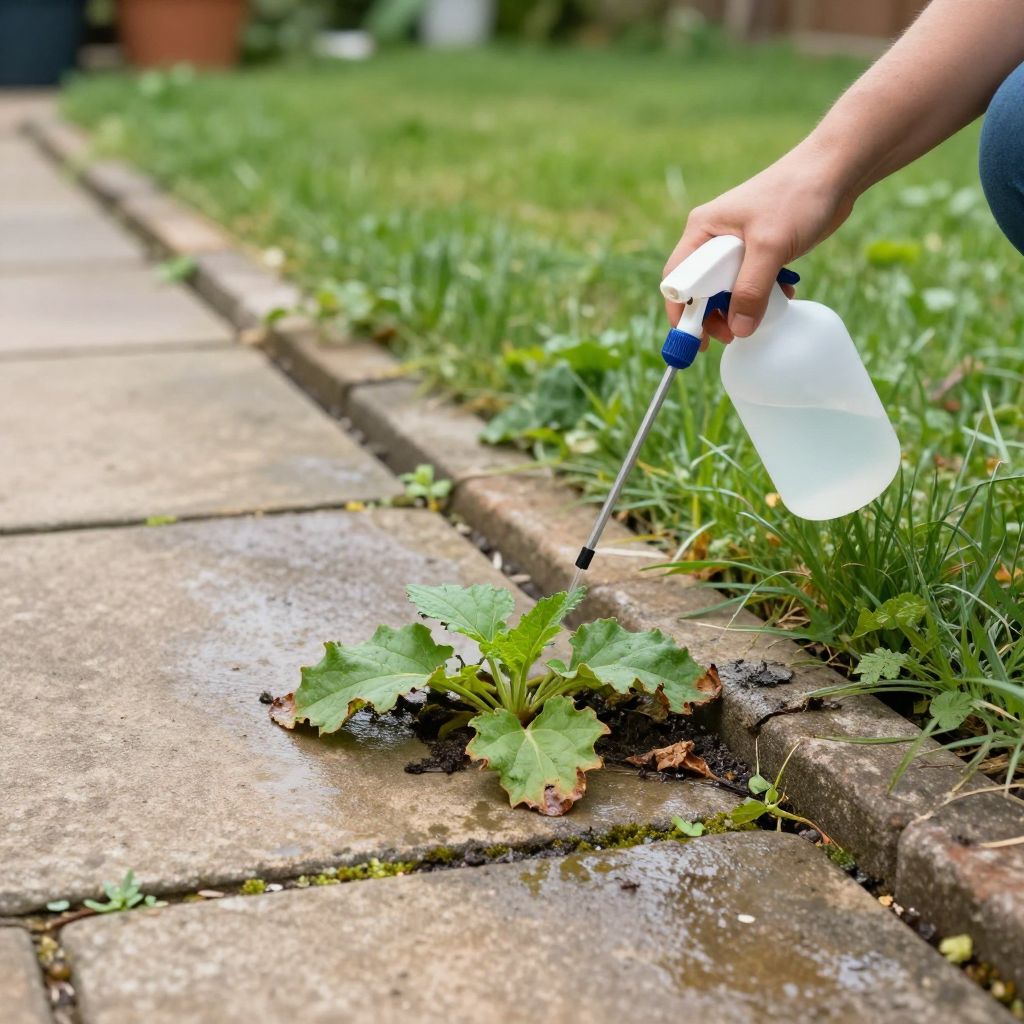
Does bleach kill weeds? Yes, bleach can burn and kill many small weeds on contact, but it is a harsh, nonselective chemical that can also damage soil, nearby plants, and hardscape surfaces. If you want a fast spot treatment, it works best on cracks and gravel, not in garden beds or lawns.
For most home gardens, bleach is usually a poor long-term weed control choice. It does not solve the root problem, and repeated use can create more maintenance issues than it fixes.
Does bleach kill weeds?
Bleach can kill the top growth of weeds by drying and damaging plant tissue, but it is not a reliable root-kill method. It may work on very small annual weeds in pavement cracks, yet perennial weeds often regrow from roots or rhizomes. It can also harm soil life and nearby ornamentals.
How bleach affects weeds and your garden
Household bleach contains sodium hypochlorite, a strong oxidizing agent. When it touches green tissue, it can scorch leaves and stems quickly, which is why weeds may look dead within hours or days.
The problem is that visible damage is not the same as complete control. Many weeds have protected growing points below the soil surface, so they recover after the foliage is burned back.
Where bleach is most likely to work
- Cracks in driveways, sidewalks, and patios
- Gravel paths and non-planted hardscape
- Very small, shallow-rooted annual weeds
Where bleach is a bad idea
- Vegetable beds and flower borders
- Lawns
- Near shrubs, trees, and groundcovers
- Areas where runoff can reach drains, ponds, or stormwater systems
Why bleach is usually not the best weed killer
Even though bleach can kill weeds on contact, it is not selective. That means it can injure any plant it touches, including desirable plants you want to keep.
It also does not improve the soil. In fact, repeated use can disrupt soil biology and leave the area harder to manage over time.
Main drawbacks to know
- Nonselective: it burns weeds and garden plants alike.
- Limited root control: many weeds regrow.
- Runoff risk: it can move into soil or water pathways.
- Surface staining or damage: it may discolor some materials.
- Safety concerns: it can irritate skin, eyes, and lungs.
How to use bleach as a spot treatment, if you choose to
If you decide to use bleach, keep it strictly to isolated weeds in cracks or other non-planted areas. Use the smallest amount possible and avoid spraying on windy days.
- Pull or cut away larger weeds first so you expose the green growth.
- Apply bleach only to the weed, not the surrounding surface or soil.
- Use a small applicator for precision rather than broad spraying.
- Keep children, pets, and nearby plants away until the area is dry.
- Watch for regrowth over the next 1 to 3 weeks.
Never mix bleach with vinegar, ammonia, or other cleaners. Those combinations can release dangerous fumes.
Important safety notes
- Wear gloves and eye protection.
- Do not use bleach in enclosed spaces without ventilation.
- Avoid using it near metal fixtures that may corrode.
- Rinse tools thoroughly after contact.
Better alternatives to bleach for weed control
For most gardeners, safer and more effective weed control methods are available. The best choice depends on whether you are dealing with a lawn, bed, path, or driveway crack.
1. Hand pulling and digging
This is the most reliable option for garden beds, especially after rain or watering when the soil is softer. Remove the entire root system when possible, especially for taprooted weeds like dandelions.
2. Mulching
A 2- to 4-inch layer of organic mulch helps suppress weed germination in beds and around shrubs. Keep mulch a few inches away from stems and trunks to prevent rot.
3. Boiling water
Boiling water can work well on weeds in cracks and gravel. It is still nonselective, so apply carefully and avoid splashing nearby plants.
4. Landscape fabric or edging
These can help reduce weed pressure along paths and borders when installed correctly. They work best when paired with mulch or gravel and regular maintenance.
5. Flame weeding
For hardscape areas, a flame weeder can scorch young weeds quickly. Use only where fire risk is low and follow local safety rules.
How to stop weeds from coming back
Weed control is easier when you address the conditions that let weeds thrive. Bare soil, thin mulch, compacted ground, and poor drainage all make it easier for weeds to return.
Improve the growing area
- Fill cracks in paving so seeds have fewer places to root.
- Refresh mulch before it breaks down completely.
- Water desired plants deeply but not excessively, so weeds do not get the same advantage.
- Remove weeds before they flower and set seed.
Watch for perennial weeds
Perennial weeds such as bindweed, nutsedge, and quackgrass usually need repeated removal. Cutting them once or burning the top growth rarely solves the problem.
For these weeds, persistence matters more than a quick fix. Digging, smothering, and repeated follow-up are usually more effective than bleach.
Common mistakes gardeners make with bleach
- Using too much: more bleach does not equal better control.
- Applying it in beds: it can injure nearby ornamentals and soil organisms.
- Expecting root kill: many weeds regrow.
- Spraying on windy days: drift can damage desirable plants.
- Ignoring runoff: bleach can move where you do not want it.
When bleach may be acceptable
Bleach can be a last-resort spot treatment for a small weed growing in a crack where no plants are nearby and you need a fast cosmetic fix. Even then, it should be used sparingly and only with full awareness of the risks.
If you are maintaining a garden bed, lawn, or mixed landscape, a gentler method is usually better for long-term plant health and soil quality.
Final verdict for home gardeners
So, does bleach kill weeds? Yes, but mostly as a surface burn, not a dependable long-term solution. It is best reserved for isolated weeds in non-planted hardscape, not for regular garden weed control.
For a healthier, more lasting result, choose hand removal, mulch, or another targeted method that fits the space you are treating. If you want to reduce weeds this season, start by clearing one problem area, then cover the soil or cracks so fewer weeds return.