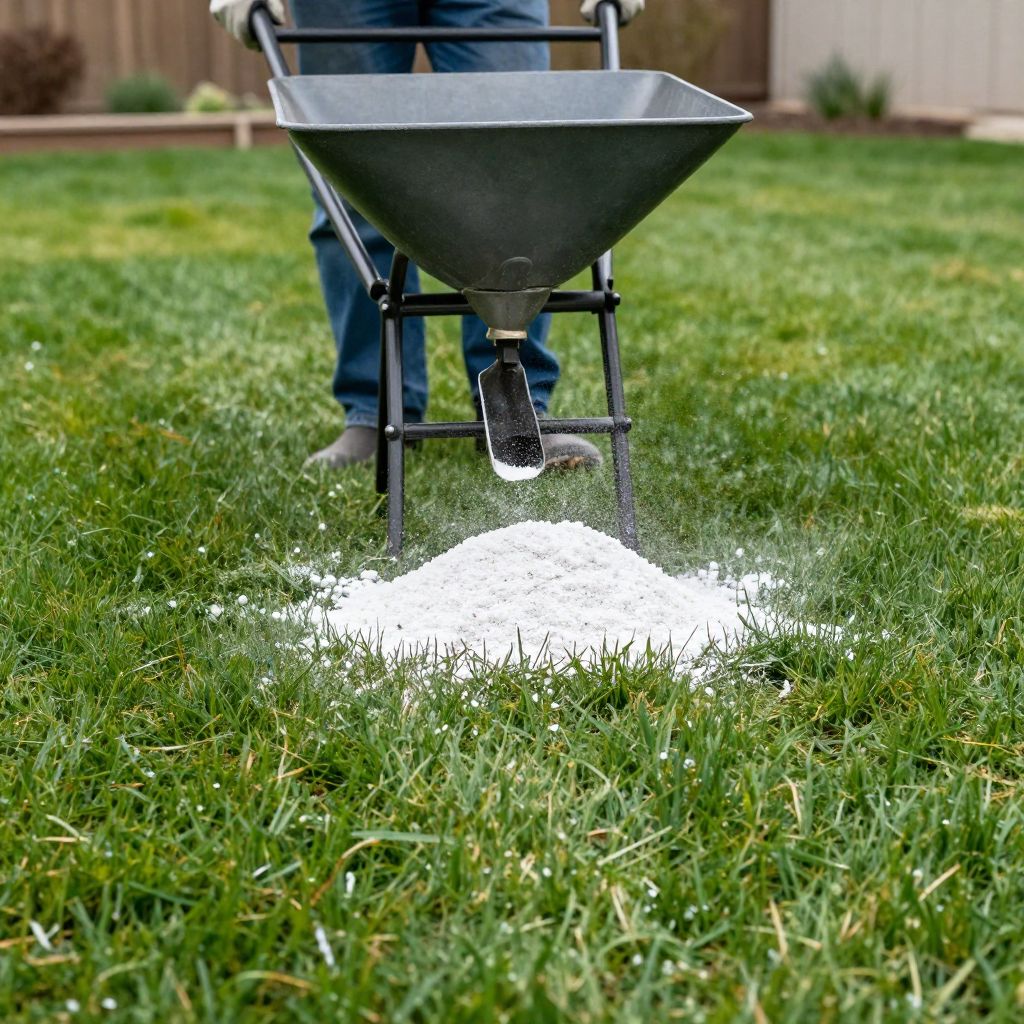
What does lime do for your lawn, and do you actually need it? Lime is used to raise soil pH when your lawn soil is too acidic, which can help grass use nutrients more effectively and improve overall turf health. It is not a fertilizer, and it will not fix every lawn problem.
If your grass looks thin, pale, or stubbornly weak despite regular care, acidic soil may be part of the issue. The best way to know is with a soil test, because lime only helps when the pH is low enough to justify it.
What does lime do for your lawn?
Lime raises soil pH in acidic lawns, making the soil less sour and more favorable for grass roots and soil microbes. When pH is too low, nutrients such as nitrogen, phosphorus, and potassium can become harder for turf to absorb. Lime helps correct that imbalance, but only if your soil actually needs it.
Why soil pH matters for grass
Most lawn grasses grow best in a slightly acidic to near-neutral soil. If pH drifts too low, the lawn may struggle even when you water and fertilize correctly. The root system can become less efficient, and some nutrients may be locked up in the soil.
Common signs of acidic soil
- Grass looks weak, thin, or patchy even with routine care
- Moss is becoming more noticeable in shady or damp areas
- Weeds that tolerate poor turf are spreading
- Fertilizer seems to help only briefly
- Soil is compacted, poorly drained, or has a history of heavy rainfall
These signs are not proof by themselves. A lawn can look poor for many reasons, including shade, compaction, drought stress, pests, or low fertility.
How to tell whether your lawn needs lime
The most reliable answer comes from a soil test. A test tells you the current pH and often recommends whether lime is needed, plus how much to apply for your soil type.
Best way to test
- Collect several small soil samples from different areas of the lawn.
- Mix them together in a clean container.
- Send the sample to a local extension service or use a reputable soil test kit.
- Follow the recommendation for your exact pH and soil texture.
If you do not have a test yet, it is better to wait than to guess. Overliming can create its own problems by pushing the soil too alkaline.
What lime does not do
Lime is useful, but it is often misunderstood. It does not act like a quick green-up product, and it is not a substitute for fertilizer, watering, mowing correctly, or fixing drainage issues.
- Lime does not feed grass directly. It changes soil chemistry so nutrients are easier to access.
- Lime does not repair dead turf. Bare areas still need reseeding or sod.
- Lime does not solve compaction. Aeration is the better fix for dense soil.
- Lime does not replace good lawn care. You still need proper mowing, watering, and weed control.
Types of lime used on lawns
Most home lawns use agricultural lime, usually in one of two forms: calcitic lime or dolomitic lime. Both are used to raise pH, but they are not identical.
Calcitic lime
Calcitic lime is mainly calcium carbonate. It is commonly used when the soil needs calcium and pH correction.
Dolomitic lime
Dolomitic lime contains calcium and magnesium. It is often chosen when soil tests show magnesium is also low.
Do not choose a product based only on the label name. Let the soil test guide you, because the wrong type may not address the real deficiency.
When to apply lime to a lawn
Lime can usually be applied when the lawn is actively growing or when soil conditions allow the product to be watered in. Many gardeners prefer cooler parts of the season because grass is less stressed and the lawn is easier to work on. Local climate, rainfall, and turf type matter, so timing should fit your region.
Good times to consider application
- After a soil test confirms low pH
- When you can water it in or expect gentle rainfall
- During a mild period, not during heat stress or drought
- Before a long-term lawn renovation, if the test recommends it
Avoid applying lime to a frozen lawn, waterlogged ground, or during extreme heat. You want the product to reach the soil, not sit on the surface or wash away.
How to apply lime correctly
Apply lime evenly so the soil receives a uniform treatment. Uneven application can leave some areas too acidic and others too alkaline.
- Read the soil test recommendation and the product label.
- Use a spreader for even coverage on larger lawns.
- Apply to dry grass if possible for easier spreading.
- Water lightly afterward, unless rain is expected soon.
- Keep lime off sidewalks, driveways, and hard surfaces where it can wash into drains.
If your soil test suggests a large correction, it is often better to split the amount over time rather than apply everything at once. This is especially important on heavier soils.
Hand application vs. spreader
- Broadcast spreader: Best for even coverage on medium to large lawns.
- Drop spreader: Good for more precise application near borders and beds.
- By hand: Only for very small patches, and even then it is easy to apply unevenly.
How long lime takes to work
Lime does not change soil pH overnight. It usually works gradually as moisture helps it move into the soil and dissolve. Finer particles tend to react faster than coarse material, but the exact timing depends on soil texture, rainfall, and how acidic the soil was to begin with.
Do not expect instant color change. If your lawn needs lime, the benefit is usually seen over time through steadier growth, better nutrient uptake, and improved turf density.
Common mistakes to avoid
Many lawn problems after liming come from overuse or poor timing rather than the lime itself.
- Skipping the soil test: This is the biggest mistake and often leads to unnecessary application.
- Applying too much: Overliming can push pH too high and cause nutrient lockout.
- Expecting lime to fix every symptom: Poor drainage, shade, or compaction may be the real problem.
- Mixing lime with unrelated lawn products without checking labels: Some combinations are not ideal.
- Applying on windy days: Fine particles can drift onto plants, patios, or walkways.
What to do if your lawn still looks poor after liming
If you corrected soil pH and the lawn still struggles, look for other causes. A healthy lawn needs the whole system working together.
Check these next
- Drainage: Waterlogged soil can suffocate roots.
- Compaction: Aeration may be needed if the soil is dense.
- Sunlight: Turf in deep shade often thins out no matter what you add.
- Mowing height: Cutting too short weakens grass.
- Pests and disease: Grubs, fungus, or other issues may be present.
- Nutrient balance: A soil test may show that fertilizer is also needed.
How lime fits into overall lawn care
Lime works best as part of a broader maintenance plan. Healthy turf depends on balanced soil, proper mowing, sensible watering, and occasional overseeding or aeration when needed.
- Mow at the correct height for your grass type.
- Water deeply but not constantly, unless your climate or soil requires a different approach.
- Leave grass clippings on the lawn if they are not clumping.
- Use compost or other organic matter where appropriate to improve soil structure over time.
- Re-test soil every few years, or sooner if your lawn continues to struggle.
Conclusion
So, what does lime do for your lawn? It corrects acidic soil so grass can use nutrients more effectively, but only when a soil test shows it is needed. If you suspect low pH, test first, then apply the right type of lime evenly and patiently for the best long-term result.
For more practical help, you may also want to read what lime does for grass and when to apply lime to a lawn.