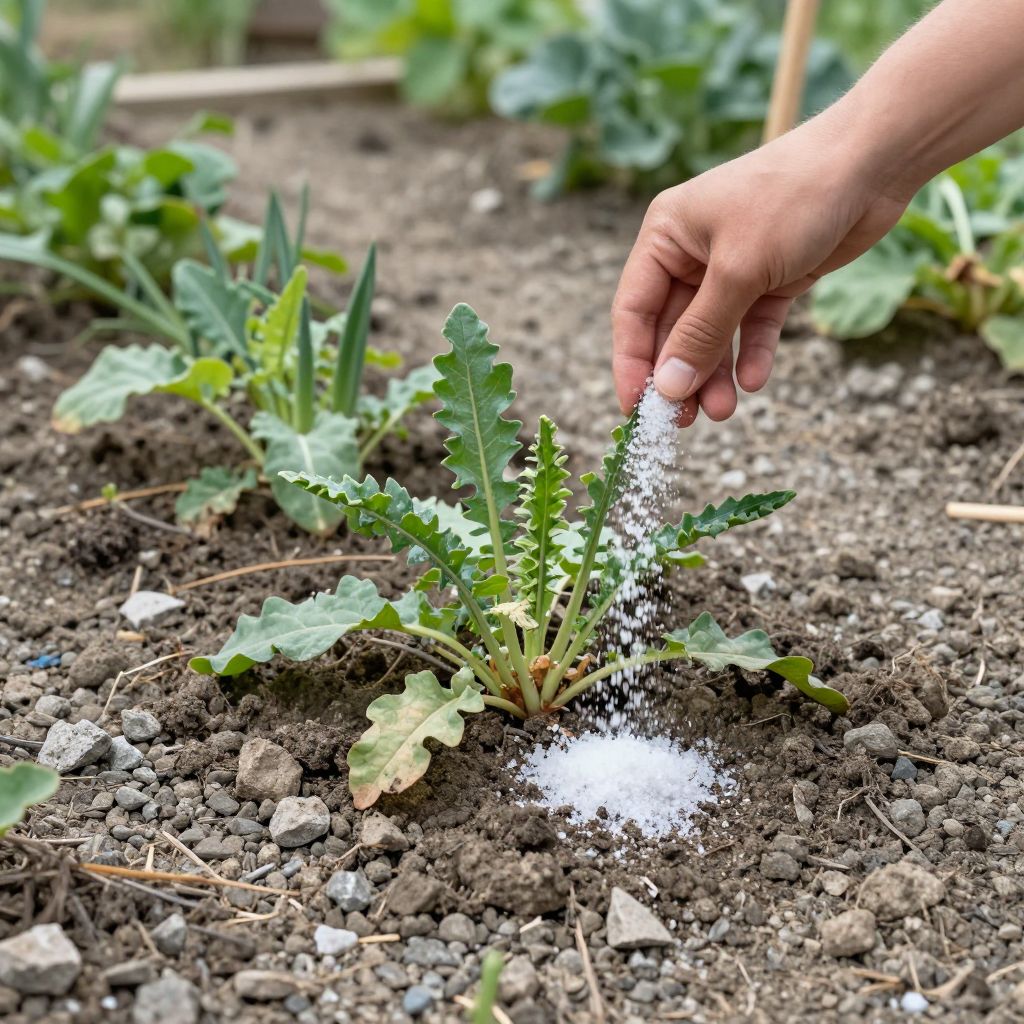
Does salt kill weeds? Yes, it can, but it is a blunt tool that damages much more than the weed you want to remove. Salt dehydrates plant tissue and can leave soil less hospitable for future planting, especially in beds, borders, and lawns.
If you are trying to clear a crack in a driveway or a spot where nothing else should grow, salt may work temporarily. For most garden areas, though, safer and more effective weed control methods are better for your soil, nearby plants, and long-term garden health.
Does salt kill weeds?
Yes. Salt can kill weeds by drawing moisture out of plant cells and disrupting water uptake, which causes wilting, browning, and eventual death. The catch is that salt does not distinguish between weeds and desirable plants, and it can linger in soil, making future growth difficult.
How salt affects weeds and soil
Salt works as a desiccant and soil disruptor. When applied directly to foliage or roots, it can damage plant tissues quickly, but repeated use can build up in the soil and create long-term problems for drainage, fertility, and plant health.
What salt does to plants
- Pulls water out of cells, causing dehydration.
- Burns leaves, stems, and roots on contact.
- Can stunt regrowth if enough reaches the root zone.
What salt does to soil
- Raises salinity, which makes it harder for plants to absorb water.
- Can injure beneficial soil life over time.
- May leave the area unsuitable for planting for months or longer, depending on rainfall and soil type.
Where salt may work, and where it should not be used
Salt is most likely to be used in non-planting spaces where you want long-term bare ground, such as cracks in pavement, gravel seams, or isolated hardscape edges. It is usually a poor choice in lawns, vegetable beds, flower borders, and around shrubs or trees.
Better places for salt use
- Driveway cracks
- Patio joints
- Areas with no nearby desirable plants
Places to avoid salt
- Lawns
- Raised beds
- Vegetable gardens
- Near roots of trees and shrubs
- Sloped areas where runoff can carry salt into planting beds
How to use salt on weeds with the least damage
If you decide to use salt, keep it as targeted as possible. The goal is to treat a tiny problem area, not the surrounding soil. Even then, it is best reserved for places where you do not want anything to grow again.
- Remove as much of the weed as you can by hand first.
- Apply salt only to the weed or the immediate crack, not the whole surface.
- Use the smallest amount needed to coat the target area.
- Keep it away from soil you may want to plant later.
- Watch for runoff after rain or watering.
Important: Do not use salt near plants you want to keep. Splash, runoff, and soil movement can spread the damage beyond the original weed.
Why salt is usually a poor weed killer in gardens
Gardeners often want a quick fix, but salt creates a long cleanup problem. It may kill the weed, yet it can also reduce soil quality, harm earthworms and microbes, and make it difficult to replant the area later.
Main drawbacks
- Non-selective: it can injure any plant it touches.
- Persistent: it may remain in soil longer than expected.
- Runoff risk: rain can move salt into nearby beds and lawns.
- Soil damage: repeated use can reduce planting success.
Safer alternatives to salt for weed control
For most garden situations, the best weed control methods are physical removal, mulching, and prevention. These approaches protect your soil while still reducing weed pressure.
Hand pulling and digging
Pull weeds when the soil is moist so roots come out more easily. For taprooted weeds, use a hand fork or dandelion tool to loosen the soil first.
Mulching
A 2- to 4-inch layer of organic mulch helps block light and suppress new weeds in beds and around shrubs. Keep mulch a few inches away from stems and trunks to prevent rot.
Landscape fabric or cardboard
These can help in some areas, especially under paths or temporary bed preparation. They work best when paired with mulch and regular inspection for breakthrough weeds.
Boiling water or flame weeding
These methods can be useful in cracks and hardscape areas. Use caution around desirable plants, dry mulch, and anything flammable.
Targeted herbicides
If you choose a herbicide, select one that matches the weed type and the site. Always follow the label exactly and protect nearby ornamentals, vegetables, and turf.
How to tell if salt has damaged soil
If you used salt and plants nearby begin to yellow, wilt, or fail to recover after watering, salt injury may be the cause. Damage often appears as browned leaf edges, stunted growth, or bare patches that persist after weeds are gone.
Signs of salt stress
- Leaf scorch or browning at the edges
- Sudden wilting despite moist soil
- Poor seed germination
- Patchy dieback in nearby turf or ornamentals
What to do if you overapplied salt
- Stop adding salt immediately.
- Keep runoff away from nearby beds if possible.
- Leach the area with deep watering only if drainage is good and the site is not prone to waterlogging.
- Remove and replace heavily contaminated soil if the area must be replanted soon.
- Wait and test with a small planting before reworking the whole space.
In clay soil or poorly drained spots, flushing salt downward can be difficult and may worsen compaction. In sandy soil, salt may move faster, but it can also spread to nearby roots more easily.
Common mistakes to avoid
Salt seems simple, but a few common mistakes can create bigger problems than the weeds themselves. Avoid these if you want to protect your garden.
- Using it in beds or lawns where desirable plants are already growing.
- Applying too much and poisoning the soil for future use.
- Relying on it repeatedly instead of fixing the underlying weed problem.
- Using it near drainage paths where rain can carry it into planting areas.
- Expecting it to solve perennial weeds with deep roots on the first try.
Best long-term weed prevention practices
The most reliable way to reduce weeds is to make your garden less welcoming to them. That means covering bare soil, maintaining healthy plant spacing, and removing new weeds before they set seed.
- Keep soil covered with mulch or living plants.
- Water the plants you want, not the whole weed-prone area.
- Pull small weeds early before roots spread.
- Edge beds cleanly so lawn grass and weeds do not creep in.
- Refresh mulch as it breaks down.
When salt might be acceptable
Salt may be acceptable only in a very limited sense: small, isolated hardscape areas where you do not want any future growth and where runoff will not affect other plants. Even then, many gardeners prefer less damaging options.
If your goal is a healthy garden, salt should be your last resort, not your first. For beds, borders, and lawns, choose methods that remove weeds without making the soil harder to use later.
For related weed-control reading, you may also want to see does salt kill grass and does bleach kill weeds.