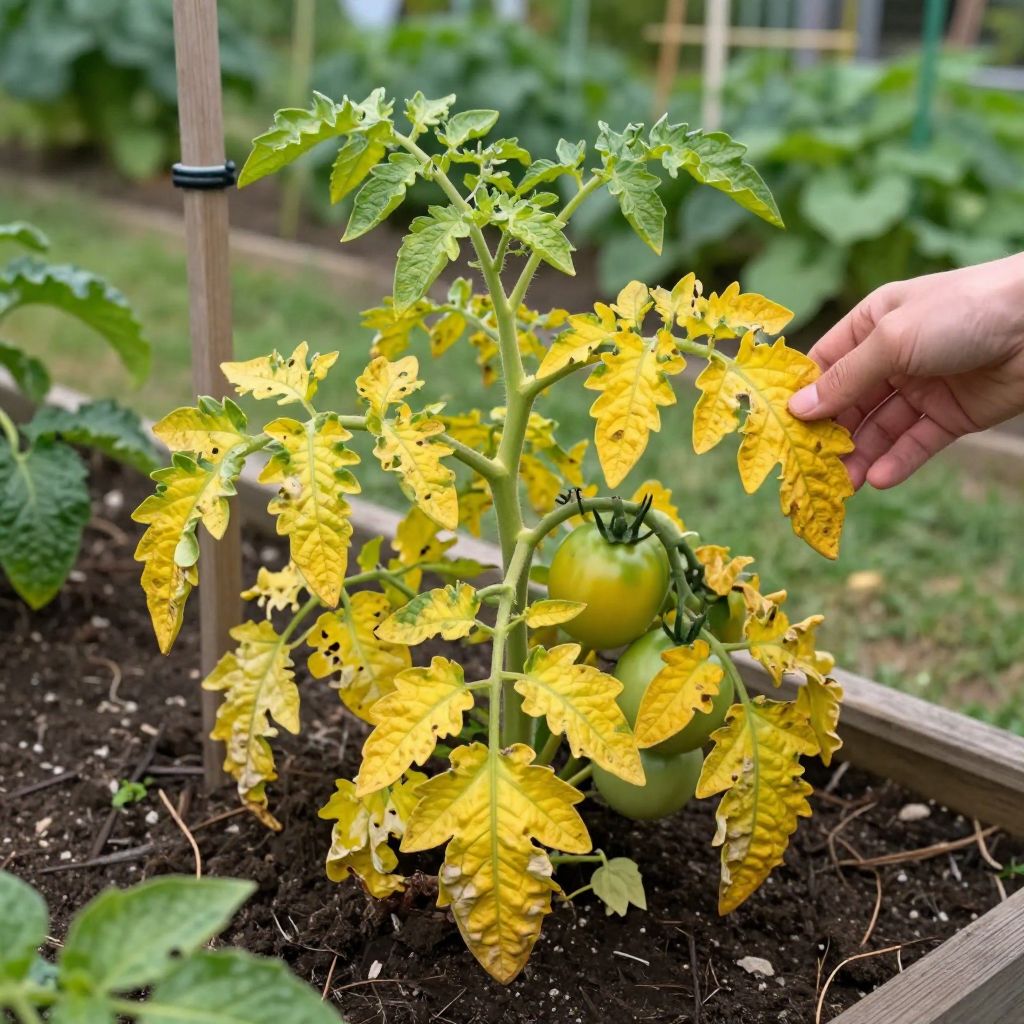
Why are my tomato plants turning yellow? Yellowing leaves are usually a sign that something in the plant’s growing conditions is off, not a mystery disease by itself. The cause may be watering problems, poor drainage, nutrient shortages, pests, or a leaf disease.
The good news is that yellow tomato leaves can often be corrected if you identify the pattern early. Start by checking where the yellowing begins, how fast it spreads, and whether the plant is in a pot or in the ground.
Why are my tomato plants turning yellow?
Tomato plants turn yellow when they are stressed by too much or too little water, low nutrients, root problems, pests, or disease. The pattern of yellowing tells you a lot: lower leaves often point to nitrogen issues or normal aging, while spotted, wilting, or rapidly spreading yellowing can signal disease, insects, or root damage.
Start with the pattern of yellowing
Before you reach for fertilizer or spray, look closely at which leaves are yellow and how the problem is developing. That one clue often narrows the cause quickly.
What the yellowing looks like
- Lower leaves yellow first: often nitrogen deficiency, transplant stress, or natural aging.
- Whole plant turns pale: often poor feeding, root stress, or severe watering issues.
- Yellow leaves with spots: possible fungal or bacterial disease.
- Yellowing plus wilting: often root rot, drought stress, or vascular disease.
- Yellow between green veins: may suggest a nutrient imbalance, especially iron, magnesium, or manganese issues.
Common causes of yellow tomato leaves and how to fix them
1. Watering problems
Tomatoes need consistent moisture, but they dislike soggy soil. Both overwatering and underwatering can cause yellow leaves, especially in containers or during hot weather.
Overwatering is one of the most common reasons tomatoes turn yellow. When roots sit in wet soil, they cannot take up oxygen well, and leaves may yellow, droop, or drop.
Underwatering can also cause yellowing, especially if the plant dries out repeatedly. Leaves may look dull, curl, or become brittle before turning yellow.
How to correct watering issues
- Check the soil 2 to 3 inches below the surface.
- If it feels wet and stays wet for days, reduce watering and improve drainage.
- If it feels dry and the plant is wilting, water deeply at the base.
- Water early in the day so foliage dries quickly.
- Use mulch to help soil moisture stay even, especially in garden beds.
For containers, make sure pots have drainage holes and never leave them standing in saucers of water. In hot weather, potted tomatoes may need more frequent watering than in cool, cloudy periods.
2. Poor soil drainage
Even if you water carefully, heavy clay soil or compacted potting mix can keep roots too wet. Tomatoes growing in poorly drained soil often yellow from the bottom up and may stop growing well.
If your garden soil stays wet after rain, the roots may be struggling. In containers, old or compacted potting mix can also reduce air flow around the roots.
What to do about drainage
- Loosen compacted soil gently around the plant without damaging roots.
- Mix in compost to improve soil structure in garden beds.
- Use raised beds if your native soil drains slowly.
- Repot container tomatoes into fresh, well-draining potting mix if needed.
- Avoid planting tomatoes in low spots where water collects.
3. Nitrogen deficiency
Tomatoes are heavy feeders, and nitrogen deficiency often shows up as yellowing of the oldest, lowest leaves first. The plant may look pale overall and grow slowly.
This is especially common later in the season, after the plant has used up available nutrients, or if the soil was not enriched before planting.
How to fix low nitrogen
- Top-dress garden soil with compost if the plant is otherwise healthy.
- Use a balanced fertilizer or one formulated for tomatoes, following the label directions.
- Do not overdo nitrogen, because too much can produce lush leaves but fewer flowers and fruit.
If the plant is flowering and fruiting, choose a fertilizer that supports overall growth without pushing excessive leafy growth. A soil test is the best way to know whether the issue is truly nitrogen or another nutrient imbalance.
4. Other nutrient deficiencies
Not all yellowing is caused by nitrogen. Tomatoes can also show yellowing from deficiencies or imbalances in magnesium, iron, or other nutrients, especially if soil pH is too high or roots are stressed.
Magnesium deficiency often appears as yellowing between the veins on older leaves, while the veins remain greener. Iron deficiency usually affects newer leaves first, making them pale with green veins.
What helps
- Check soil pH if yellowing persists despite proper watering and feeding.
- Keep soil pH in a range tomatoes can use well, typically slightly acidic.
- Avoid piling on multiple fertilizers at once, which can worsen nutrient lockout.
- Use compost regularly to support long-term soil health.
If you suspect a nutrient issue but are unsure which one, a soil test is more reliable than guessing. It can save you from adding the wrong amendment.
5. Natural aging of lower leaves
Sometimes the oldest leaves at the bottom of the plant yellow simply because they are aging. This is common once the plant is larger and producing fruit.
If only a few lower leaves are yellow and the rest of the plant looks vigorous, this may not be a serious problem. Remove the yellow leaves if they are touching the soil or making the plant look crowded.
Do not remove too many healthy leaves at once. Tomato leaves help feed the plant and protect fruit from sunscald.
6. Pests
Insects can weaken tomato plants and cause yellowing, especially if they feed on sap or damage roots. Common culprits include aphids, whiteflies, spider mites, and root-feeding pests.
Look closely at the undersides of leaves for tiny insects, sticky residue, webbing, or speckled leaf damage. Yellowing caused by pests may be patchy rather than uniform.
How to manage pests
- Rinse small infestations off with a strong spray of water.
- Remove heavily infested leaves if needed.
- Encourage beneficial insects by avoiding broad-spectrum sprays when possible.
- Inspect nearby weeds and plants that may harbor pests.
If the plant is in a container, also check the root zone for signs of root damage or gnawing pests. Sometimes the problem is below the soil line.
7. Fungal and bacterial diseases
Several tomato diseases can cause yellow leaves, especially in warm, humid weather or when foliage stays wet. Early blight, Septoria leaf spot, and bacterial leaf spot are common examples.
These problems often begin on lower leaves and move upward. You may see spots, yellow halos, browning, or leaf drop. If disease is the cause, yellowing usually spreads despite normal watering and feeding.
What to do if disease is suspected
- Remove badly affected leaves with clean pruners.
- Dispose of diseased foliage in the trash, not the compost pile, unless your compost system gets hot enough to break down pathogens safely.
- Water at soil level instead of overhead.
- Improve air circulation by spacing plants properly and pruning lightly if needed.
- Rotate tomatoes to a new bed each season if possible.
Fungicides may help prevent spread in some situations, but they work best when used early and alongside good cultural care. Always follow the product label and local guidance.
8. Root stress from transplanting or damage
Tomatoes can yellow after transplanting if roots were disturbed, planted too early into cold soil, or exposed to wind and temperature swings. This is often temporary, but severe stress can slow growth for weeks.
Root damage from cultivation, pests, or waterlogging can produce similar symptoms. If the roots cannot function well, the leaves will often yellow even if the top growth looks fine at first.
How to help stressed roots recover
- Keep soil evenly moist, not saturated.
- Mulch to moderate soil temperature and moisture.
- Avoid heavy fertilizing until the plant resumes steady growth.
- Protect young transplants from cold nights and strong wind.
How to troubleshoot yellow tomato plants step by step
If you are not sure what is wrong, use a simple process of elimination. This helps you avoid making the problem worse.
- Check the soil moisture. Feel 2 to 3 inches down.
- Inspect the leaves. Look for spots, holes, webbing, or sticky residue.
- Look at where yellowing starts. Lower leaves, upper leaves, or the whole plant?
- Review recent care. Have you changed watering, fertilizing, or pruning?
- Check drainage. Especially important in pots and heavy soil.
- Consider weather. Cold snaps, heat waves, and heavy rain can all trigger yellowing.
Prevention: keep tomato leaves green and healthy
Healthy tomato plants are easier to maintain than stressed ones. A few good habits can prevent many yellowing problems before they start.
- Plant in full sun, where tomatoes receive strong light for most of the day.
- Use compost or well-prepared soil before planting.
- Water deeply and consistently rather than in small, frequent splashes.
- Mulch to reduce moisture swings and soil splash.
- Space plants so air can move around the foliage.
- Remove diseased leaves promptly and clean tools between plants if disease is present.
Avoid fertilizing on autopilot. Too much fertilizer, especially nitrogen, can create more problems than it solves if the real issue is poor drainage or disease.
When yellow tomato leaves are normal and when to worry
One or two yellow lower leaves on an otherwise healthy tomato plant are often not alarming. Older leaves naturally decline as the plant focuses energy on fruit.
Worry more if yellowing is rapid, affects new growth, includes spotting or wilting, or spreads through the whole plant. In those cases, act quickly so the plant can keep producing.
Conclusion
Why are my tomato plants turning yellow? Most often, the answer is water stress, poor drainage, nutrient imbalance, pests, or disease. Start by checking moisture, leaf pattern, and root conditions, then correct the most likely cause first. If you want to keep improving your tomato care, you may also find it helpful to read more about why tomato plants turn yellow and when to harvest tomatoes.