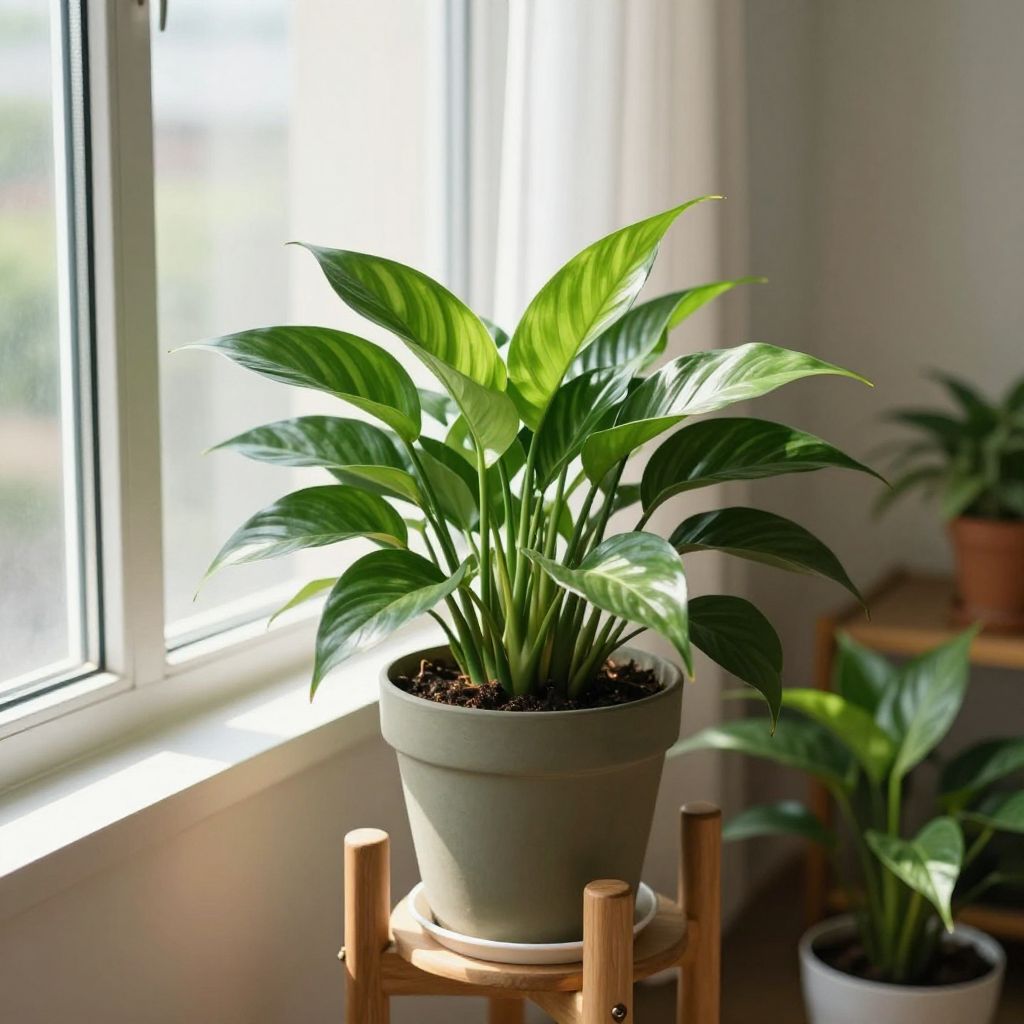
What does indirect sunlight mean for your plants? In gardening, it usually means bright light that reaches a plant without the sun’s rays hitting the leaves directly. It is one of the most common light conditions for houseplants, seedlings, and some shade-loving outdoor plants.
Understanding this light level helps you place plants correctly, prevent leaf scorch, and avoid weak, stretched growth. The tricky part is that “indirect sunlight” can mean different things depending on the window, season, and distance from the light source.
What does indirect sunlight mean?
Indirect sunlight means a plant receives bright light that has been filtered, reflected, or diffused rather than hit by direct sunbeams. Indoors, this is often found near an east-facing window, several feet back from a south or west window, or behind a sheer curtain. Outdoors, it usually means bright shade or dappled light.
How to identify indirect sunlight in your home
The easiest way to tell is by checking whether the sun’s rays fall directly on the plant. If the light is bright but the plant is not sitting in a sharp beam of sun, that is indirect light.
Simple ways to judge the light
- Look at the shadow: In indirect light, shadows are soft, faint, or blurry.
- Check the leaf surface: Leaves may be lit up, but they should not feel hot or show sunburn spots.
- Use your hand: Hold your hand where the plant sits. If the shadow is weak and diffuse, the light is likely indirect.
- Watch the sun path: A spot that is indirect in the morning may become direct in the afternoon.
Common indoor examples
- Bright indirect light: Near an east window, or 1 to 3 feet from a south or west window with no harsh direct sun.
- Medium indirect light: A few feet farther from a bright window, or in a room with large windows but no direct beam.
- Low indirect light: A dimmer room with no direct sun, but still some natural daylight.
Indirect light vs. direct sun: what plants actually need
Many gardening problems start when “bright light” gets mistaken for “direct sun.” Some plants need several hours of direct sun, while others prefer filtered light and will scorch if exposed too long.
Signs a plant is getting too much direct sun
- Bleached or faded patches on leaves
- Brown crispy edges or tips
- Leaves curling to reduce exposure
- Soil drying out very quickly
Signs a plant is not getting enough light
- Long, weak stems
- Large gaps between leaves
- Small new growth
- Slow growth or leaf drop
Important: “Indirect sunlight” is not the same as “low light.” Many plants that like indirect sun still need a bright room, not a dark corner.
Where indirect sunlight works best indoors
Indoor light changes with window direction, season, and nearby obstructions like trees, porches, and buildings. The same spot can be ideal in winter and too intense in summer.
Best window placements
- East-facing windows: Often provide gentle morning sun and bright indirect light for the rest of the day.
- North-facing windows: Usually offer softer light, which may suit lower-light plants but may be too dim for sun-loving species.
- South- or west-facing windows: Can be excellent for bright indirect light if the plant is set back or filtered by a curtain.
How distance changes the light
Moving a plant just a few feet can make a big difference. A plant on the windowsill may get direct rays, while the same plant on a nearby table may receive bright indirect light.
- Right on the sill: often strongest light, sometimes direct
- 1 to 3 feet away: commonly bright indirect light
- Farther into the room: lower indirect light
What indirect sunlight means outdoors
Outside, indirect sunlight usually means shade that is still bright. This can come from trees with open canopies, a patio roof, a pergola, or the filtered light along the edge of a garden bed.
Outdoor light situations to look for
- Dappled shade: Sunlight passes through leaves in moving patches.
- Bright shade: A well-lit area with no direct sun hitting the plant.
- Morning sun only: Gentle direct sun early in the day, followed by indirect light later.
Outdoor indirect light is often helpful for plants that burn in hot afternoon sun, especially in warm climates. In cooler climates, the same plant may tolerate more direct sun than you expect.
Which plants usually prefer indirect sunlight?
Many common houseplants grow best in bright indirect light. Some outdoor ornamentals and tender seedlings also appreciate filtered light, especially during hot weather.
Common plants that often do well in indirect light
- Pothos (Epipremnum aureum)
- Heartleaf philodendron (Philodendron hederaceum)
- Spider plant (Chlorophytum comosum)
- Peace lily (Spathiphyllum spp.)
- Snake plant (Dracaena trifasciata)
- Many ferns
- Some orchids
Even among shade-tolerant plants, light needs vary. A peace lily may cope with lower light, while a pothos usually grows more vigorously in brighter indirect light.
How to give plants the right amount of indirect light
Once you know what indirect sunlight means, the next step is matching it to the plant. The goal is to give enough light for healthy growth without causing stress.
Step-by-step placement guide
- Identify the window or outdoor spot. Note the direction, nearby trees, and how many hours of sun it receives.
- Observe the light at different times. Morning, midday, and late afternoon light can be very different.
- Place the plant accordingly. Start closer to bright light if the plant is active-growing, or farther back if it is sensitive to sun.
- Check the plant after one to two weeks. Look for scorch, stretching, or slowed growth.
- Adjust gradually. Move the plant a little at a time rather than shifting it from deep shade to full sun.
Useful tools for checking light
- A simple notebook to track where the sun falls
- A sheer curtain for filtering harsh light
- A light meter app, if you want a rough comparison of spots in your home
Common mistakes when interpreting indirect sunlight
Many plant issues come from assuming all bright rooms are the same. Light quality changes with season, glass, and room layout.
- Putting a plant too far from the window: The room may look bright to you, but the plant may still be in low light.
- Ignoring seasonal shifts: Winter light is weaker and shorter; summer sun is stronger and higher.
- Forgetting reflected heat: Windows can intensify heat even when the light seems filtered.
- Moving plants too quickly: Sudden shifts from shade to bright light can shock leaves.
- Assuming all houseplants want the same thing: Light needs vary a lot by species.
How indirect sunlight affects watering and soil
Light level directly affects how fast soil dries. A plant in bright indirect sunlight usually uses water faster than one in lower light, but not as fast as one in full direct sun.
What to watch for
- Faster drying: Bright indirect light often means you need to check soil more often.
- Better airflow: Brighter spots can reduce some fungal problems, but dry air may also stress leaves.
- Drainage still matters: Even in indirect light, roots can rot if the pot holds too much water.
Use a potting mix suited to the plant, and make sure containers have drainage holes. Water based on soil moisture, not the calendar. A finger test or moisture meter is more reliable than a fixed schedule.
Troubleshooting: if your plant is not thriving
If a plant looks unhappy, light is one of the first things to check. But do not blame light alone; watering, root health, pests, and temperature can all play a role.
Problem: leaves are pale or stretched
This often means the plant needs more light. Move it gradually closer to a brighter window or into a brighter outdoor spot with filtered sun.
Problem: leaves are scorched or crispy
The plant may be getting direct sun instead of indirect light. Pull it back from the window, add a sheer curtain, or move it to a spot with gentler morning light.
Problem: growth has stalled
Check whether the plant is receiving enough brightness for its type. Also confirm that the pot is not rootbound and the soil is not staying soggy.
Problem: pests appear on stressed plants
Weak or sun-stressed plants can attract spider mites, mealybugs, and fungus gnats. Improve light and airflow, inspect stems and leaf undersides, and treat pests early.
Practical light tips for indoor and outdoor gardeners
- Rotate houseplants every week or two so growth stays even.
- Use sheer curtains to soften harsh southern or western exposure.
- Move tender plants outdoors slowly so they can adapt to brighter conditions.
- Watch for changes after pruning nearby trees or shrubs, since more light may suddenly reach the plant.
- Remember that clean windows let in more light than dusty ones.
Conclusion: use the light your plant actually gets
Now you know what indirect sunlight means: bright, filtered light without harsh direct sunbeams. The best next step is to observe your space at different times of day, place your plant where the light matches its needs, and adjust gradually if the leaves show stress.
If you want to keep learning about indoor growing, you may also find how to grow strawberries indoors useful for comparing light needs in a home setting.