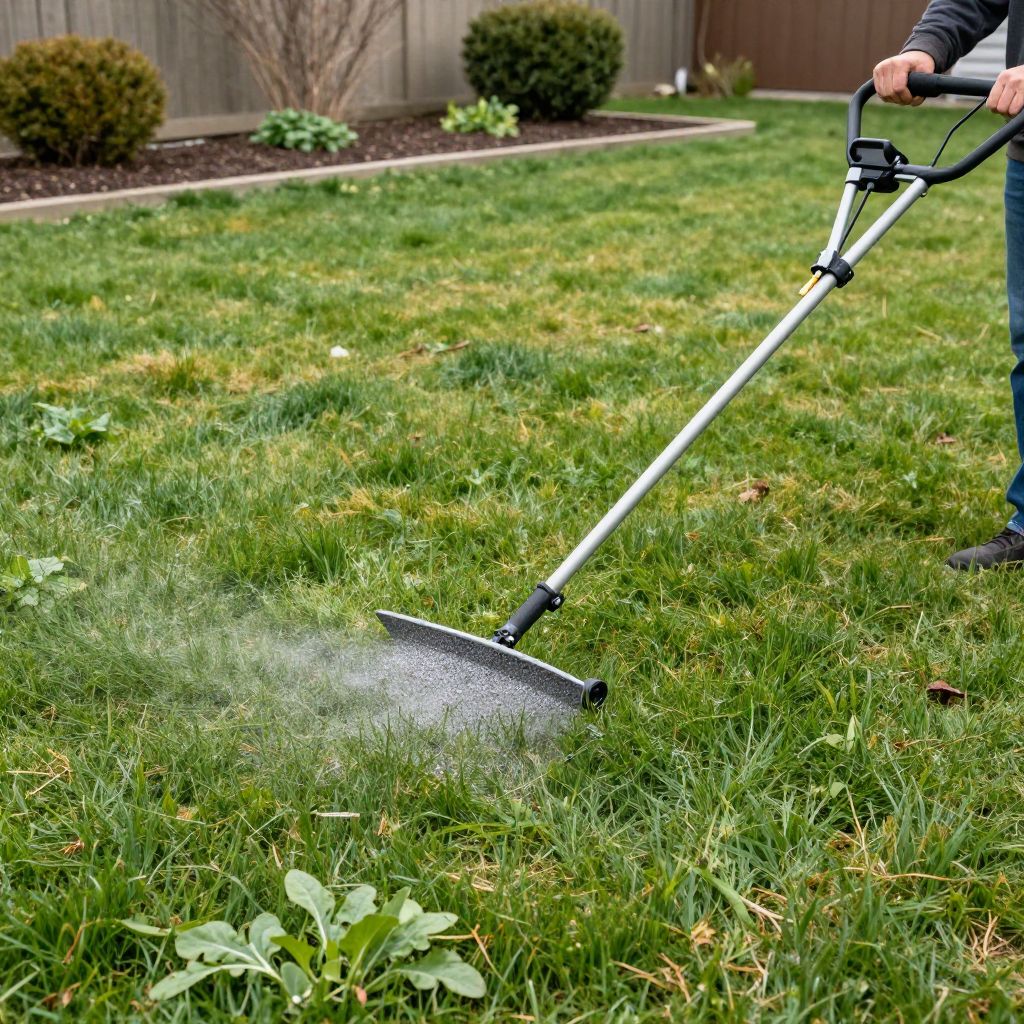
Wondering when to apply weed and feed so it actually works? Timing matters more than most gardeners realize, because these products work best when the lawn is actively growing and weeds are vulnerable.
Apply weed and feed only when your grass is in a healthy growth phase and the target weeds are present. For most lawns, that means spring for many broadleaf weeds or early fall for cool-season grasses, but local climate, soil moisture, and grass type should guide the final timing.
When to apply weed and feed?
Apply weed and feed when your lawn is actively growing, the weeds are young and actively growing too, and rain is not expected immediately after application. For cool-season lawns, early fall is often ideal; for warm-season lawns, late spring to early summer is usually better. Avoid applying during heat stress, drought, or when the lawn is dormant.
What weed and feed actually does
Weed and feed combines a lawn fertilizer with a broadleaf weed killer. The fertilizer supports grass growth, while the herbicide is designed to control common broadleaf weeds such as dandelion, clover, plantain, and chickweed.
It is important to know that weed and feed is not a cure-all. It will not stop every weed, and it is not meant for newly seeded lawns or for controlling grassy weeds like crabgrass in most cases.
Best use cases
- Lawns with scattered broadleaf weeds and generally healthy turf
- Established grass that is actively growing
- Situations where you want one product for feeding and spot weed control
When it is not the right choice
- New lawns or recently overseeded areas
- Lawns under drought or heat stress
- Lawns with heavy weed pressure that need a more targeted approach
- Areas where you want to grow flowers, vegetables, or ornamental plants nearby
Seasonal timing by lawn type
Cool-season grasses
Cool-season grasses such as Kentucky bluegrass, perennial ryegrass, fescues, and tall fescue grow most strongly in spring and fall. If you are choosing one season for weed and feed, early fall is often the safest and most effective time because the grass recovers well and many broadleaf weeds are still actively growing.
Spring can also work, especially if weeds are already up and the lawn is not stressed. Just avoid applying too early when the grass is still waking up or too late when temperatures rise and the lawn begins to slow down.
Warm-season grasses
Warm-season grasses such as bermudagrass, zoysia, St. Augustinegrass, and centipedegrass usually respond best in late spring through early summer, after they have fully greened up. Applying too early, while the lawn is still dormant or thin, can reduce effectiveness and stress the turf.
For warm-season lawns, wait until the grass is actively growing and has recovered from winter dormancy. This is especially important because some warm-season grasses are more sensitive to certain herbicides than others.
Regional and climate differences
Your local weather matters more than the calendar. In a mild climate, the right application window may arrive earlier or last longer than in a colder region. In hot, dry climates, it may be better to wait until temperatures moderate and the lawn is not under stress.
If you are unsure, look for these signs: steady grass growth, weeds with active leaf growth, and soil that is moist but not soggy. Those conditions usually mean the lawn can absorb the product and recover well.
How to tell if your lawn is ready
Before applying weed and feed, check the lawn carefully. The grass should be growing enough to use the fertilizer, and the weeds should be small enough for the herbicide to work well.
- Mow the lawn a few days before application if needed, but do not scalp it.
- Make sure the grass is not drought-stressed, yellowing, or recently damaged.
- Check that weeds are actively growing and have enough leaf surface to absorb the treatment.
- Confirm the product label matches your grass type.
- Review the weather forecast for rain, wind, and temperature extremes.
Do not apply weed and feed to a lawn that is dormant, newly seeded, or under stress. That is one of the most common reasons for poor results or turf injury.
How to apply weed and feed correctly
Always follow the product label first, because formulations vary. Some products are granular and are spread with a lawn spreader, while others are liquid and sprayed evenly over the lawn.
Step-by-step application
- Read the label for grass compatibility, timing, and safety directions.
- Mow first if needed, but leave the grass at a normal height.
- Apply evenly with a calibrated spreader or sprayer to avoid streaks and over-application.
- Water only if the label says to; some products need watering-in, while others should stay on the leaf surface for a period of time.
- Keep people and pets off the lawn until the product has dried or until the label’s re-entry instructions are met.
Tools that help
- Broadcast or drop spreader for granular products
- Hand spreader for small lawns
- Sprayer for liquid formulations
- Rake or broom for cleaning up spills from hard surfaces
Common mistakes to avoid
Most weed and feed problems come from poor timing, uneven application, or using the wrong product for the lawn. A little caution goes a long way.
- Applying during heat waves can stress grass and reduce weed control.
- Using it right after seeding can interfere with new grass establishment.
- Applying to wet leaves when the label says not to may reduce even coverage.
- Overlapping passes can burn turf or create dark stripes of excess fertilizer.
- Ignoring grass species can lead to injury, especially on sensitive lawns.
- Expecting instant weed death can lead to overuse; many weeds take days or weeks to decline.
What to do before and after application
Before you apply
- Mow a few days ahead if the lawn is overgrown.
- Remove toys, hoses, and debris from the area.
- Check for rain, wind, and extreme temperatures.
- Water lightly in advance only if the lawn is dry and the product label allows it.
After you apply
- Do not mow immediately unless the label allows it.
- Keep foot traffic low while the product is settling in.
- Watch for weed response over the next 1 to 3 weeks.
- Spot-treat surviving weeds later instead of reapplying too soon.
If weeds remain after treatment, it may mean they were too mature, the lawn was under stress, or the product did not match the weed species. In that case, a targeted post-emergent herbicide or hand removal may be a better next step.
Should you use weed and feed every year?
Not necessarily. Many lawns do better with separate feeding and weed control based on actual need. That approach gives you more control over timing and can reduce unnecessary herbicide use.
For example, you might fertilize when the lawn needs nutrients and spot-treat weeds only where they appear. This is often a better long-term strategy than applying a combined product on a fixed schedule.
Consider separate treatments if:
- Your lawn has only a few weeds
- You want to avoid blanket herbicide use
- Your grass type is sensitive or newly established
- You need different timing for feeding and weed control
Special situations: new lawns, overseeding, and drought
New lawns and overseeded areas
Do not use weed and feed on newly seeded lawns unless the label specifically says it is safe for that stage. Young grass can be damaged, and herbicides may interfere with germination or establishment.
If you overseeded recently, wait until the new grass is established and has been mowed several times before considering any weed control product, and even then choose carefully.
Drought-stressed lawns
During drought, grass slows down and absorbs products poorly. Applying weed and feed in that condition can stress the lawn further and reduce weed control.
It is usually better to water the lawn back into active growth first, if local watering restrictions and conditions allow, and then treat when the turf has recovered.
Recently renovated lawns
If you have aerated, dethatched, or topdressed recently, give the lawn time to recover before applying weed and feed. Freshly disturbed turf often needs a gentler recovery period rather than a combined herbicide-fertilizer treatment.
Better lawn care habits that reduce weeds
Weed and feed can help, but a healthy lawn is the best long-term weed prevention tool. Dense grass shades the soil, making it harder for weed seeds to sprout.
- Mow at the correct height for your grass type
- Water deeply but not too often, if your climate and soil allow
- Aerate compacted soil when needed
- Feed based on lawn needs, not just the calendar
- Overseed thin areas so weeds have less room to move in
Thick, well-maintained turf usually needs less weed control over time. That means better mowing, watering, and soil care can reduce how often you need weed and feed at all.
Quick timing checklist
- Grass is actively growing
- Weeds are small and actively growing
- Temperature is moderate, not extreme
- No drought stress or dormancy
- No recent seeding or overseeding
- Product label matches your grass type
- Weather forecast is suitable for application
Conclusion
The best answer to when to apply weed and feed is: when your lawn is actively growing, the weeds are young, and the weather is mild enough for the grass to recover. For many cool-season lawns, that is early fall; for many warm-season lawns, it is late spring to early summer.
Check your grass type, read the label carefully, and avoid stressed or newly seeded lawns. If you want to keep your lawn healthier with fewer weed problems, consider reading more about lawn care basics and how to fertilize a lawn for a more targeted maintenance plan.