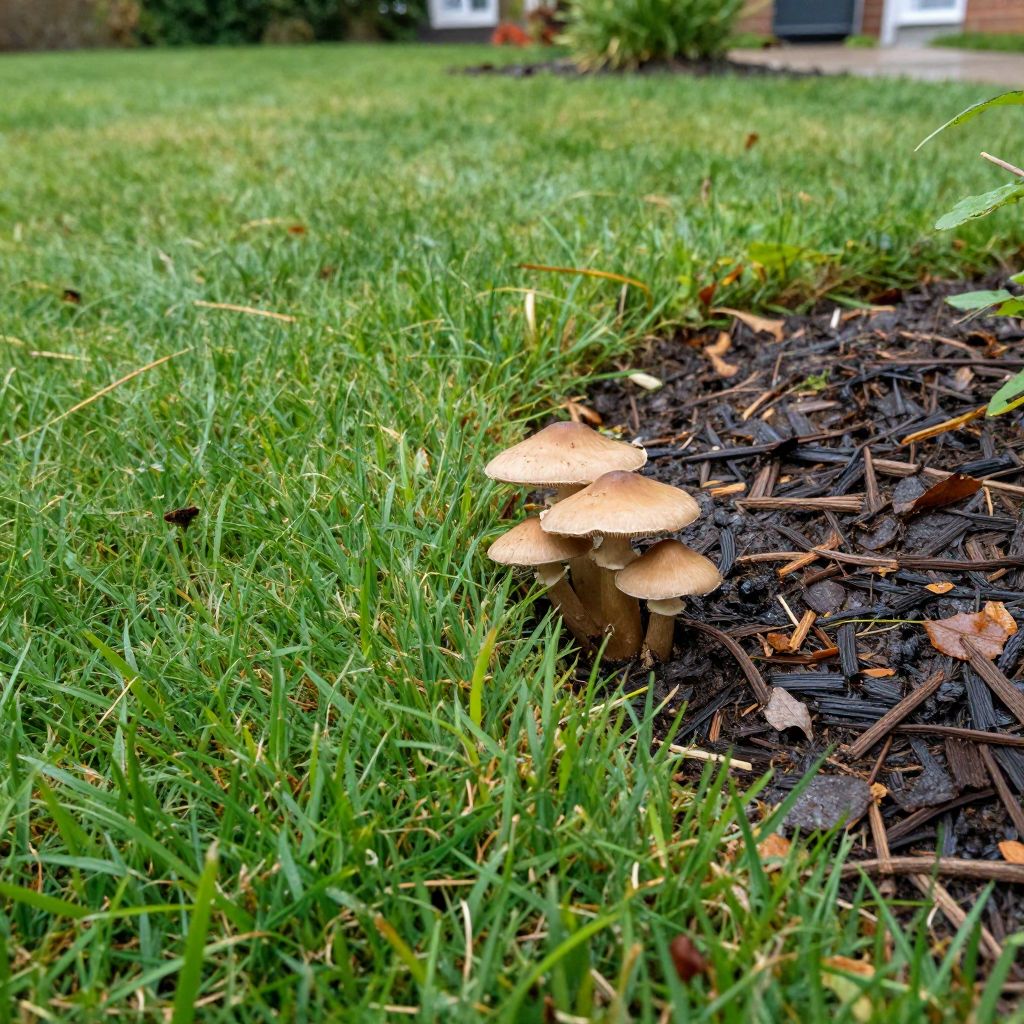
Why do mushrooms grow in my yard? In most cases, it means the soil is moist, rich in organic matter, and full of decomposing roots, mulch, or buried wood. Mushrooms are the fruiting bodies of fungi already living in the ground, so their appearance usually points to active decomposition rather than a problem with the grass itself.
That said, repeated mushrooms can signal poor drainage, overwatering, compacted soil, or hidden decaying material under the lawn. The good news is that you can usually manage them safely by improving growing conditions and removing the food sources that fungi love.
Why do mushrooms grow in my yard?
Mushrooms grow in your yard because fungi are breaking down dead organic material such as wood chips, old roots, thatch, buried stumps, or excess mulch. Warm temperatures, frequent rain, shade, and damp soil encourage mushroom fruiting. Most lawn mushrooms are harmless, but they often indicate the soil stays wetter than ideal.
What mushrooms in the yard are telling you
Mushrooms are not plants; they are the reproductive stage of fungi. The visible cap is only a small part of a much larger organism living in the soil or decaying material beneath it.
Common conditions that trigger mushrooms
- Moist soil from rain, irrigation, or poor drainage
- Shade that slows evaporation
- Organic debris such as mulch, leaves, grass clippings, or buried wood
- Compacted soil that holds water and reduces air movement
- Thatch buildup in lawns
- Decaying roots or stumps under turf or landscape beds
When mushrooms are most likely to appear
You’ll often see mushrooms after periods of rain, during humid weather, or when irrigation has been running too often. They may pop up overnight, especially in shaded areas and in mulched beds.
In many yards, mushrooms are more noticeable in spring and fall because temperatures are moderate and moisture lingers longer. In hot, dry weather, they may disappear even though the fungus remains in the soil.
Are yard mushrooms harmful?
Most mushrooms in lawns and landscape beds are not harmful to turf, shrubs, or trees. In fact, many are simply recycling organic matter. The main concern is that some wild mushrooms can be toxic if eaten by children or pets.
Never eat a mushroom unless it has been identified with certainty by a qualified expert. If you have dogs, cats, or young children, remove mushrooms promptly and supervise outdoor play in affected areas.
When to be more cautious
- If mushrooms appear in large numbers where pets or children play
- If you notice a strong foul smell, slimy caps, or rapidly spreading patches
- If mushrooms keep returning in the same spot near buried wood or a stump
- If the lawn is declining along with the mushroom growth
How to get rid of mushrooms in the yard
You can usually reduce mushrooms by changing the conditions that support them. The goal is not just to remove the visible caps, but to make the area less favorable for fungal fruiting.
- Pick or cut mushrooms at the base as soon as you see them.
- Bag and discard them if pets or children use the area.
- Reduce watering if the soil stays wet for long periods.
- Improve drainage in low spots where water collects.
- Rake away excess thatch, leaves, and heavy organic debris.
- Thin dense shade where possible to increase sunlight and air movement.
- Remove buried wood, old stumps, or rotting roots if they are the source.
Simply mowing over mushrooms is not a real fix. It may scatter spores, and the fungus underground will usually remain active.
What not to do
- Do not rely on fungicides for lawn mushrooms; they rarely solve the root cause.
- Do not overwater just because the lawn looks dry on top.
- Do not seal the area with plastic or heavy coverings for long periods.
- Do not assume mushrooms mean your lawn is diseased.
Fix the conditions that encourage mushrooms
1. Correct watering habits
Lawns and beds should be watered based on soil moisture, weather, and plant needs, not on a fixed calendar. If the top few inches of soil stay damp for days, reduce irrigation frequency and water more deeply only when needed.
For established lawns, shallow frequent watering often creates the damp surface layer that mushrooms love. Deeper, less frequent watering is usually better for roots and for overall turf health.
2. Improve drainage
If mushrooms keep returning in the same low area, the soil may be staying saturated after rain or irrigation. That can happen in clay soil, compacted soil, or places where runoff collects.
- Loosen compacted soil with aeration if appropriate for your lawn type.
- Topdress lightly with compost only when it will not worsen drainage problems.
- Redirect downspouts away from problem spots.
- Regrade persistent low areas if water pools there after storms.
3. Reduce organic fuel for fungi
Mushrooms feed on decaying material, so removing the source often helps. In lawns, this may mean dethatching if the thatch layer is thick. In beds, it may mean cutting back on heavy mulch layers and clearing out buried woody debris.
Keep mulch about 2 to 3 inches deep in most landscape beds, and pull it back slightly from stems and trunks. Very thick mulch can stay wet and become a long-term mushroom nursery.
4. Increase light and airflow
Dense shade and still air slow drying. If possible, prune trees and shrubs to improve airflow and let in more light, especially over lawn areas that stay damp.
Be careful not to over-prune. Remove only what is needed to improve conditions and maintain plant health.
How to tell whether mushrooms are caused by buried wood
If mushrooms keep appearing in a ring, patch, or line, there may be buried wood, an old stump, or decaying roots underneath. This is common after construction, tree removal, or landscape changes.
Signs buried wood may be the cause
- Mushrooms return in the same spot each year
- The area feels soft or uneven underfoot
- Grass grows poorly over a hidden object
- You recently removed a tree or shrub nearby
If you suspect buried wood, digging it out may be the only lasting solution. For large roots or stumps, it may be better to leave the fungus to finish decomposition naturally unless the area is causing a safety or landscape issue.
Should you remove mushrooms by hand?
Yes, hand removal is a practical first step, especially in family yards and pet areas. It won’t eliminate the fungus underground, but it does reduce the risk of accidental ingestion and keeps the space tidier.
Safe removal tips
- Wear gloves if you are handling unfamiliar mushrooms.
- Use a small trowel or knife to lift them at the base.
- Place them in a sealed bag if pets or children are present.
- Wash hands and tools afterward.
If you are unsure whether a mushroom is poisonous, treat it as unsafe. Identification from a photo is often unreliable, and many toxic species resemble harmless ones.
How mushrooms affect lawns, trees, and garden beds
In most cases, mushrooms are more of a sign than a threat. They do not usually attack healthy grass. Instead, they indicate that fungi are doing cleanup work in the soil.
In lawns
Occasional mushrooms in turf are common after wet weather. If the grass is otherwise healthy, the lawn may need only better drainage and less frequent watering.
In tree and shrub beds
Mushrooms in mulch beds often mean the mulch is decomposing, which is normal. If they are appearing around the base of a tree, check for overly deep mulch, compacted soil, or poor drainage.
Near vegetable gardens
Mushrooms can appear in compost-rich soil or old mulch around garden beds. They are usually harmless to vegetables, but they may indicate the bed is staying too wet or has too much undecomposed organic matter on the surface.
When mushrooms suggest a bigger problem
Most mushroom growth is harmless, but a few patterns deserve attention. If you see widespread dieback, soft or spongy roots, or mushrooms growing from the trunk or base of a tree, the issue may be more serious.
In that case, the fungus may be feeding on decaying wood or compromised plant tissue. If a valuable tree is involved, consider consulting a local arborist or extension service for an on-site assessment.
Prevention checklist for future mushroom growth
- Water only when the soil needs it.
- Fix standing water and drainage problems.
- Keep mulch at a moderate depth.
- Rake up leaves and excess thatch.
- Remove buried wood, old roots, or stumps when practical.
- Improve shade and airflow where possible.
- Remove mushrooms promptly in areas used by pets or children.
Conclusion
If you’ve been wondering why do mushrooms grow in my yard, the short answer is that your soil is likely moist and rich in decaying organic matter. Start by removing the mushrooms, then focus on watering, drainage, mulch depth, and hidden wood debris. If you want to keep reading about healthy soil and lawn care, look for guidance from your local extension service or related articles on lawn drainage and mulch management.