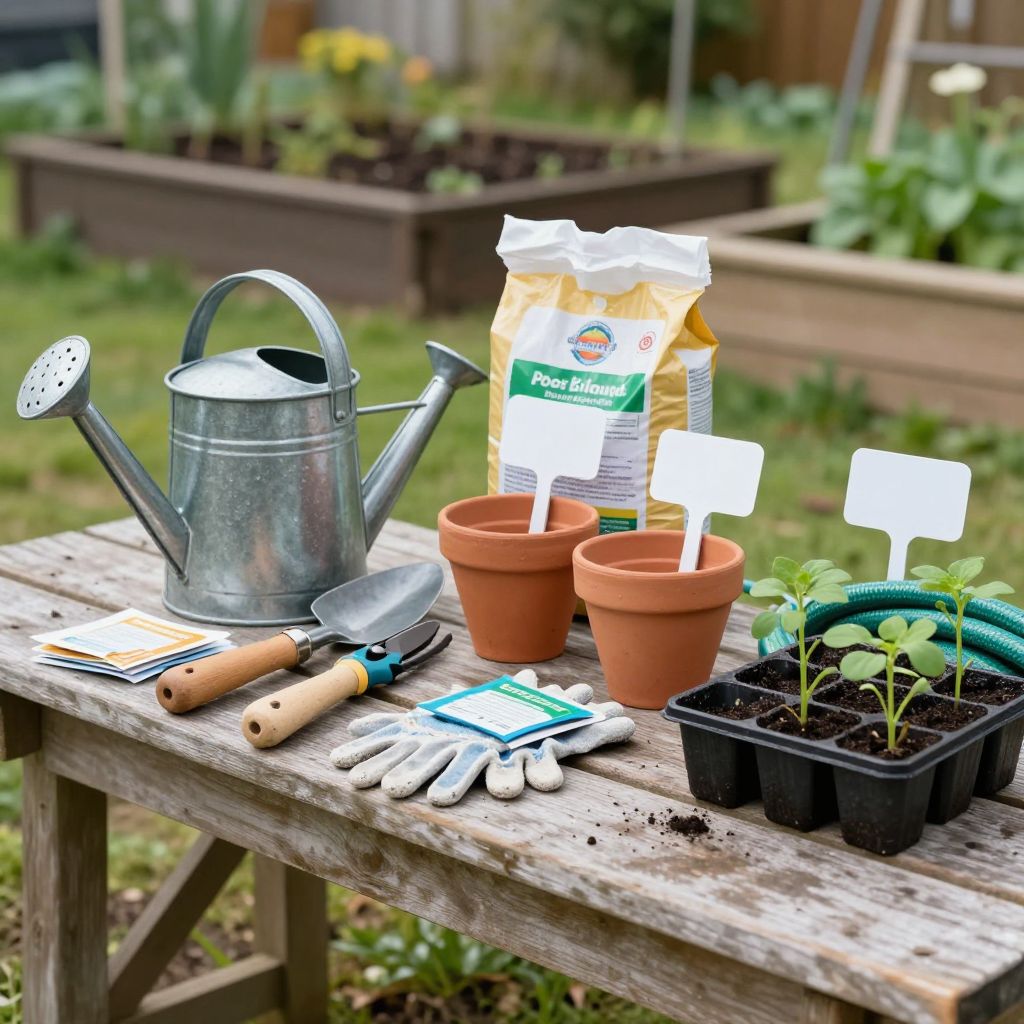
What gardening supplies should I buy Appcgarden? If you are starting a garden or upgrading an existing one, the best supplies are the ones that match your space, your plants, and your local growing conditions. You do not need to buy everything at once.
Focus first on the basics: healthy soil, reliable watering tools, a few good hand tools, and the right containers or supports for the plants you want to grow. Then add pest control, mulch, and plant-specific items as your garden develops.
What gardening supplies should I buy Appcgarden?
The best gardening supplies to buy are the essentials that help you plant, water, support, and maintain healthy growth: quality soil or compost, a watering can or hose, hand tools, gloves, containers or beds if needed, mulch, and simple pest-control supplies. Start with the basics, then buy only what your garden actually needs.
Start with the essentials: the core supplies every gardener needs
If you are unsure where to begin, build your shopping list around the jobs every garden requires. That keeps you from overspending on gadgets you may never use.
1. Soil and compost
Good soil is the foundation of almost every successful garden. For in-ground beds, you may need compost, topsoil, or soil amendments depending on what you already have.
- Compost: Improves soil structure, moisture retention, and nutrient content.
- Potting mix: Use for containers, raised beds only if the label says it is suitable, and indoor plants.
- Mulch: Helps reduce weeds and slow moisture loss in outdoor beds.
Do not use garden soil in pots unless it is specifically formulated for containers. It often drains poorly and can compact too tightly.
2. Watering tools
Watering tools should fit the size of your garden. A small balcony garden may only need a watering can, while a larger yard may benefit from a hose with a gentle spray nozzle.
- Watering can: Best for containers, seedlings, and small beds.
- Garden hose with adjustable nozzle: Useful for larger outdoor spaces.
- Drip irrigation or soaker hose: Efficient for beds, vegetables, and water-conscious gardens.
Choose a nozzle that can deliver a soft shower for seedlings and a stronger stream for established plants. Harsh water pressure can damage young roots and wash away soil.
3. Hand tools
A few well-made hand tools will do most of the day-to-day work in a home garden.
- Trowel: For planting, transplanting, and digging small holes.
- Hand fork or cultivator: Useful for loosening soil and mixing in compost.
- Pruners: Essential for trimming stems, deadheading, and harvesting many crops.
- Weeder: Helpful if your beds get persistent weeds.
Buy tools with comfortable handles and sturdy metal parts. Cheap tools may bend or break quickly, especially in rocky or compacted soil.
4. Gloves and protective gear
Gloves protect your hands from thorns, blisters, dirt, and rough stems. If you work with roses, brambles, or prickly shrubs, choose tougher gloves with reinforced palms.
You may also want kneeling pads, long sleeves, or eye protection for pruning and debris-heavy jobs. These are small purchases that make regular garden work easier and safer.
What you need depends on the type of garden you want
Your shopping list changes depending on whether you are planting vegetables, flowers, shrubs, houseplants, or containers. Buy for the garden you are actually growing, not the one in a catalog.
For vegetable gardens
Vegetable gardens usually need more support and soil care than ornamental beds because crops are harvested repeatedly and often grown intensively.
- Compost or organic matter to enrich the bed
- Mulch to reduce weeds and moisture loss
- Plant supports such as stakes, cages, or trellises
- Row cover or netting if pests are a problem in your area
- Seed trays or small pots for starting seedlings indoors, if needed
If you are growing tomatoes, peas, beans, cucumbers, or tall flowers, buy supports before planting. It is much easier to install a trellis early than to add one after plants are sprawling.
For flower beds and ornamental borders
Flower beds often benefit from soil improvement, edging tools, and pruning supplies. If you are planting perennials or shrubs, think about long-term maintenance as well as planting day.
- Compost or soil conditioner
- Mulch for weed suppression and moisture retention
- Pruners or loppers for seasonal trimming
- Edging tool if you want clean bed lines
For flowering shrubs and perennials, check mature size before buying. Many garden problems begin when plants are crowded too closely or planted where they outgrow the space.
For container gardens
Containers need a few specific supplies because pots dry out faster and drainage matters more than in-ground planting.
- Containers with drainage holes
- High-quality potting mix
- Saucer or tray if you are gardening on a patio or indoors
- Watering can or drip system for regular moisture
- Slow-release fertilizer or a feeding plan suitable for the plant
Choose pots large enough for root growth. A container that is too small dries out quickly and can stunt plants, even if everything else is done well.
For indoor plants
Indoor gardening needs fewer tools, but the right supplies matter because houseplants depend entirely on you for light, water, and drainage.
- Potting mix made for indoor plants or the specific plant type
- Pots with drainage holes
- Watering can with a narrow spout
- Humidity tray or pebble tray if your home is very dry
- Pruners or scissors for trimming dead leaves and stems
If natural light is limited, you may also need a grow light. That is often more useful than buying extra fertilizer for a plant that simply is not getting enough light.
How to choose quality supplies without overspending
Good gardening supplies do not have to be expensive, but low-quality tools and poor soil products often cost more in the long run. Buy the best version of the items you will use often.
- Prioritize the basics first. Soil, water, and a few reliable tools matter more than decorative extras.
- Match supplies to your climate. Hot, dry regions may need irrigation and mulch sooner; wet climates may need drainage-focused products.
- Check labels carefully. Potting mix, compost, fertilizer, and pest products are not interchangeable.
- Buy durable tools. Stainless steel or coated metal usually lasts longer than flimsy plastic parts.
- Choose the right size. Oversized pots, hoses, or bags of soil can be awkward; undersized ones create maintenance problems.
If you are gardening on a budget, buy one season at a time. You can always add trellises, specialty fertilizers, or extra containers later once you see what your garden actually needs.
Helpful supplies for planting and maintenance
Once you have the basics, a few extra items can make gardening easier and improve results.
Labels and markers
Plant labels are especially useful for seedlings, herbs, and mixed containers. They help you remember what you planted and where, which matters when young plants look similar.
Soil test kit
A soil test can save you from guessing about pH or nutrient issues. If your plants struggle despite good watering and sunlight, testing the soil is a practical next step.
Fertilizer
Fertilizer is useful, but it should not replace good soil. Choose a product suited to the plants you are growing, and follow the label rather than applying extra “just in case.”
Too much fertilizer can burn roots, push weak growth, or reduce flowering. When in doubt, start lightly and observe the plant’s response.
Pest and disease supplies
Keep a few simple pest-management items on hand so you can act early if problems appear.
- Insecticidal soap or horticultural oil, if appropriate for the pest and plant
- Fine mesh netting or row cover for insect protection
- Sticky traps for monitoring indoor pests
- Clean pruners for removing diseased growth
Always identify the pest or disease before treating it. The wrong product can waste money and sometimes harm beneficial insects or sensitive plants.
Common mistakes to avoid when buying gardening supplies
Many gardening frustrations come from buying the wrong products, not from gardening itself. A few simple choices can prevent a lot of trouble.
- Buying too much at once: Start small and expand as you learn.
- Using the wrong soil: Potting mix is for containers; garden soil is for beds.
- Ignoring drainage: Standing water leads to root problems in pots and poorly drained beds.
- Choosing plants before checking light: Sun-loving plants need enough direct light to perform well.
- Skipping support structures: Tall or vining plants often need stakes, cages, or trellises early.
- Overbuying fertilizer: Healthy soil and correct watering matter more than frequent feeding.
Seasonal considerations when shopping for supplies
What you buy can also depend on the season. In spring, gardeners often need soil, seed-starting supplies, and transplant tools. In summer, irrigation and pest-control items become more important. In fall, mulch, compost, and pruning tools may be the priority.
If you garden in a region with a short growing season, start with supplies that help plants get established quickly, such as row covers, seed trays, or cold-frame materials. In warmer climates, focus more on watering efficiency, shade protection, and mulch.
Simple starter shopping list
If you want a practical first purchase list, this is a good place to begin for most home gardens:
- Quality potting mix or compost, depending on your setup
- Watering can or hose with nozzle
- Trowel
- Hand fork
- Pruners
- Gloves
- Mulch for outdoor beds
- Containers with drainage holes, if gardening in pots
- Plant supports if you are growing tall or climbing crops
From there, add only what your plants and space require. A focused, well-chosen kit is usually more useful than a crowded shed full of unused supplies.
Final advice: buy for your garden, not for the aisle
The best answer to what gardening supplies should I buy Appcgarden is simple: start with soil, water, a few dependable tools, and the right containers or supports for your plants. Then add mulch, fertilizer, and pest-control items only as needed.
If you are still planning your garden, make a short list based on your plant choices and growing space, then shop with that list in hand. For more practical help, you can also read about choosing the right potting mix and basic garden tools for beginners.
Leave a Reply