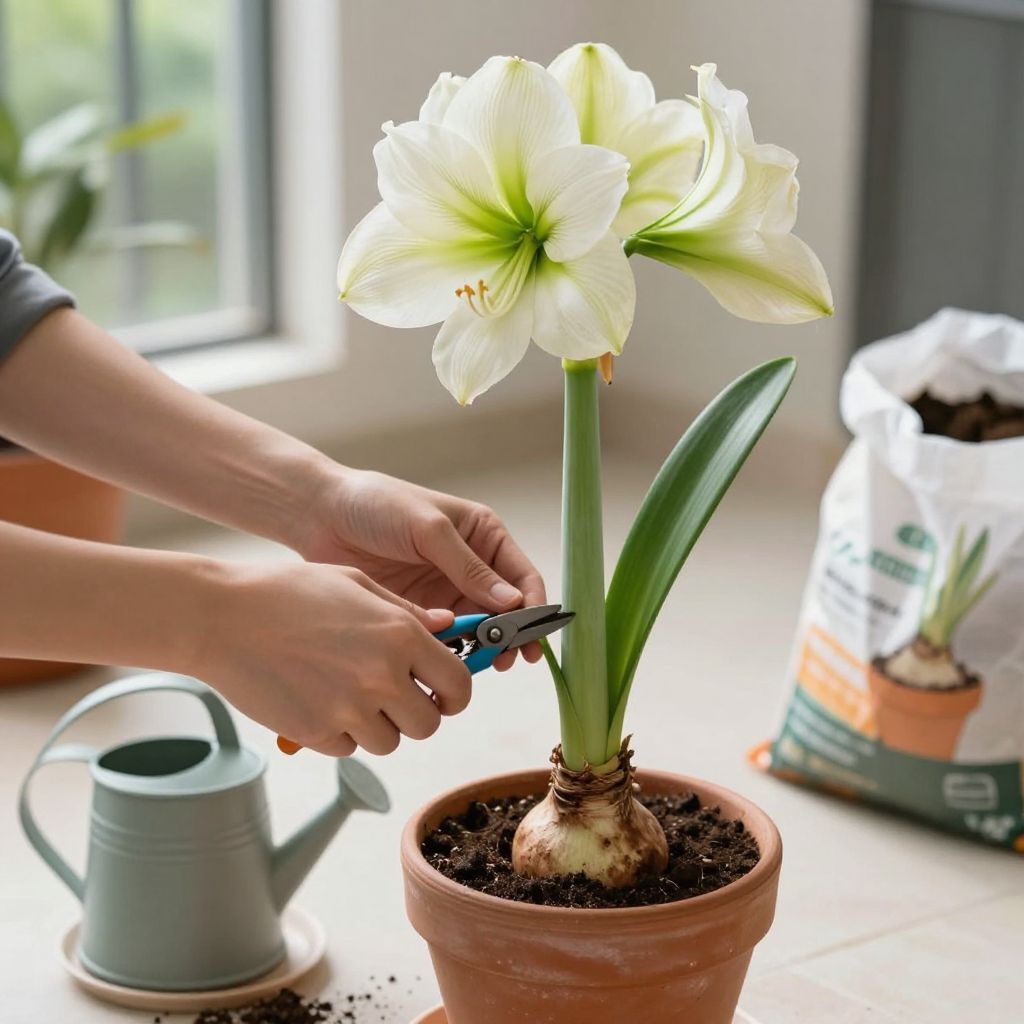
What should you do with amaryllis after it blooms? The short answer is: don’t throw it away. With the right post-bloom care, an amaryllis bulb can store energy, grow new leaves, and often bloom again in a future season.
Whether your amaryllis is growing indoors in a pot or planted outside in a mild climate, the key is to let the leaves rebuild the bulb after flowering. What you do next affects whether you get another round of blooms or just a tired, shrinking bulb.
What to do with amaryllis after it blooms?
After amaryllis blooms fade, remove the spent flowers but keep the flower stalk and leaves growing. Place the plant in bright light, water when the top inch of soil dries, and feed lightly while the leaves are active. The bulb needs several months of leaf growth to recharge for next season’s flowers.
Step-by-step care after flowering
1. Remove the faded flowers
As each bloom fades, pinch or snip off the old flower to keep the plant tidy. This prevents the plant from putting energy into seed formation.
If the whole flower cluster has finished, you can cut the flower stalk down once it starts to soften or yellow. Leave the green leaves in place.
2. Keep the leaves growing
The leaves are the bulb’s energy factory. They collect sunlight and replenish the bulb, which is what makes future blooming possible.
Do not cut the leaves off right after flowering. That is one of the most common mistakes and usually leads to weak growth and no bloom the following season.
3. Give bright light
Move the plant to the brightest spot you have, such as a sunny windowsill with several hours of indirect to direct light. Indoors, a south- or west-facing window is often best if the plant is not overheating.
If the leaves stretch, lean, or become pale, the plant is not getting enough light. Rotate the pot every week or so to encourage even growth.
4. Water carefully
Water when the top layer of potting mix feels dry, then let excess water drain away. Amaryllis dislikes soggy soil, especially after blooming when the bulb is recovering rather than actively flowering.
- Use a pot with drainage holes.
- Empty saucers after watering so the bulb does not sit in water.
- Water less often in cool, low-light conditions.
If the bulb is planted outdoors in the ground, water only if the weather is dry and the soil is not holding moisture well. In many climates, established bulbs need less attention outdoors than they do in pots.
5. Feed during the leaf-growth period
Once flowering is over and leaves are actively growing, feed the plant lightly with a balanced houseplant fertilizer or bulb fertilizer according to the label directions. The goal is steady recovery, not forcing rapid growth.
Stop feeding when the leaves begin to yellow naturally later in the season or when you start preparing the bulb for dormancy.
Should you cut back the amaryllis stalk?
Yes, but timing matters. After the flowers fade, you can remove the spent blooms first and leave the stalk in place until it turns yellow or soft. Then cut it back close to the bulb. Keeping the stalk green for a while allows the plant to recover a little more energy.
If the stalk is already browning and collapsing, it is fine to cut it back sooner. Use clean scissors or pruners to avoid tearing the tissue.
What happens next depends on whether your amaryllis is indoors or outdoors
Indoor amaryllis care after blooming
Most home gardeners grow amaryllis in pots indoors, especially during winter. After flowering, your main job is to keep the bulb in bright light and let the leaves grow for several months.
Continue normal care through spring and summer if the plant is healthy. If the pot becomes crowded or the bulb pushes up out of the soil, repotting can wait until the dormant period unless the mix is badly broken down or the pot is unstable.
Outdoor amaryllis care after blooming
In warm climates where amaryllis can grow outdoors year-round, the plant may naturalize in beds or borders. After blooming, remove spent flowers and keep the foliage healthy so the bulb can recharge.
Choose a site with well-drained soil and partial sun to bright light. Heavy shade can reduce flowering, while dense, wet soil can lead to bulb rot.
How to help amaryllis bloom again
Amaryllis reblooming depends on strong leaf growth, then a rest period. The bulb usually needs a cycle of active growth followed by dormancy to set flower buds again.
Let the leaves do their job
Do not rush to put the plant away after flowering. The leaves should stay on the plant for as long as they remain green and healthy, often through spring and summer.
The longer the leaves can photosynthesize in good light, the better the chance of a strong bloom later.
Prepare for dormancy when the leaves fade
When the leaves begin to yellow naturally, reduce watering gradually. Once the foliage dies back, the bulb can rest.
For potted bulbs, many gardeners move the pot to a cool, dry place for a rest period. The exact timing varies with your climate and the plant’s growth cycle, so watch the foliage rather than relying on a fixed calendar date.
Restart growth at the right time
After the rest period, resume watering and move the bulb back into warmth and bright light. New growth should emerge, followed by a flower stalk if the bulb has stored enough energy.
If only leaves appear, the bulb may need more time, better light, or stronger feeding during the previous growth period.
Repotting and dividing amaryllis bulbs
When to repot
Repot amaryllis when the bulb becomes crowded, the potting mix breaks down, or the bulb has clearly outgrown its container. The best time is usually during dormancy or just before active growth resumes.
Choose a pot only slightly larger than the bulb, with drainage holes. Amaryllis often blooms best when slightly snug in its container.
How to divide offsets
Healthy mature bulbs may produce smaller side bulbs, often called offsets or bulblets. These can be separated when they are large enough to handle and have their own roots.
- Lift the bulb carefully from the pot or bed.
- Gently separate the offsets from the mother bulb.
- Replant them in a well-drained potting mix or garden bed suitable for bulbs.
- Keep them lightly watered and in bright light as they establish.
Be patient: offsets may take a few years before they bloom.
Common problems after amaryllis blooms
Yellowing leaves too soon
If leaves yellow quickly after flowering, the plant may be stressed by low light, overwatering, poor drainage, or a depleted bulb. Check the roots and potting mix, and make sure the bulb is not sitting in water.
Soft or rotting bulb
A soft bulb usually points to rot, often from excess moisture. Remove damaged tissue if minor, but if the bulb is badly mushy or smells bad, it may not recover.
Prevention is much easier than treatment: use a free-draining mix and a pot with drainage holes.
No flowers the next season
This is often caused by cutting off the leaves too early, insufficient light, or not allowing a proper rest period. A bulb that only produces leaves is usually still alive; it just needs better recovery conditions.
Leggy growth or weak stems
Weak, stretched growth usually means the plant needs more light. Move it closer to a brighter window or outdoors to a sheltered bright spot if temperatures are suitable.
Pests and diseases to watch for
Amaryllis is not especially fussy, but it can still attract common houseplant pests. Inspect the leaves, leaf bases, and soil surface regularly.
- Aphids can cluster on tender new growth.
- Spider mites may appear in dry indoor air and cause stippling or fine webbing.
- Mealybugs hide in leaf joints and around the bulb neck.
- Bulb rot develops when soil stays wet too long.
If you spot pests early, isolate the plant and remove them by hand or with a gentle insecticidal soap if appropriate for your setup. Always follow the product label and avoid spraying stressed plants in hot sun.
Simple post-bloom amaryllis checklist
- Remove faded flowers promptly.
- Keep the green leaves intact.
- Place the plant in bright light.
- Water only when the top of the soil dries slightly.
- Feed lightly while leaves are growing.
- Let foliage yellow naturally before reducing water.
- Rest the bulb, then restart growth for the next bloom cycle.
What not to do
A few common mistakes can undo months of care. Avoid these if you want your amaryllis to bloom again:
- Do not cut off the leaves while they are green.
- Do not keep the soil soggy.
- Do not place the plant in a dark room after flowering.
- Do not overfertilize in an attempt to force blooms.
- Do not repot or divide unnecessarily while the plant is actively recovering.
Conclusion
What to do with amaryllis after it blooms is simple: keep the leaves growing, give the bulb bright light and careful watering, then let it rest naturally when the foliage fades. If you follow that cycle, you give the bulb the best chance to flower again.
For more practical bulb care and seasonal plant guidance, you may also want to read related bulb planting and care tips and indoor flowering houseplant maintenance advice.
Leave a Reply