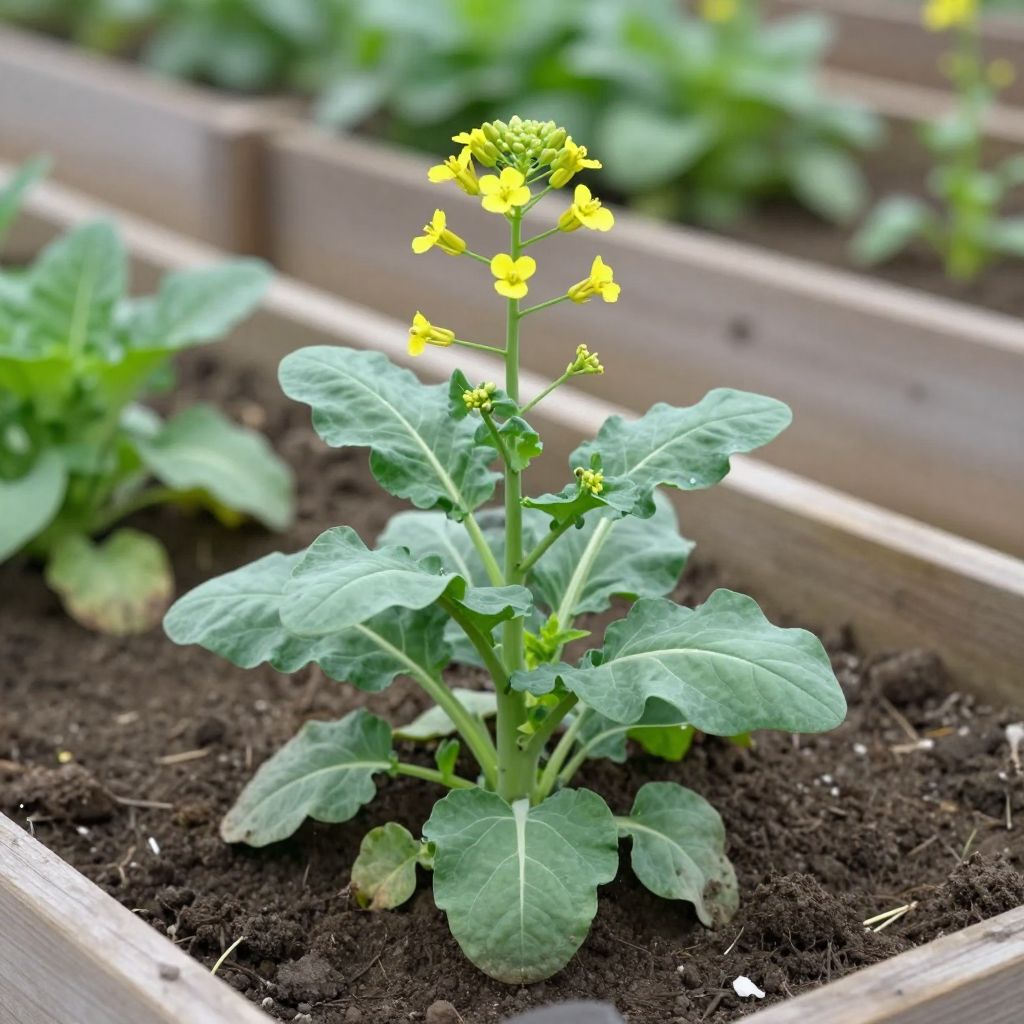
What does a mustard seed grow into? In the garden, it grows into a mustard plant: a fast-growing leafy annual in the genus Brassica, often grown for its edible leaves, stems, flowers, or seed. Depending on the variety, you may be looking at Brassica juncea, Brassica nigra, or Brassica hirta.
That means the answer is not one single plant form. Mustard can be harvested young as tender greens, grown larger for a bushier leafy plant, or left to flower and set seed, which is how mustard seed is produced for future planting or culinary use.
What does a mustard seed grow into?
A mustard seed grows into a mustard plant, usually an upright annual with broad green leaves, small yellow flowers, and slender seed pods. If left to mature, the plant can reach about 1 to 6 feet tall depending on the species and growing conditions. Young plants are often harvested for greens before flowering.
How to identify a mustard plant at each stage
Seedling stage
Mustard seedlings emerge quickly in warm, moist soil and usually show two smooth seed leaves first. The true leaves that follow are often slightly lobed, crinkled, or toothed, and they may have a mild peppery scent when rubbed.
Leafy growth stage
As the plant develops, it forms a rosette or upright clump of leaves. Many mustard varieties have tender, broad leaves, while others produce more frilled or deeply cut foliage. The leaves are edible when young and become stronger in flavor as they mature.
Flowering and seed stage
When mustard bolts, it sends up flower stalks with small yellow blossoms. After pollination, thin seed pods form along the stems. These pods dry and split as the seeds mature, so timing matters if you want to collect seed.
Growing conditions mustard plants prefer
Mustard is one of the easier cool-season crops to grow, but it performs best when you match it to the right conditions. Rich soil, steady moisture, and moderate temperatures help produce tender leaves and reduce premature bolting.
- Sunlight: Full sun is ideal in cool weather, though partial shade can help in warmer climates.
- Soil: Loose, fertile, well-drained soil works best.
- pH: Slightly acidic to neutral soil is generally suitable.
- Moisture: Even moisture supports fast growth and milder leaves.
- Temperature: Mustard prefers cool to mild conditions and may bolt in heat.
If your garden is hot or dry, give mustard morning sun and afternoon shade where possible. In cooler climates, full sun usually produces the strongest growth.
How to plant mustard seed
You can sow mustard seed directly in the garden or in containers, and direct sowing is usually simplest. Because the plants grow quickly, they do not need a long indoor start unless you are extending the season.
- Prepare a bed or container with loose soil and a little compost.
- Sow seeds shallowly, about 1/4 to 1/2 inch deep.
- Space seeds or thin seedlings so plants have room to develop leafy growth.
- Water gently to keep the seedbed evenly moist until germination.
- Thin crowded seedlings early to avoid weak, leggy plants.
Tip: For baby greens, you can sow more densely and harvest young. For larger plants, give them more space so air can move through the foliage.
Soil preparation and compost
Mustard grows best in soil that drains well but still holds some moisture. Before planting, mix in compost to improve texture, fertility, and water retention. This is especially helpful in sandy soil or in beds that dry out quickly.
Avoid heavy, compacted soil if you can. If your soil stays soggy after watering or rain, raise the bed slightly or grow mustard in a container with drainage holes.
Watering and maintenance
Mustard needs consistent moisture to stay tender and productive. Irregular watering can make leaves tough, encourage bitterness, or push the plant to bolt early.
- Water when the top inch of soil begins to dry.
- Keep moisture even, especially during germination and early leaf growth.
- Mulch lightly around plants to slow evaporation and reduce soil splash.
- Water at the base instead of overhead when possible to help prevent leaf disease.
In containers, mustard may dry out faster than in garden beds, so check pots more often during warm or windy weather.
Harvesting mustard leaves, flowers, and seed
Harvesting leaves
You can begin harvesting mustard leaves when they are large enough to eat, often as baby greens or full-sized leaves depending on the variety. Pick outer leaves first and leave the center growing point intact so the plant can keep producing.
Harvesting seed
If your goal is mustard seed, let the plant flower and form pods. Wait until the pods dry on the plant and begin to turn tan or brown. Harvest before the pods shatter and spill seed, then finish drying them in a paper bag or on a tray indoors.
Once dry, rub the pods gently to release the seeds and store them in a cool, dry place. Make sure the seeds are fully dry before storage to reduce mold risk.
Common problems when growing mustard
Bolting too early
Heat, drought, and crowded planting can cause mustard to bolt. Once flowering starts, leaves often become sharper and less tender. To slow bolting, grow mustard in cool weather, keep the soil evenly moist, and harvest regularly.
Pests
Mustard can attract flea beetles, aphids, cabbage worms, and other brassica pests. Small holes in leaves are often the first sign.
- Flea beetles: Tiny shot holes in leaves; use row cover on young plants if needed.
- Aphids: Clusters on new growth; wash off with a strong stream of water.
- Cabbage worms: Chewed leaves and green larvae; inspect undersides of leaves regularly.
Diseases
Leaf spots, damping-off in seedlings, and fungal problems can appear when plants stay too wet or crowded. Good spacing, clean tools, and watering at soil level help reduce risk. Remove badly affected leaves and avoid replanting mustard in the same spot repeatedly if disease has been a problem.
Growing mustard in pots
Mustard is well suited to containers, which makes it a practical choice for patios, balconies, and small gardens. Use a pot with drainage holes and a quality potting mix blended with compost.
Choose a container deep enough for root growth and wide enough for several plants if you want repeated leaf harvests. Container-grown mustard may need more frequent watering and feeding than bed-grown plants because nutrients wash out more quickly.
How to keep mustard productive
If you want a steady supply of greens, sow small batches every couple of weeks during suitable weather rather than planting all at once. This staggered approach gives you a longer harvest window and reduces the risk of losing everything to heat or pests at the same time.
- Harvest young leaves often to encourage new growth.
- Remove yellowing or damaged leaves to improve airflow.
- Use shade cloth or partial shade in hot spells if bolting is a problem.
- Rotate brassicas to a different bed in future seasons if disease pressure is high.
What to avoid when growing mustard
Several simple mistakes can make mustard disappointing even though it is a fast crop. Avoid sowing too deeply, letting the soil dry out completely, and planting in hot weather without any shade protection.
Also avoid overfeeding with high-nitrogen fertilizer if your soil is already rich. Too much fertility can produce lush but weak growth and may increase pest pressure. Compost and balanced soil preparation are usually enough for home gardens.
Conclusion
So, what does a mustard seed grow into? It grows into a fast-growing mustard plant that can be harvested as greens, allowed to flower, or grown on for seed. If you want to try it yourself, start with a small sowing in cool weather, keep the soil evenly moist, and harvest young for the best flavor.
If you enjoy identifying garden plants from seed to harvest, you may also like reading about what a pumpkin plant looks like and what a rice plant looks like.