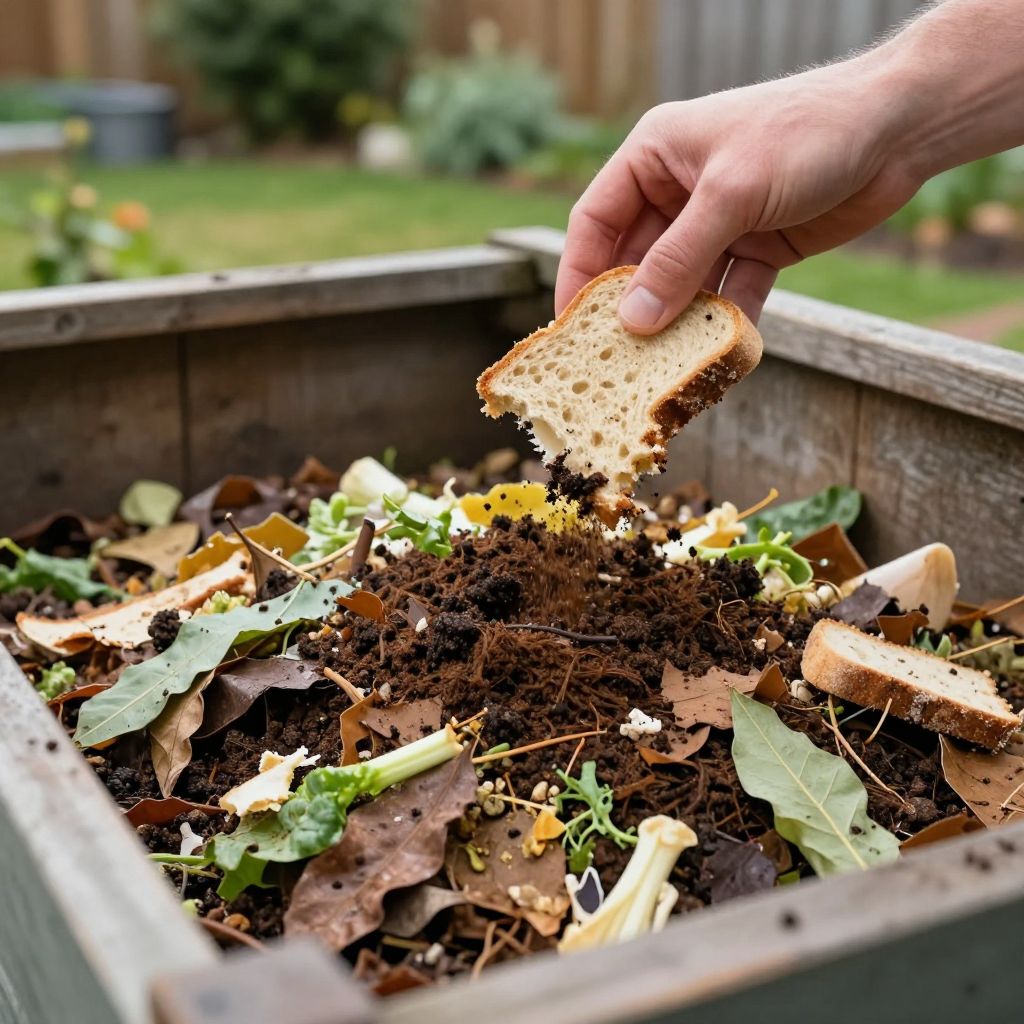
Can you compost bread? Yes, you can compost plain bread in a home compost pile or bin, as long as you add it in moderation and manage moisture, airflow, and pests. Bread breaks down quickly because it is soft and starchy, but it can also attract rodents, flies, and mold if it is left exposed or added in large amounts.
The best approach is to treat bread like a small “green” compost ingredient, burying it well inside the pile and balancing it with dry “brown” materials such as leaves, shredded paper, or straw. Done correctly, it can become useful compost instead of a nuisance.
Can you compost bread?
Yes, plain bread is compostable, but it should be added sparingly and buried in the center of an active compost pile or contained bin. Bread is high in carbohydrates and moisture, so it decomposes fast, but it can also create odor and pest problems if it sits on top of the pile or is added in large quantities.
Why bread can be tricky in compost
Bread seems harmless, but it behaves differently from many kitchen scraps. Its soft texture and starch content make it easy for fungi and bacteria to break down, which is good for composting. The downside is that the same qualities that speed decomposition can also make bread attractive to pests.
Common composting concerns with bread
- Pests: Rats, mice, raccoons, ants, and flies may be drawn to bread scraps.
- Odor: Too much bread can become sour or moldy if airflow is poor.
- Clumping: Bread can mat together and reduce oxygen in the pile.
- Imbalance: Bread adds nitrogen and moisture, so it needs plenty of dry carbon-rich material nearby.
What kinds of bread can go in compost?
Plain bread is the safest choice for composting. Small amounts of stale slices, crusts, rolls, bagels, and torn pieces all break down well when mixed into an active pile. The key is to keep the portions modest and the pile well managed.
Usually okay in small amounts
- Plain sandwich bread
- Bread crusts and heels
- Bagels and rolls
- Stale bread pieces
- Croutons without heavy seasoning
Best to avoid or limit
- Bread with large amounts of oil, butter, or cheese
- Heavily salted or heavily seasoned bread
- Bread with meat-based toppings or fillings
- Moldy bread in large quantities
- Packaged bread with lots of sugary coatings or glazes
Moldy bread is not automatically a problem for compost, because mold is part of decomposition. The issue is not the mold itself; it is the pest attraction and the chance that a large amount of wet, dense food will upset the pile.
How to compost bread the right way
To compost bread successfully, add it in small amounts, bury it deeply, and keep the pile balanced with dry materials. A healthy compost system needs oxygen, moisture, and a mix of carbon-rich browns and nitrogen-rich greens.
Step-by-step method
- Break bread into small pieces so it decomposes faster.
- Moisten very dry bread lightly if needed, but do not soak it.
- Place the bread in the middle of the compost pile or bin, not on top.
- Cover it with at least 4 to 6 inches of browns such as dry leaves, shredded cardboard, or straw.
- Mix or turn the pile if your system allows it, so the bread is not concentrated in one spot.
- Watch for odors, flies, or animal activity and adjust if needed.
If you use a small countertop caddy or kitchen pail, do not let bread sit there for long. Transfer it to the compost system promptly, especially in warm weather when pests and odors appear quickly.
Best compost systems for bread scraps
Not every compost setup handles bread equally well. Open piles can work, but enclosed bins or hot compost systems are usually better because they reduce pest access and speed decomposition.
Hot composting
Hot composting is the best option if you regularly add food scraps like bread. When the pile is large enough and properly balanced, heat helps break down bread quickly and discourages pests. Aim for a mix of greens and browns, with enough volume to retain heat.
Cold composting
Cold piles can still handle bread, but they are more vulnerable to pests and slower to decompose. If you use a cold pile, bury bread deeply and avoid adding too much at once.
Enclosed bins and tumblers
These are often the safest choices for bread because they limit access for rodents and raccoons. Even so, you still need to balance moisture and browns so the bread does not turn into a soggy lump.
How much bread can you add?
Use restraint. Bread should be a minor part of your compost, not a major ingredient. A few slices or crusts at a time is usually fine for a home compost system, especially if you are also adding plenty of leaves, garden trimmings, and shredded paper.
A good rule is to treat bread like a small kitchen scrap, not a bulk material. If you have a lot of stale bread, add it in layers over several days rather than dumping it all in one place.
Common problems and how to fix them
The compost smells sour or rotten
This usually means there is too much wet food material, not enough airflow, or too few browns. Add dry leaves, shredded cardboard, or straw, then turn the pile if possible.
Rats or other animals are visiting
Stop adding bread for a while and bury existing scraps deeper. Use a secure bin with a lid or switch to a more enclosed system. Avoid leaving kitchen scraps exposed near the compost area.
Flies are gathering around the pile
Flies are often a sign that bread is exposed near the surface. Cover food scraps immediately with browns and keep the top layer dry enough to discourage egg-laying.
The pile is too wet and compacted
Bread can contribute to a dense, sticky texture if too much is added. Mix in coarse brown materials such as dry stems, shredded cardboard, or woodier plant debris to restore structure and airflow.
What not to do with bread in compost
- Do not leave bread sitting on top of the pile.
- Do not add large amounts all at once.
- Do not rely on bread as a major nitrogen source.
- Do not compost bread in an unsecured pile if pests are already a problem.
- Do not add bread to a pile that is already too wet and smelly without correcting the balance first.
Can bread go into a worm bin?
In small amounts, plain bread can sometimes go into a worm bin, but it is not an ideal worm food. Worm bins are more sensitive than outdoor compost piles, and bread can compact, sour, or attract pests if overused. If you do add it, use tiny amounts and bury it under bedding.
For worm bins, it is usually better to focus on softer fruit and vegetable scraps, coffee grounds, and bedding materials. If bread starts to mold heavily or smell off, remove it and rebalance the bin.
Does bread make good compost?
Bread does not create special compost on its own, but it can become part of a healthy finished mix when handled properly. Once fully broken down, it contributes organic matter that helps improve soil structure, moisture retention, and microbial activity.
Finished compost should look dark, crumbly, and earthy, with no recognizable bread pieces left. If you can still identify the bread, the pile likely needs more time, moisture balance, or turning.
Using finished compost in the garden
After bread has fully decomposed, the compost can be used just like any other finished compost. Work it into vegetable beds, mix it into planting holes, top-dress shrubs, or spread a thin layer around ornamentals.
Use compost as a soil amendment, not a replacement for soil. A 1- to 2-inch layer over beds is often enough for top-dressing, while container mixes need a lighter hand so drainage stays strong.
Quick checklist for composting bread safely
- Use plain bread in small amounts.
- Break it into pieces before adding it.
- Bury it in the middle of the pile.
- Cover it with dry browns.
- Keep the compost bin secure from pests.
- Turn or mix the pile when possible.
- Watch for odors, excess moisture, or animal activity.
Conclusion
So, can you compost bread? Yes, and it can break down well when you add it carefully and keep the pile balanced. The smartest approach is to compost small amounts, bury them deeply, and maintain enough dry brown material to keep the system airy and pest-resistant.
If you want to improve your composting setup further, you may also find it helpful to read about where to buy compost and whether eggshells are good for plants.