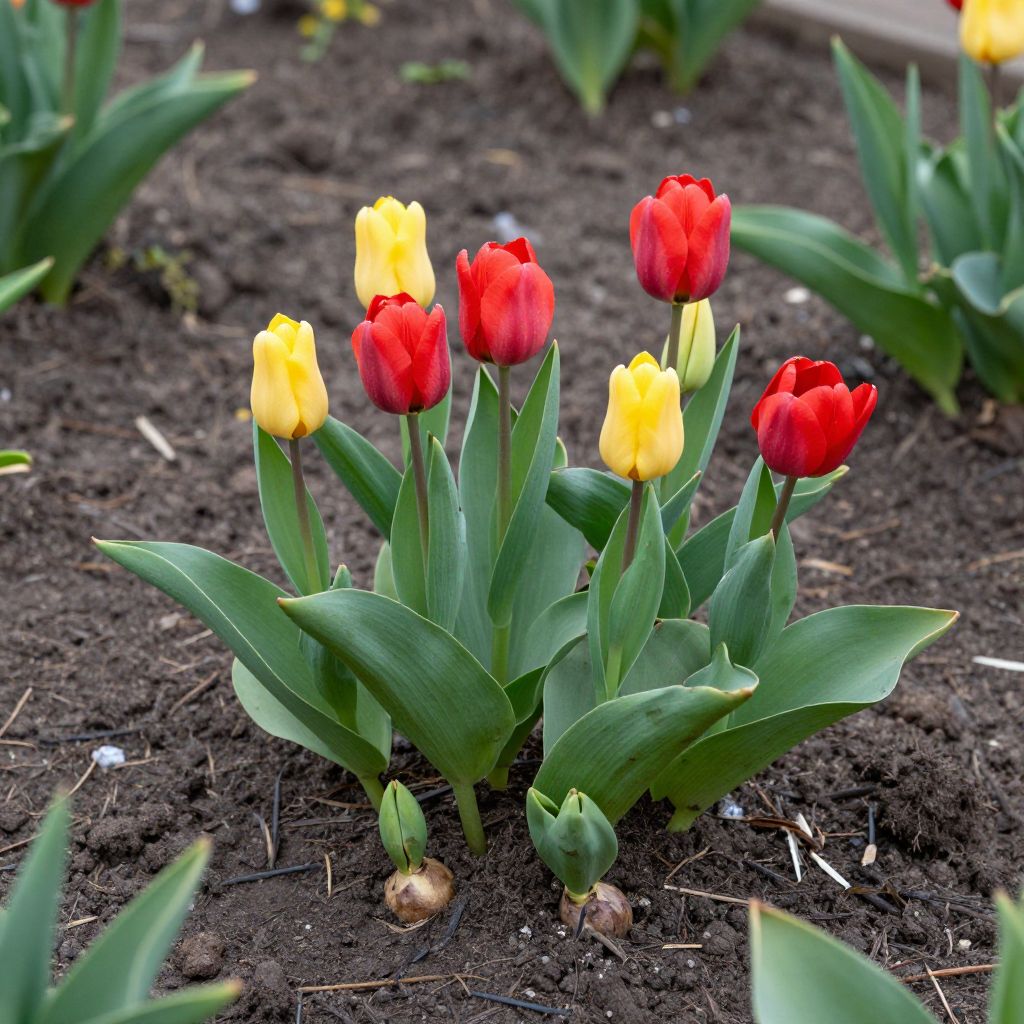
Do tulips multiply? Yes, but not always in the way gardeners expect. Most tulips can produce offsets, or small daughter bulbs, yet many common garden tulips bloom best for a year or two before gradually thinning out unless conditions are ideal.
If you want more tulips over time, the key is choosing the right type, planting them correctly, and giving them the after-bloom care they need to rebuild the bulb. With the right conditions, you can encourage natural multiplication and better repeat flowering.
Do tulips multiply?
Tulips can multiply by forming small bulbs, called offsets, around the parent bulb. Species tulips and some perennializing varieties are more likely to naturalize well, while many large hybrid tulips decline after a few seasons. Good drainage, enough sunlight, and proper after-bloom care improve your chances.
How tulips multiply in the garden
Tulips reproduce vegetatively, not by seed in most home gardens. The parent bulb stores energy, blooms, then may produce one or more offsets below or beside it.
Offsets are the main way tulips spread
Offsets are miniature bulbs attached to the original bulb’s basal plate. Over time, they enlarge and can become flowering bulbs of their own.
- Small offsets usually need a few seasons to reach blooming size.
- Healthy bulbs are more likely to divide than stressed ones.
- Dry, crowded, or poorly drained soil can reduce multiplication.
Seed is possible, but slow
Tulips can set seed if flowers are pollinated and the seed pods are allowed to mature. However, seedlings take years to bloom and may not look like the parent plant, so this is not the usual method for home gardeners.
Which tulips are most likely to multiply?
Not all tulips behave the same way. Some are bred for strong, dramatic first-year blooms, while others are better at returning and spreading gradually.
Types that often naturalize better
- Species tulips are usually the best at multiplying and returning reliably.
- Botanical tulips often perform well in suitable conditions.
- Darwin hybrids and some fosteriana types may return for several years if the site is right.
Types that often decline faster
- Many large, showy hybrid tulips bred for cut flowers or one-season displays.
- Bulbs planted in heavy shade or soggy soil.
- Tulips left crowded for too long in warm climates.
If you want multiplication as a goal, look for descriptions such as “naturalizing,” “perennializing,” or “species tulip.” Even then, local climate and soil conditions matter a lot.
What conditions help tulips multiply?
Tulips multiply best when they can rebuild energy after flowering. That means the bulb needs sun, drainage, and time to recharge before dormancy.
Sunlight
Give tulips full sun or at least a bright spot with morning sun. In cooler climates, six or more hours of direct light helps bulbs store enough energy for future growth.
Soil and drainage
Tulips hate sitting in wet soil. Loose, well-drained soil is one of the biggest factors in whether bulbs survive and divide.
- Work in compost to improve structure, especially in poor soil.
- Avoid low spots where water collects after rain.
- In clay soil, consider raised beds or mounded planting areas.
Planting depth and spacing
Plant bulbs at a depth roughly three times their height, usually about 6 to 8 inches deep for many standard tulips, depending on bulb size and soil type. Space them so bulbs are not touching, because a little room helps offsets form and mature.
How to encourage tulips to multiply
You cannot force every tulip to multiply heavily, but you can improve the odds with good care. The goal is to keep the foliage healthy long enough for the bulb to recharge after bloom.
1. Plant healthy bulbs
Choose firm bulbs that feel heavy for their size. Discard any that are soft, moldy, or damaged.
2. Plant in the right season for your climate
In most temperate climates, tulips are planted in fall after soil temperatures cool. The exact timing depends on your local weather, but bulbs generally need a cold period before they can bloom well.
3. Water at planting, then moderately
Water bulbs after planting to settle the soil. After that, tulips usually need little extra water unless the soil is very dry. Too much moisture is more harmful than too little.
4. Feed lightly if needed
A balanced bulb fertilizer or a thin layer of compost can support growth, but avoid overfeeding with high-nitrogen products. Too much nitrogen can produce lush leaves and weak bulbs.
5. Leave the foliage in place after bloom
This is one of the most important steps. The leaves feed the bulb after flowering, helping it store energy for next year and for offset production.
- Do not braid or tie the leaves.
- Do not cut them back while they are still green.
- Let them yellow naturally before removing them.
What to do after tulips bloom
After flowering, deadhead the spent bloom so the plant does not waste energy making seed. Then let the leaves continue growing until they fade naturally.
Step-by-step after-bloom care
- Remove the faded flower head as soon as petals drop.
- Keep the foliage intact and healthy.
- Water only if the soil dries out severely.
- Allow the leaves to yellow and collapse naturally.
- Once foliage is fully brown, you can tidy it away.
If you want the bulbs to multiply, resist the urge to dig them up too early. Premature lifting interrupts the bulb’s energy storage and can reduce future flowering.
Should you lift tulip bulbs or leave them in the ground?
This depends on your climate, soil, and the type of tulip. In some gardens, leaving bulbs in place works well. In others, lifting and replanting is better.
Leave them in place when
- The soil drains well.
- You grow species tulips or other reliable perennializers.
- The bulbs return well year after year.
Lift and replant when
- The bed becomes crowded.
- Soil stays wet in summer.
- You want to sort and replant offsets.
- Flowering has declined and bulbs need rejuvenation.
In many gardens, lifting bulbs after the foliage dies back and storing them in a cool, dry place can help preserve them, especially if summer soil is hot or wet. Replant in fall according to your local climate.
How to divide and replant offsets
If your tulips have produced offsets, you can separate them once the foliage has died back and the bulbs are dormant. This is the most direct way to increase your stock.
Division steps
- Dig carefully around the clump with a garden fork or trowel.
- Lift the bulbs and brush off excess soil.
- Separate the smaller offsets from the parent bulb.
- Keep only firm, healthy bulbs.
- Replant immediately or store them briefly in a cool, airy place.
Smaller offsets may not bloom for a season or two. That is normal. Give them space, sunlight, and well-drained soil so they can size up.
Common problems that stop tulips from multiplying
When tulips fail to multiply, the cause is often environmental rather than genetic. A few common issues can make bulbs decline quickly.
Poor drainage
Wet soil is one of the fastest ways to lose tulips. Bulbs may rot before they have a chance to divide.
Too much shade
Without enough light, the leaves cannot recharge the bulb well enough to support future blooms or offsets.
Cutting foliage too soon
If you remove green leaves early, the bulb is left underfed. That often means fewer flowers and less multiplication the following year.
Overcrowding
Bulbs packed too tightly compete for water, nutrients, and space. Crowded clumps may produce smaller flowers or stop blooming altogether.
Pests and disease
Rodents can eat bulbs, and diseases such as bulb rot or fungal problems can weaken them. Use clean tools, remove damaged bulbs, and avoid replanting in infected soil if disease is suspected.
Can tulips multiply in pots?
Tulips can grow in containers, but multiplication is usually less reliable than in the ground. Pots dry out faster, heat up more, and can become crowded quickly.
Container tips
- Use a pot with drainage holes.
- Choose a loose, well-draining potting mix.
- Do not let containers stay soggy.
- Give the bulbs a cool dormant period if your climate is mild.
For best results, treat potted tulips as a seasonal display unless you are prepared to manage them carefully year to year.
Best practices if you want more tulips next year
If your goal is multiplying bulbs, focus on long-term bulb health rather than just the bloom. Healthy foliage, good drainage, and the right type of tulip matter more than any quick fix.
- Choose tulips known for naturalizing.
- Plant in full sun or bright light.
- Use well-drained soil enriched with compost.
- Deadhead spent flowers but keep the leaves.
- Let foliage die back naturally.
- Divide crowded clumps when needed.
With these habits, you give tulips the best chance to form offsets and return with stronger growth.
Conclusion
So, do tulips multiply? Yes, but success depends on the variety and growing conditions. If you want more bulbs over time, plant tulips in well-drained soil, give them plenty of sun, and let the foliage finish its job after bloom.
For more help with tulip care, you may also want to read about whether tulips come back and what to do with tulips after they bloom.