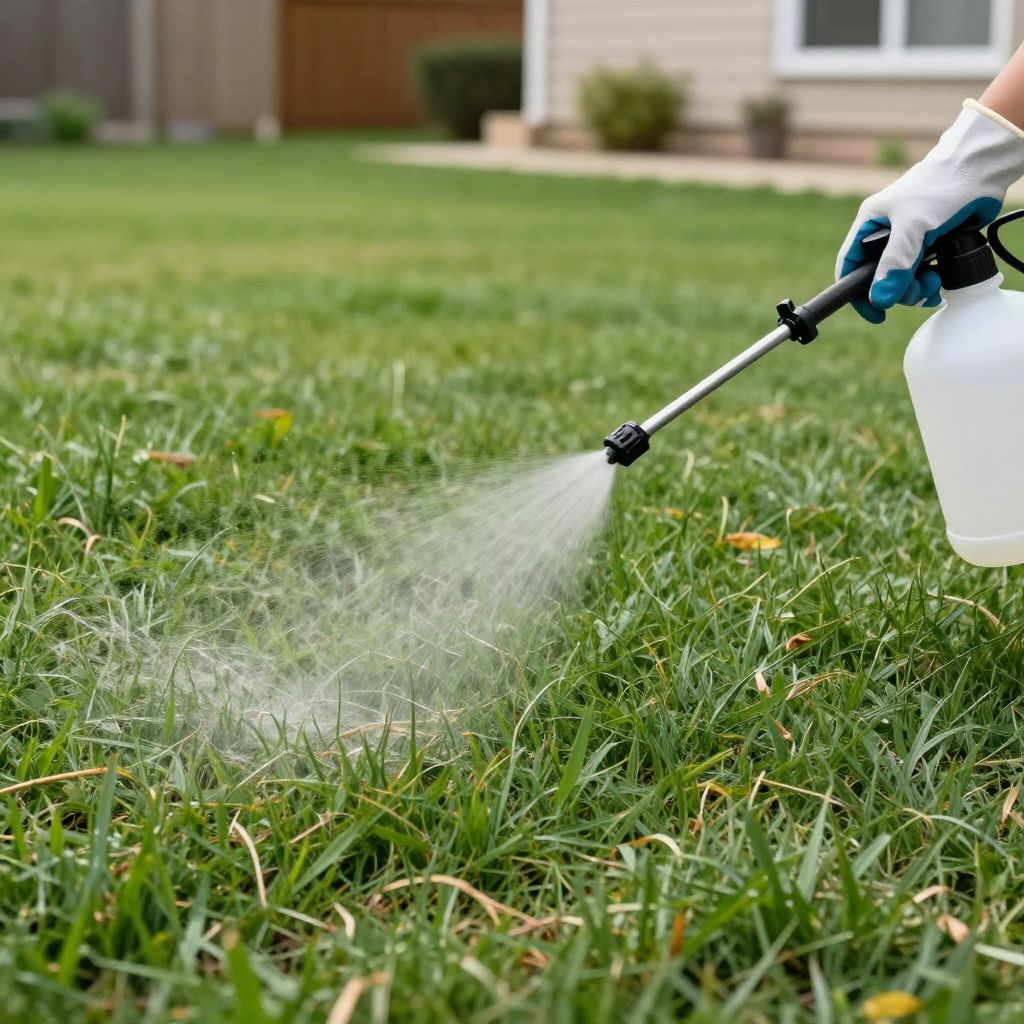
What kills crabgrass but not grass? The safest answer is a selective herbicide made for lawns, plus good timing and lawn care that helps your turf outcompete weeds. Crabgrass is an annual grassy weed, so the best control depends on whether you are preventing new seedlings or killing existing plants.
If you treat the wrong product at the wrong time, you can stress or damage your lawn. The goal is to target crabgrass while protecting desirable turf such as Kentucky bluegrass, fescue, ryegrass, or Bermuda grass.
What kills crabgrass but not grass?
Selective crabgrass killers are herbicides formulated to target crabgrass and other grassy weeds while leaving most established lawn grasses unharmed when used as directed. For existing crabgrass, look for products labeled for lawns that contain ingredients such as quinclorac, fenoxaprop, or mesotrione, depending on your turf type and the weed’s growth stage.
How to choose the right crabgrass control
The right product depends on whether you are dealing with new seedlings, mature crabgrass, or next season’s prevention. Read the label carefully, because not every lawn herbicide is safe for every grass type.
Post-emergent herbicides for existing crabgrass
Post-emergent products are used after crabgrass has already sprouted. They are most effective on young plants, usually before they have spread widely or produced many tillers.
- Quinclorac: Commonly used in many cool-season lawns for crabgrass control and often helpful on young to moderately established plants.
- Mesotrione: Often used in some cool-season turf situations; it can suppress or control young crabgrass and may temporarily whiten some turfgrass species.
- Fenoxaprop: Used in certain lawns for grassy weeds, but not safe for all turf types.
Important: A product can be “crabgrass control” and still be unsafe for your lawn if the label does not list your grass species.
Pre-emergent herbicides for prevention
Pre-emergent herbicides stop crabgrass seeds from germinating. They do not kill crabgrass that has already emerged, so they are best used before soil temperatures warm enough for germination.
- Prodiamine
- Dithiopyr
- Pendimethalin
These are useful if crabgrass shows up every year. A pre-emergent is often the most effective long-term strategy, especially in thin lawns with bare soil.
When to treat crabgrass for the best results
Timing matters more than many gardeners realize. Crabgrass is easiest to control when it is small, actively growing, and not heat-stressed.
Early season control
If you spot crabgrass in spring or early summer, treat it as soon as possible. Young plants are much easier to suppress than large, mature clumps with many stems.
Late season control
Once crabgrass is large and spreading seed, control becomes harder. You may still reduce it, but you should also focus on prevention for the next season because late-summer plants have often already dropped seed.
Soil temperature and germination
Crabgrass germinates when soil warms up, often as spring progresses. In many climates, pre-emergent timing is tied to soil temperature rather than a calendar date, because local weather changes the schedule from year to year.
How to apply crabgrass killer without harming your lawn
Careful application protects turf and improves control. Overlap too much, spray on a hot day, or apply to stressed grass, and you can injure the lawn you are trying to save.
- Identify your lawn grass so you know which products are labeled safe.
- Read the label completely before buying or applying anything.
- Choose the right product for post-emergent control or pre-emergent prevention.
- Apply when crabgrass is actively growing and your lawn is not drought-stressed.
- Use even coverage with a sprayer or spreader calibrated for the product.
- Water in only if the label says to; some products need irrigation, while others work best left on the leaf surface for a period of time.
If you use a spray, avoid windy conditions and spray only the target area. If you use a granular product, make sure the spreader is set correctly so you do not create stripes or missed patches.
What to avoid when treating crabgrass
Several common mistakes make crabgrass harder to control and can damage your lawn.
- Using a non-selective herbicide on the lawn. This can kill grass along with crabgrass.
- Applying herbicide to heat-stressed turf. Hot, dry lawns are more likely to be injured.
- Waiting until crabgrass is large. Older plants are tougher to kill.
- Using the wrong product for your grass type. Some turf species are sensitive to certain active ingredients.
- Skipping prevention. If seeds remain in the soil, crabgrass often returns next year.
How to reduce crabgrass naturally and support healthy grass
Herbicides work best when your lawn is dense and vigorous. A thick lawn shades the soil, making it harder for crabgrass seedlings to establish.
Mow correctly
Mow at the upper end of the recommended height for your turf species when possible. Taller grass shades soil and can reduce crabgrass germination. Avoid scalping, which exposes bare soil and encourages weeds.
Water deeply, not constantly
Deep, less frequent watering encourages deeper roots in turfgrass. Frequent shallow watering can favor crabgrass and other shallow-rooted weeds.
Feed the lawn appropriately
Healthy turf competes better with weeds, but overfertilizing can create weak, fast growth that needs more mowing and may not improve weed resistance. Follow local recommendations and soil test results when possible.
Overseed thin areas
Bare or thin spots are prime crabgrass territory. Overseed with a grass type suited to your climate and site, and keep the area watered according to seed-label directions until established.
Troubleshooting common crabgrass problems
If you treated crabgrass and it still looks alive, the issue may be timing, product choice, or plant size.
The crabgrass is only partly dying
Some products suppress growth rather than kill mature crabgrass quickly. You may see yellowing, stunting, or browning before full decline. Give the product time if the label indicates delayed results.
The lawn is yellowing too
That can mean the herbicide is not suitable for your turf, the rate was too high, or the lawn was already stressed. Stop additional applications and water the lawn appropriately if the label allows.
Crabgrass keeps coming back every year
This usually means the seedbank is still active. Use a pre-emergent in spring, improve lawn density, and repair bare spots in fall or at the best season for your grass type.
Weed patches appear after mowing
Crabgrass often thrives where mowing is too low, soil is compacted, or irrigation is uneven. Correcting those conditions can make a big difference over time.
Best lawn-care habits that prevent crabgrass
Prevention is often easier than rescue. A lawn that is thick, properly mowed, and well-rooted is far less inviting to crabgrass.
- Keep mower blades sharp so grass recovers quickly.
- Do not remove more than about one-third of the leaf blade at a time.
- Improve drainage in persistently wet areas if water stands after rain.
- Reduce soil compaction by limiting traffic on wet turf.
- Fill bare patches promptly with seed or sod suited to your region.
When to call a professional or get extra help
If you are unsure of your turf species, have a mixed lawn, or need to treat a large area, a local garden center, extension office, or lawn professional can help you choose a product that is safe for your grass. This is especially useful if you have sensitive turf or repeated weed pressure.
For more help comparing products, you may also want to read what kills crabgrass permanently and does 2,4-D kill crabgrass.
The best answer to what kills crabgrass but not grass is a selective lawn-safe herbicide used at the right time, combined with thicker turf and spring prevention. Start by identifying your grass type, then choose the correct product label and treat crabgrass while it is still young.