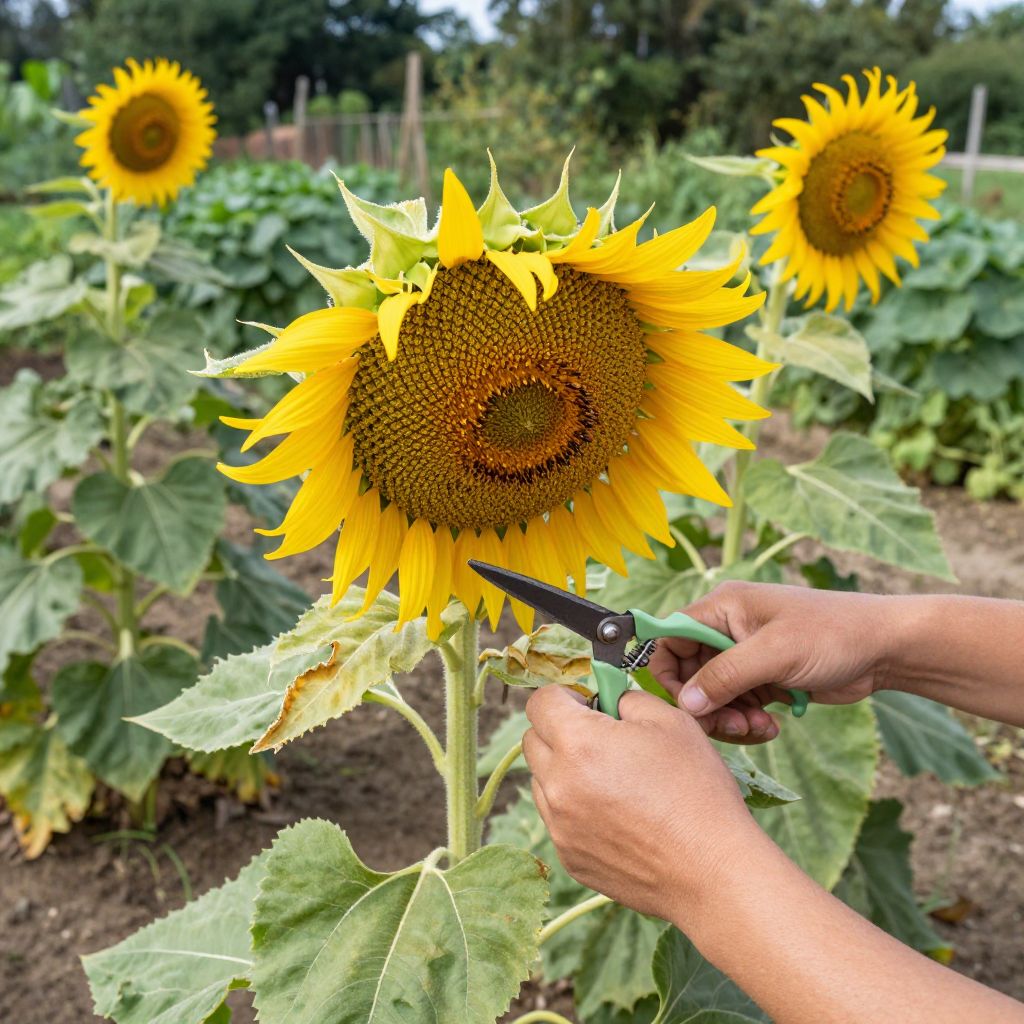
Wondering when to harvest sunflowers? The right time depends on what you want from the plant: fresh-cut blooms, edible seeds, or seed saving for next year. Harvest too early and the seeds may be immature; wait too long and birds, mold, or shattering can reduce your crop.
The good news is that sunflowers give clear visual clues. Once you know what to look for, you can harvest confidently and avoid losing the best heads to weather or wildlife.
When to harvest sunflowers?
Harvest sunflowers when the back of the flower head turns yellow-brown, the petals have mostly dried and fallen, and the seeds look plump and mature. For seed harvest, the head should feel heavy, and the seeds should be firm with dark, developed shells or full kernels, depending on the variety.
How to tell sunflower heads are ready
Sunflowers do not all ripen at exactly the same stage, so look at the whole plant rather than relying on one sign alone. A mature sunflower usually shows several of these clues at once:
- The back of the flower head changes from green to yellow, tan, or brown.
- The petals dry, curl, and begin to drop.
- The seeds are swollen and look filled out.
- The head may start to droop as it matures.
- Birds and squirrels may become very interested in the flower.
If you are growing a pollen-rich or branching sunflower for pollinators, the bloom stage may be more important than seed maturity. In that case, you may cut flowers earlier for display, but not if you want viable seeds.
Check the seeds directly
Gently rub a few seeds from the outer ring of the head. Mature seeds should feel firm and look developed. If they are pale, thin, or easy to squash between your fingers, the head needs more time.
For striped sunflower seeds, the shells are usually hard and well patterned when ready. For oilseed types, the kernels should be full and the heads should feel dense.
Harvesting sunflowers for seeds
If your goal is seed harvest, wait until the flower has clearly finished blooming and the back of the head has started to dry. You can harvest at full maturity or slightly before, then finish drying the heads indoors if birds, rain, or humidity are a problem.
Step-by-step seed harvest
- Choose a dry day if possible.
- Cut the stem with clean pruners, leaving 12 to 18 inches of stem if you want to hang the head.
- Inspect the head for mold, insect damage, or bird pecking.
- Remove the flower head or hang it in a dry, airy place to finish drying.
- When fully dry, rub or brush the seeds out by hand.
Drying matters. Seeds harvested too damp can mold in storage, so make sure the head is crisp and dry before storing or shelling.
How long to dry sunflower heads
Drying time varies with weather and head size. In a warm, dry, well-ventilated space, a cut head may dry in one to two weeks. In humid conditions, it can take longer. The head is ready when the back feels dry and the seeds come away easily.
When to harvest sunflowers for cut flowers
If you want sunflowers for a vase, harvest earlier than you would for seed. Cut them when the petals are just opening or when the flower is fully open, depending on the look you want and how long you need them to last indoors.
Best stage for vase life
For the longest vase life, cut sunflowers early in the morning or in the evening when temperatures are cooler. Choose blooms with firm stems and petals that are fresh, not limp. Avoid flowers that are already shedding petals or showing pollen drop if you want a cleaner display.
Place stems immediately in clean water and remove any leaves that would sit below the waterline. Sunflowers can be heavy-headed, so a tall, sturdy vase helps support them.
Should you wait for the seeds to dry on the plant?
Sometimes yes, but not always. Leaving heads on the plant can help seeds mature fully, especially in dry weather. However, if birds, squirrels, rain, or humid conditions are common in your area, harvesting a little early and finishing indoors is often the safer choice.
Outdoor drying works best when late-season weather is dry and breezy. If rain is frequent, the seed head can become moldy or start to rot before the seeds are fully ready.
Signs you waited too long
- Seeds are missing from the outer ring because birds have eaten them.
- The head feels soft, moldy, or slimy.
- Seeds fall out easily when brushed.
- The flower head is splitting or breaking apart.
If you notice these problems, harvest immediately. You may still be able to save many seeds, especially if the damage is only on the outer edge of the head.
How weather affects harvest timing
Local climate makes a big difference. In dry, sunny regions, sunflower heads often dry naturally on the plant with little trouble. In cooler or wetter climates, it is usually better to monitor the heads closely and harvest before prolonged rain or frost.
Frost can damage the bloom and reduce seed quality, especially if the seeds are not fully mature. If a hard frost is forecast and the seeds are close to ready, cut the heads and finish drying them indoors.
Humidity and mold risk
High humidity slows drying and increases the chance of mold. If your growing area is humid, space the heads out well during drying and avoid piling them together. Good airflow is just as important as warmth.
Common mistakes to avoid
Sunflower harvest is simple, but a few common mistakes can cost you a good crop.
- Harvesting too early: seeds may be underdeveloped and poor for eating or saving.
- Waiting too long: birds, squirrels, and weather can remove or damage seeds.
- Drying in a closed, damp space: this encourages mold.
- Using dull tools: crushed stems dry poorly and are harder to handle.
- Ignoring pests: insects can hollow out seeds before harvest.
What to do if pests or disease affect the head
Birds, squirrels, and insects are often the biggest harvest-time threats. If wildlife pressure is high, cover the heads with breathable mesh or paper bags once the seeds start filling out. This can protect the crop while still allowing air movement.
If you see blackened tissue, fuzzy growth, or a bad smell, the head may have rot or mold. Remove badly affected heads rather than storing them with healthy ones. One moldy head can spoil others if they are packed together.
Seed-saving tips
If you are saving seed for planting, choose healthy, fully mature heads from strong plants. Let the seeds dry completely before storing them in a cool, dry place. Label the variety if you know it, because many garden sunflowers cross-pollinate and may not come true from saved seed.
Quick harvest checklist
- Back of head is yellow, tan, or brown.
- Petals are dry and falling away.
- Seeds are plump and firm.
- Head feels heavy, not soft.
- Weather is dry enough for safe cutting or finishing indoors.
Final practical advice
The best time for when to harvest sunflowers is when the flower has finished blooming and the seeds have matured, but before birds, rain, or mold take over. Check the back of the head, test a few seeds, and decide whether to leave the plant a little longer or cut it for indoor drying.
If you want to plan your next crop, you may also find it helpful to read about when to harvest sunflower seeds and when to plant sunflower seeds.