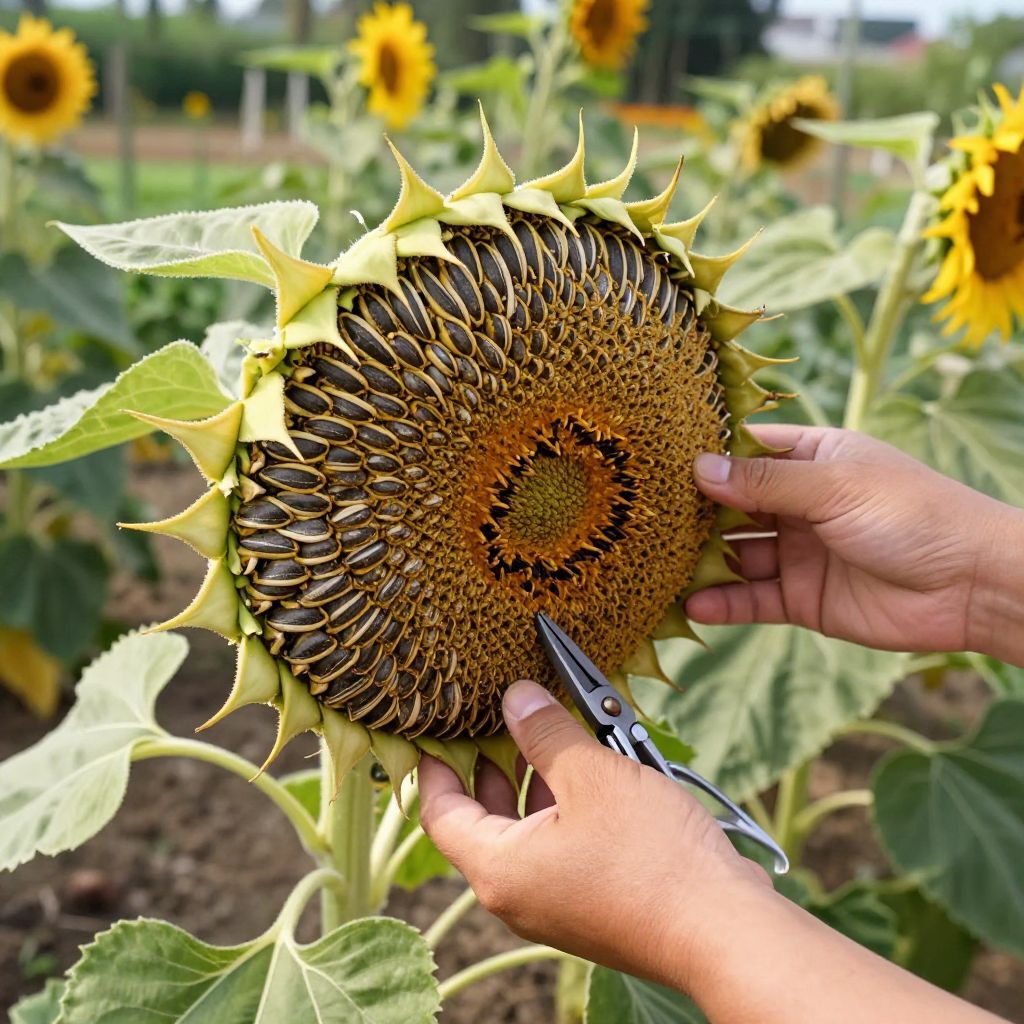
Wondering when to harvest sunflower seeds? The short answer is to wait until the backs of the flower heads turn yellow-brown, the petals have dried, and the seeds look plump and mature. Harvest too early and the seeds may be small, soft, or poor for eating or planting; wait too long and birds, squirrels, and weather may beat you to them.
Sunflowers are easy to grow, but timing the harvest makes a big difference in seed quality. The best moment depends on whether you want seeds for snacking, bird feed, or saving for next year’s planting, and it also depends on your local climate and how quickly the heads dry in your garden.
When to harvest sunflower seeds?
Harvest sunflower seeds when the flower head has finished blooming, the petals have mostly fallen, the back of the head turns yellow to brown, and the seeds are fully formed. For edible or saved seeds, cut the head before it becomes completely brittle, but after the seeds are hard and striped or darkened, depending on the variety.
How to tell sunflower seeds are ready
Sunflowers do not ripen all at once in a neat calendar window. Instead, you should watch the plant and the seed head for a few clear signs of maturity.
Visual signs of maturity
- Petals are dry or falling off. The bright yellow rays fade and droop.
- The back of the head changes color. It usually shifts from green to yellow, then tan, brown, or yellow-brown.
- Seeds look filled out. They should appear plump and firm, not flat or soft.
- The head starts to droop. Many sunflower heads naturally bend downward as seeds mature.
Simple touch test
Gently press a few seeds with your fingernail. Mature seeds feel hard and resist pressure. If they dent easily or feel watery, they need more time on the plant.
What the plant is telling you
A sunflower that is still actively feeding the seeds will often have a greener stem and a fresher-looking head. As the plant finishes its life cycle, the stem and head dry down, which is exactly what you want before harvest.
The best time to cut the sunflower head
For most home gardeners, the ideal harvest point is when the seeds are mature but before the head becomes fully dry and fragile. That usually means the back of the head is yellow-brown, the petals are gone, and the seeds are hard enough to rub out with your fingers.
If you wait until the head is completely dry on the stalk, birds may strip it, and seeds can loosen and fall. If you cut too early, the seeds may not finish filling properly, especially in cooler or shorter seasons.
Harvest timing by purpose
- For eating: Wait until seeds are fully filled and the head is drying, then finish drying indoors if needed.
- For saving seed: Let the seeds mature as long as possible without losing them to wildlife or weather.
- For bird feed: You can harvest once the seeds are mature and dry enough to store safely.
How to harvest sunflower seeds step by step
- Check the head daily once the petals begin to fade.
- Cover the head if needed with breathable mesh, paper, or a lightweight bag to protect it from birds.
- Cut the stem with clean pruners or loppers, leaving 6 to 12 inches of stem attached for handling.
- Bring the head indoors to a dry, airy place if the weather is wet or if the seeds are not quite finished drying.
- Rub or brush out the seeds once the head is dry enough that seeds loosen easily.
- Dry the seeds further before storing, especially if you plan to eat them or save them for planting.
Tools that make the job easier
- Sharp pruners or garden snips
- Paper bags or breathable mesh bags
- Gloves, especially for large heads
- A tray, bucket, or shallow screen for drying seeds
Should you leave sunflower heads on the plant?
Sometimes yes, but only if birds, squirrels, and damp weather are not a problem. Leaving heads on the plant can help seeds finish maturing naturally. However, in many gardens, wildlife pressure makes it smarter to cut the heads a little early and finish drying them indoors.
If rain is frequent where you live, leaving mature heads outside can also invite mold or rot. In humid climates, earlier cutting and indoor drying is often the safer choice.
How to dry sunflower seeds after harvest
Freshly harvested seeds often need a bit more drying before storage. This is especially important if the head was cut before it was fully crisp or if you harvested after damp weather.
Drying method
- Spread seeds in a single layer on a screen, tray, or paper towel.
- Keep them in a warm, dry, well-ventilated location out of direct sun.
- Stir or turn them occasionally so they dry evenly.
- Store only when they feel dry and hard all the way through.
If you are saving seeds for planting, extra drying matters even more. Moist seeds can mold in storage or lose viability faster.
Common mistakes when harvesting sunflower seeds
Most harvest problems come from picking too early, waiting too long, or drying seeds poorly. A few simple habits can help you avoid disappointment.
Harvesting too early
Immature seeds are often pale, soft, and underfilled. They may taste grassy or fail to germinate well if saved for planting.
Waiting too long
Overripe heads can shed seeds, attract wildlife, or develop mold after rain. Once the head is dry and brittle, the window for easy harvest gets smaller.
Drying in a damp place
Seeds stored while still moist can mildew. Always dry them thoroughly before placing them in containers.
Ignoring pests
Birds, squirrels, chipmunks, and even insects may feed on the heads before you do. Protective netting or paper bags can help if you want a better harvest.
How to know if sunflower seeds are good for eating
Edible sunflower seeds should be full, firm, and dry. The hulls should be intact, and the seeds should not smell musty or sour. If the seeds were exposed to rain after maturity, inspect them carefully for mold or spoilage before storing or eating.
For the best flavor, harvest when the seeds are mature but before weather damage starts. You can roast them later if that suits your use, but the harvest stage is what determines quality.
How to save sunflower seeds for planting
If your goal is propagation, choose fully mature seeds from healthy, open-pollinated plants. Avoid saving seed from diseased heads or from plants that were stressed by severe drought, pest damage, or rot.
Seed-saving tips
- Let seeds dry completely before storage.
- Keep them in a cool, dry, dark place.
- Label the variety and harvest year.
- Use only seeds that look full and undamaged.
Keep in mind that hybrid sunflowers may not grow true from saved seed, so the next generation can differ from the parent plant.
What affects sunflower harvest timing?
Several growing conditions can shift the harvest window by days or even weeks. Warm, sunny weather usually speeds drying, while cool, cloudy, or rainy conditions slow it down. Soil fertility, water availability, and the sunflower variety also influence how quickly seeds mature.
Climate and weather
In short-season areas, sunflowers may need to be harvested a bit earlier and dried indoors. In long, warm seasons, you may be able to leave heads on the plant longer without losing many seeds.
Plant health
Healthy plants with good sunlight, well-drained soil, and steady moisture during growth are more likely to produce full, mature seed heads. Stressed plants may mature unevenly or produce smaller seeds.
Preventing problems before harvest
You can improve your seed harvest long before the heads are ready. Sunflowers do best in full sun, in soil that drains well, with enough room for airflow between plants.
- Sunlight: Give sunflowers at least 6 to 8 hours of direct sun for strong growth and better seed development.
- Soil: Use moderately fertile soil with good drainage. Waterlogged soil can weaken plants and reduce seed quality.
- Watering: Water deeply during establishment and dry spells, but avoid keeping the soil soggy.
- Spacing: Good spacing helps reduce disease and makes it easier to access heads at harvest.
Pests and diseases that can affect seed harvest
Birds are the most obvious harvest thieves, but fungal diseases and insects can also reduce seed quality. Watch for gray mold, black spots, or soft, rotting tissue on the head, especially after wet weather.
If a head is badly diseased, it is usually better to discard it than to store poor-quality seed. Healthy, dry heads produce the best harvest and store more safely.
A quick harvest checklist
- Petals are dry and mostly gone
- Back of the head is yellow-brown to brown
- Seeds are plump and hard
- Head is drooping naturally
- Weather is dry, or you are ready to finish drying indoors
- Birds and squirrels are not already taking the seeds
Conclusion
When to harvest sunflower seeds comes down to watching the head, not the calendar. Look for dry petals, a yellow-brown back of the head, and firm, filled-out seeds, then cut the head before wildlife or weather ruins the crop. If you are unsure, check a few seeds by hand and let the plant guide you.
For more practical garden timing tips, you may also find it helpful to read about how to dry flower heads for seed saving and how to store garden seeds properly.