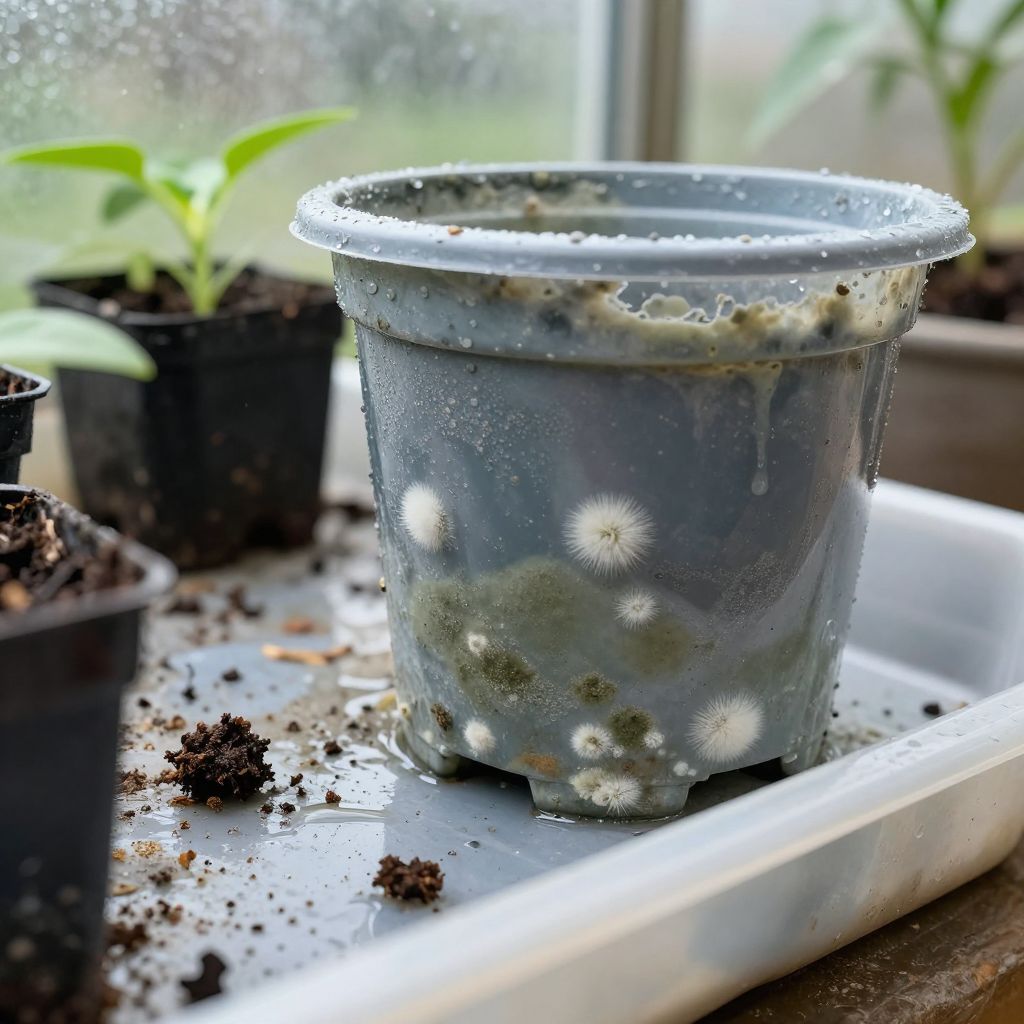
Can mold grow on plastic in the garden? Yes—if plastic stays damp, dirty, shaded, or filled with organic residue, mold can grow on it just like on many other surfaces.
For gardeners, the real issue is usually not the plastic itself but the conditions around it: trapped moisture, poor airflow, algae buildup, potting mix splashes, and decaying plant debris. The good news is that most mold on plastic containers, trays, labels, and covers is easy to clean and prevent.
Can mold grow on plastic?
Yes, mold can grow on plastic when spores land on a moist surface with dust, soil, fertilizer residue, or plant matter to feed on. Plastic is non-porous, so mold does not usually infest the material deeply, but it can spread across the surface and into nearby organic debris. In gardens, this is most common on pots, seed trays, saucers, greenhouse covers, and storage bins.
Why mold shows up on plastic in gardens
Mold needs moisture, warmth, and food. Plastic itself is not a food source, but garden plastic often collects the things mold does eat.
Common garden situations that encourage mold
- Wet potting mix splashes on nursery pots and trays
- Standing water in saucers, buckets, or tray bottoms
- Shaded, poorly ventilated areas such as greenhouses, sheds, and covered patios
- Organic residue from compost, fertilizer, leaves, and algae
- Repeated damp storage of pots, tools, and propagation supplies
If you see white, gray, green, or black growth on plastic, it may be mold, mildew, algae, or a mix of all three. In most home garden settings, the practical concern is the same: the surface is staying too wet for too long.
Is mold on plastic harmful to plants?
Mold on plastic is usually more of a maintenance problem than a direct plant disease. However, it can signal conditions that do harm plants, such as overwatering, poor drainage, and low airflow. In seed-starting setups and indoor plant areas, moldy surfaces can also indicate that seedlings or roots are staying too wet.
When to pay closer attention
- Seedlings are damping off, collapsing, or rotting at the soil line
- Pots smell sour, stagnant, or swampy
- Water sits in trays for days
- Houseplants show yellowing leaves and slow growth along with moldy pots
- Greenhouse benches or propagation domes stay humid with little air movement
If the mold is only on the outside of a plastic pot or tray, your plant may be fine. If the potting mix is soggy or the roots are stressed, fix the growing conditions first.
How to clean mold off plastic garden items
Cleaning plastic is straightforward because the surface is smooth and non-porous. The goal is to remove the mold, then dry the item thoroughly so it does not return.
Step-by-step cleaning method
- Take the item outdoors or to a well-ventilated area.
- Brush off loose soil, leaves, and debris.
- Wash with warm water and dish soap to remove grime.
- Scrub moldy areas with a stiff brush or sponge.
- Rinse well and let the item dry completely in sunlight if possible.
For stubborn buildup on pots, trays, or saucers, a diluted disinfecting solution can help. Always follow the product label, and rinse thoroughly before using the item around plants.
Good cleaning habits for gardeners
- Clean pots before reusing them for seedlings or transplants
- Scrub propagation trays between batches
- Empty and rinse saucers regularly
- Do not store damp pots in a closed pile
- Remove algae and slime from greenhouse floors, benches, and watering cans
Avoid mixing cleaning chemicals, and never use a strong solution on items that will touch tender roots or foliage unless you can rinse them thoroughly and safely. If you are unsure, soap and scrubbing are often enough for routine garden cleanup.
How to prevent mold on plastic pots, trays, and covers
Prevention is mostly about moisture control and airflow. If plastic stays dry between uses, mold has far fewer opportunities to establish itself.
Practical prevention tips
- Use containers with drainage holes whenever possible
- Raise pots slightly off the ground so air can move underneath
- Empty saucers after watering instead of letting water sit
- Space plants so leaves and pots do not stay crowded and damp
- Water early in the day so surfaces can dry before nightfall
- Keep greenhouse lids, domes, and cold frames vented when humidity is high
- Remove fallen leaves, spent flowers, and other debris promptly
In indoor gardening, mold often appears when a plant is overwatered and the room has limited airflow. In outdoor gardening, it is more likely after rain, in shaded corners, or under dense plantings where plastic stays wet for long periods.
What mold on plastic can tell you about your growing conditions
Think of mold as a warning sign. It often points to a care issue that is easy to miss until the surface becomes visibly dirty or slimy.
Common causes and what to adjust
- Overwatering: Let the top layer of potting mix dry if the plant prefers it, and check drainage holes.
- Poor airflow: Open vents, thin overcrowded plants, or move containers where air can circulate.
- Too much shade and moisture: Relocate plastic items that never dry, especially under dense shrubs or eaves.
- Dirty surfaces: Remove compost, algae, and soil residue that feed mold growth.
- Repeated splashing: Adjust watering technique so water goes into the soil, not across the pot and tray.
If mold keeps coming back on the same plastic item, inspect the surrounding area. A moldy tray may be telling you that the bench, floor, or nearby potting mix is staying wet too long.
Indoor vs. outdoor plastic: what changes?
The basic answer to can mold grow on plastic is the same indoors and out, but the causes differ slightly.
Indoor gardening
Indoors, the biggest triggers are overwatering, low air movement, and dust. Houseplant saucers, cachepots, humidity trays, and seed-starting domes are common trouble spots.
- Use a fan on low speed if the room is stagnant.
- Check that decorative pots are not trapping water inside.
- Wipe condensation off domes and lids regularly.
Outdoor gardening
Outside, mold is more likely after rain, in shaded beds, and under structures that block drying. Plastic mulch, nursery pots, rain barrels, and storage bins may all develop surface growth if they stay damp.
- Keep containers out of low spots where water collects.
- Do not stack wet pots tightly for storage.
- Rinse off mud and plant debris after storms or heavy watering.
How to tell mold from algae or mineral buildup
Gardeners often mistake one surface problem for another. Identifying it correctly helps you choose the right fix.
Quick comparison
- Mold: fuzzy, dusty, or patchy growth; often white, gray, or dark
- Algae: slimy, green, or dark film that develops in wet light-exposed areas
- Mineral buildup: crusty white or chalky residue from hard water or fertilizer salts
When in doubt, clean the surface first. If the growth returns quickly, look at moisture, light, and airflow around the item rather than assuming the plastic is the problem.
When to replace plastic garden items
Most moldy plastic pots and trays can be cleaned and reused, but some items should be retired. Replace plastic if it is cracked, deeply scratched, brittle, or impossible to clean well.
Signs it is time to discard an item
- Cracks that trap soil and moisture
- Warping that prevents proper drainage
- Heavy staining or residue that will not scrub off
- Persistent odor after cleaning
- Surface damage that makes the item hard to sanitize
Deep scratches and roughened plastic can hold grime more easily than smooth surfaces, so older containers may need extra attention or replacement if you use them for seedlings or disease-prone plants.
Simple troubleshooting checklist
If you keep seeing mold on plastic in your garden, use this quick checklist to narrow down the cause.
- Is water sitting in the tray, saucer, or container?
- Are drainage holes open and functioning?
- Is the item shaded, humid, or poorly ventilated?
- Is there soil, compost, or leaf debris on the surface?
- Has the item been cleaned and fully dried before reuse?
If you answer yes to two or more of these, the fix is usually to dry, clean, and improve airflow rather than treat the mold as a separate pest.
Conclusion: keep plastic clean, dry, and well-ventilated
So, can mold grow on plastic? Yes—but in gardening, it usually means the surface is staying too wet or dirty, not that the plastic itself is “infected.” Clean the item, improve drainage and airflow, and remove organic residue before it builds up again. If you want to prevent repeat problems, start by checking every pot, tray, and saucer that holds water.
For more practical garden care, look for related reading on container drainage, seed-starting hygiene, and managing excess moisture around houseplants and greenhouse setups.