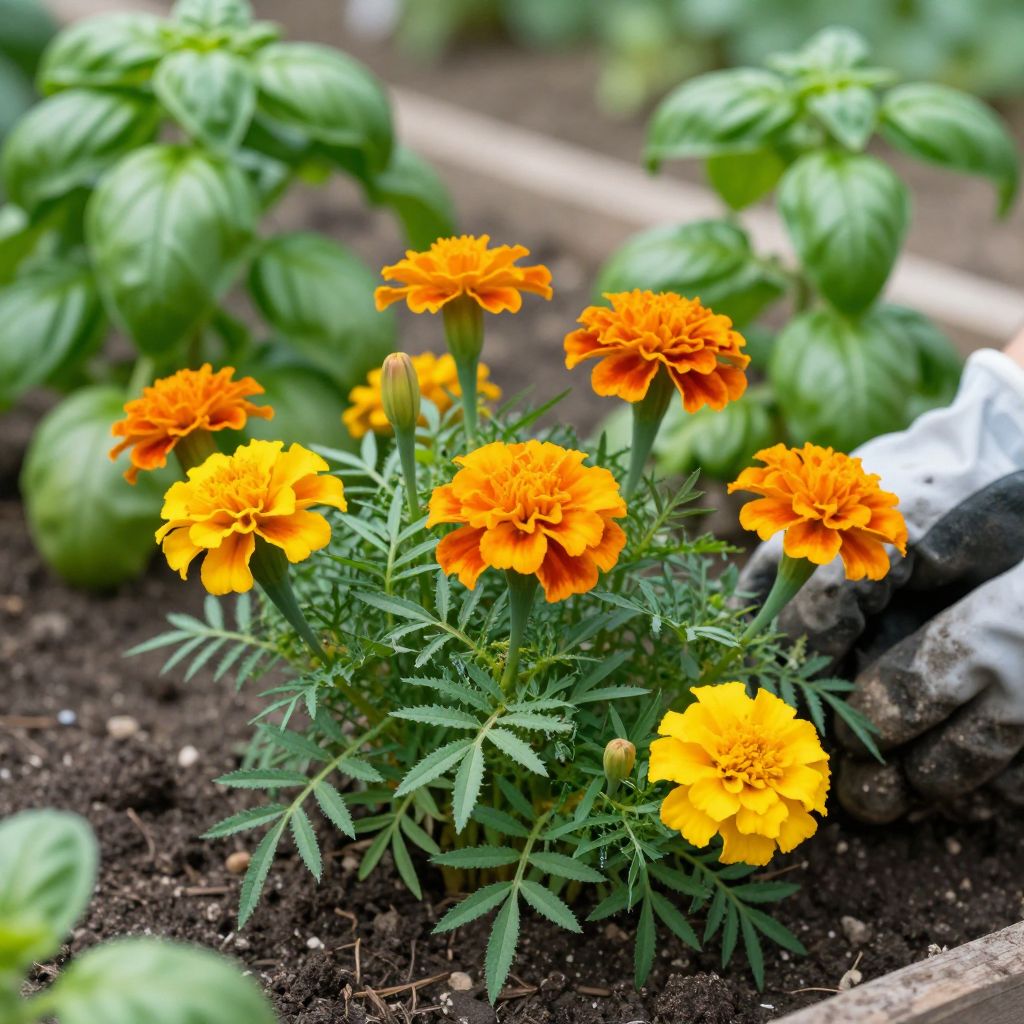
Do marigolds keep bugs away? They can help a little, but they are not a magic shield for your garden. Marigolds may confuse some pests, attract beneficial insects, and work as part of a broader pest-management plan, but they will not stop every bug on their own.
If you want fewer pest problems, think of marigolds as a useful companion plant rather than a stand-alone solution. Good spacing, healthy soil, regular scouting, and the right plant choices usually matter more than any single flower.
Do marigolds keep bugs away?
Marigolds can discourage some pests in certain situations, especially when planted densely and combined with other good garden practices. Their scent and root compounds may help against a few insects and nematodes, but results are inconsistent. They are best used as a support plant, not a guaranteed insect repellent.
How marigolds may help in the garden
Marigolds, especially Tagetes species, are popular because they are easy to grow and can fit into many beds and borders. Their value comes from several small effects rather than one dramatic one.
Possible pest-reducing effects
- Scent confusion: Strong-smelling foliage may make it harder for some pests to locate nearby crops.
- Beneficial insect support: Flowers can attract hoverflies, parasitic wasps, and other helpful insects that feed on pests.
- Trap or distraction planting: In some gardens, marigolds may draw pests away from more valuable plants, though this is not reliable everywhere.
- Soil effects: Some marigold types are used in vegetable gardens because they may help suppress certain soil pests, especially when grown over time.
Important: marigolds do not repel all insects. They are not a substitute for monitoring, healthy soil, crop rotation, or physical pest control.
What marigolds do not do
It helps to be realistic. Marigolds are often promoted as a cure-all, but that can lead to disappointment.
- They do not reliably stop aphids, whiteflies, flea beetles, or caterpillars by themselves.
- They do not protect every crop equally.
- They do not replace row covers, hand-picking, or insecticidal soap when those are needed.
- They do not work well if the plants are weak, shaded, overcrowded, or stressed.
If you already have a pest outbreak, marigolds may still be useful, but they will not solve the problem quickly. You will need a direct control method too.
Which pests marigolds may help with
Gardeners often ask about specific insects. The answer depends on the pest, the marigold type, and your growing conditions.
In the vegetable garden
- Nematodes: Some marigold varieties are grown for their potential to reduce certain soil-dwelling nematodes over time.
- Whiteflies: Marigolds may be less attractive than some crops, but they are not a dependable whitefly barrier.
- Aphids: They may attract beneficial insects that feed on aphids, but they do not repel aphids consistently.
In flower beds and borders
- Leaf-chewing insects: Some gardeners notice fewer problems near marigolds, but this is highly variable.
- General pest pressure: A mixed planting with marigolds can increase biodiversity, which may help balance pest populations.
If a pest is severe in your area, research that specific insect rather than relying on general claims about marigolds.
Best marigold types for pest management
Not all marigolds are used the same way. The most common garden marigolds include French marigolds (Tagetes patula), African marigolds (Tagetes erecta), and signet marigolds (Tagetes tenuifolia).
Choosing the right type
- French marigolds: Often used in vegetable beds and edging because they are compact and bloom heavily.
- African marigolds: Taller plants with large blooms that work well in borders and sunny beds.
- Signet marigolds: Fine-textured plants with smaller flowers; useful where you want a lighter, more delicate look.
For pest management, the best choice is usually the one you can grow vigorously in your climate. Healthy, flowering plants are more useful than weak plants that struggle all season.
How to grow marigolds for the best results
Strong marigold growth matters if you want any pest-related benefit. Stressed plants flower poorly and are less attractive to beneficial insects.
Sunlight and site
Marigolds grow best in full sun, with at least 6 hours of direct light a day. In very hot climates, a little afternoon shade can help prevent wilting.
Soil and drainage
Use well-drained soil. Marigolds dislike soggy roots, so heavy clay may need compost, raised beds, or improved drainage.
- Add compost to improve structure and support steady growth.
- Avoid rich, overly wet soil that pushes leafy growth at the expense of flowers.
- If your soil stays wet after rain, plant in raised beds or containers.
Watering
Water marigolds when the top inch or two of soil feels dry. Deep, less frequent watering is usually better than light daily sprinkling.
Container-grown marigolds dry out faster than those in the ground, so check pots more often, especially in hot weather and wind.
Spacing
Give plants enough room for air movement. Crowded marigolds are more prone to mildew and are less effective as companion plants because they become weak and leggy.
- Space compact types about 8 to 12 inches apart.
- Space larger types farther apart so the foliage can dry quickly after rain or watering.
How to use marigolds in a pest-reduction plan
To get the most from marigolds, place them with a purpose. They work best as one part of a layered approach.
- Plant them near vulnerable crops such as tomatoes, beans, brassicas, or leafy greens, depending on your local pest pressure.
- Mix them into borders rather than relying on a single row as a barrier.
- Keep them blooming by deadheading spent flowers if your variety slows down after seed set.
- Scout nearby plants weekly for aphids, eggs, chewing damage, and sticky residue.
- Use direct controls when needed such as hand-picking, row covers, or insecticidal soap.
Marigolds are most helpful when they are part of a healthy, diverse planting. A mixed garden is usually less inviting to pests than a large block of one crop.
Common mistakes gardeners make with marigolds
Many disappointing results come from how marigolds are used, not from the plant itself.
- Expecting instant pest control: Marigolds are not a quick fix.
- Planting them too late: If pests are already established, marigolds will not erase the problem.
- Overcrowding beds: Dense plantings can increase disease and reduce airflow.
- Growing weak plants: Shade, poor drainage, and overwatering limit flowering.
- Using only marigolds: Companion planting works best alongside other pest-management steps.
Diseases and pests that can affect marigolds
Marigolds are fairly tough, but they are not trouble-free. If your plants are unhealthy, they will be less useful in the garden.
Common problems
- Powdery mildew: More likely in crowded plantings or where air movement is poor.
- Root rot: Caused by poorly drained soil or overwatering.
- Aphids and spider mites: Can still appear, especially during hot, dry weather or on stressed plants.
- Slug damage: Young plants may be nibbled in damp gardens.
Simple fixes
- Improve spacing and airflow.
- Water at the base instead of wetting foliage.
- Remove badly diseased leaves and discard them.
- Check seedlings early for chewing pests.
Propagating marigolds
Marigolds are usually grown from seed, which is the easiest and cheapest way to fill a bed or border. Sow them according to your local frost dates and the warmth of your soil.
You can also buy transplants if you want an earlier start. Set them out only when conditions are warm enough for steady growth, because cold soil can stall young plants.
When marigolds are most useful
Marigolds make the biggest difference when you want a low-maintenance, sunny annual that adds color and may support a healthier garden ecosystem. They are especially useful in vegetable beds, pollinator-friendly borders, and mixed plantings where you want more beneficial insect activity.
They are less useful if you are trying to stop a specific pest outbreak with one plant alone. In that case, identify the pest first and choose a targeted control.
Bottom line
So, do marigolds keep bugs away? Sometimes a little, but not reliably enough to depend on them alone. Their real strength is as a companion plant that supports a healthier, more balanced garden when combined with good soil, proper spacing, and regular pest checks.
If you want to try them, plant marigolds in full sun, keep them well drained, and observe which pests or beneficial insects show up in your garden. For more practical help, read up on companion planting basics and how to manage common garden pests naturally.