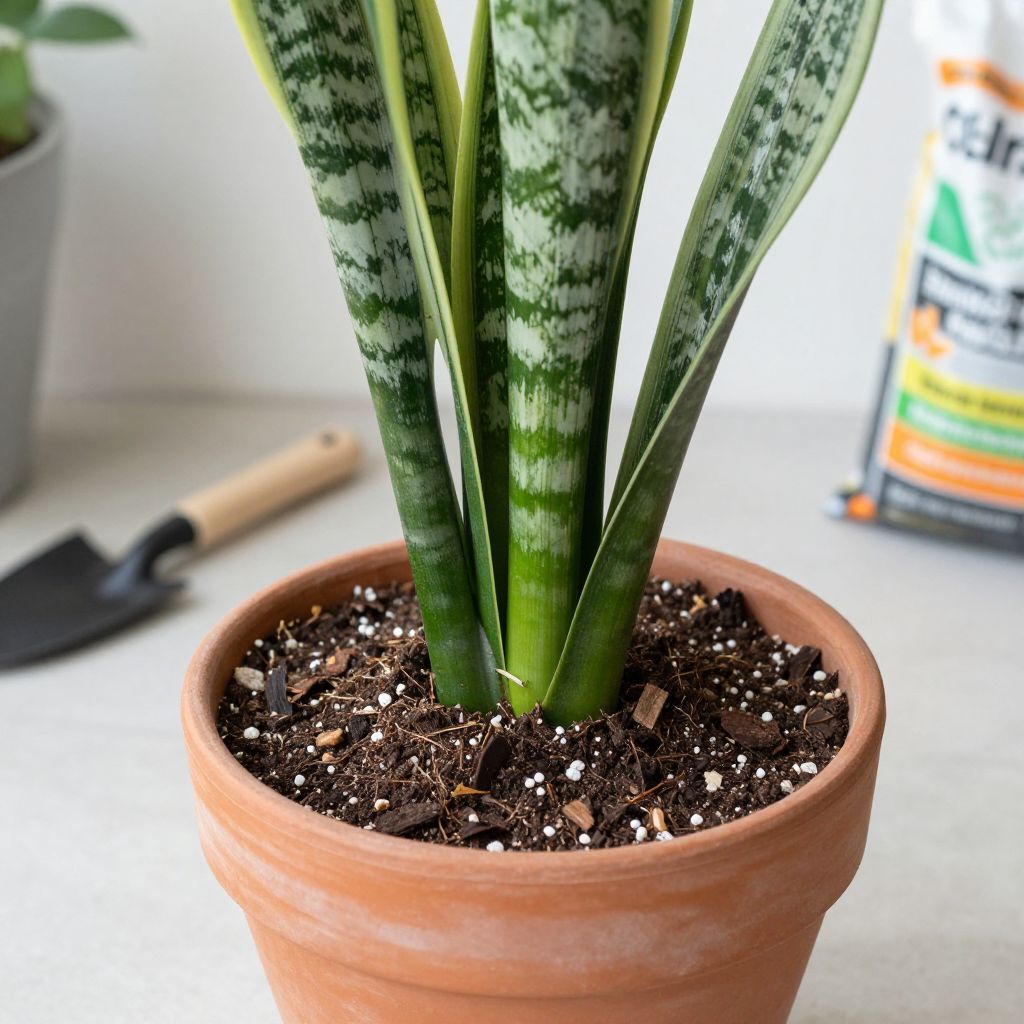
What kind of soil do snake plants like? If your snake plant is drooping, staying wet too long, or growing slowly, the potting mix may be the problem. Snake plants are tough, but they do best in a soil that drains quickly and does not hold excess moisture.
The right mix helps the roots breathe, reduces rot, and keeps the plant growing steadily. Whether you grow Dracaena trifasciata indoors or in a warm outdoor container, the goal is the same: a loose, gritty, fast-draining soil that dries out between waterings.
What kind of soil do snake plants like?
Snake plants like a light, well-draining potting mix with plenty of air space around the roots. A cactus or succulent mix works well, especially when amended with perlite, pumice, or coarse sand. Avoid heavy garden soil or water-retentive mixes, which can stay soggy and lead to root rot.
Why drainage matters so much
Snake plants store water in their leaves and rhizomes, so they do not need rich, moisture-holding soil. Their roots are far more likely to fail from too much water than from too little.
When soil stays wet for long periods, oxygen is pushed out of the root zone. That creates the conditions for rot, fungus problems, and yellowing leaves.
Signs your soil is too heavy
- The pot feels wet days after watering.
- Leaves become soft, mushy, or yellow near the base.
- The plant grows slowly even in bright light.
- The soil looks compacted or crusted on top.
- You notice a sour smell from the pot.
The best soil texture for snake plants
The ideal mix is loose, gritty, and fast draining. It should hold just enough moisture for the roots to absorb, then dry out without staying soggy.
A good snake plant mix usually includes:
- Base potting soil for a little moisture retention and nutrients
- Perlite or pumice for air pockets and drainage
- Coarse sand or fine gravel in small amounts, if needed
- Cactus/succulent mix as a ready-made option
If you want a simple homemade blend, start with about 2 parts quality potting mix and 1 part perlite or pumice. If your home is humid, or you tend to overwater, you can increase the gritty material a little more.
Good soil qualities to look for
- Light and airy, not dense or sticky
- Drains quickly after watering
- Does not clump tightly when squeezed
- Contains some organic matter, but not too much
- Does not stay wet for many days
Best potting mix ingredients for snake plants
1. Cactus or succulent potting mix
This is often the easiest choice for indoor snake plants. It is usually formulated to drain faster than standard houseplant soil.
Check the label, though. Some “succulent” mixes still contain a lot of peat or compost, which can hold more water than snake plants prefer.
2. Perlite
Perlite improves drainage and keeps the mix from packing down. It is one of the most useful amendments for snake plants grown in containers.
If your soil feels too dense, perlite is often the quickest fix.
3. Pumice
Pumice works much like perlite, but it is heavier and does not float to the top as easily. Many gardeners prefer it for long-term container mixes.
4. Coarse sand
Coarse horticultural sand can help open up the mix, but use it carefully. Fine sand or play sand can actually make the soil denser when mixed with potting soil.
5. Small amounts of compost
Snake plants do not need rich soil, but a little compost can be useful in a balanced mix. Keep it modest so the potting medium still drains well.
Avoid using compost as the main growing medium. It is usually too moisture-retentive for snake plants on its own.
What to avoid in snake plant soil
Some soils are too heavy for this plant, even if they look healthy and fertile. The wrong mix can cause problems quickly, especially indoors where pots dry more slowly.
- Dense garden soil that compacts in pots
- Peat-heavy mixes that stay wet too long
- Soil with poor drainage or no aeration amendments
- Large amounts of compost or manure
- Fine sand that makes the mix dense and muddy
If you are planting outdoors in a warm climate, the same rule still applies. Snake plants in the ground need well-drained soil and should never sit in a low spot that collects water.
How to make your own snake plant soil mix
You do not need a complicated recipe. A simple, airy container mix is usually enough for healthy growth.
- Start with a quality indoor potting mix or cactus mix.
- Add perlite or pumice to improve drainage.
- Mix thoroughly so the texture is evenly open.
- Test the blend by watering it lightly; it should drain freely.
- Adjust if it feels too heavy or stays wet too long.
A practical starting point is:
- 2 parts potting mix
- 1 part perlite or pumice
If your home is cool, dark, or humid, lean toward a grittier mix. If the plant sits in bright light and dries quickly, a slightly richer mix may be fine.
Indoor vs. outdoor soil needs
Indoor snake plants
Indoor pots usually dry more slowly, so drainage is especially important. Choose a pot with a drainage hole and a mix that does not hold excess water.
Terracotta can help because it allows moisture to evaporate through the sides of the pot. That said, the soil mix still matters more than the pot material.
Outdoor snake plants
In warm climates, snake plants can grow outdoors in containers or in the ground where conditions allow. Outdoor soil must drain well after rain, not just after watering.
If your native soil is clay-heavy, grow snake plants in raised beds or containers with a gritty mix rather than planting directly into the ground.
How soil affects watering
The right soil makes watering much easier. When the mix drains well, you can water thoroughly and then let the plant dry out before watering again.
Do not water on a fixed schedule alone. Instead, check the soil first. Insert a finger a few inches into the pot, or use a moisture meter if that helps you judge drying time.
Watering clues that help
- Water only when the top several inches of soil are dry.
- In lower light or cooler weather, the plant will dry more slowly.
- In bright light and warm conditions, it may dry faster.
- Always empty saucers so the pot does not sit in runoff.
Good soil and careful watering work together. Even the best mix can fail if the pot stays wet after every watering.
Repotting snake plants into better soil
If your snake plant is struggling in the wrong mix, repotting can make a big difference. This is especially helpful if the soil has broken down, become compacted, or started smelling sour.
- Choose a pot with drainage holes.
- Remove the plant gently and shake off loose old soil.
- Inspect the roots and trim away any soft, black, or mushy sections.
- Fill the new pot with a fast-draining mix.
- Set the plant at the same depth it was growing before.
- Water lightly after repotting, then let the mix dry well before watering again.
Do not move a snake plant into an oversized pot. Too much extra soil around the roots can hold moisture longer than the plant can use it.
Common soil-related problems and fixes
Problem: The plant is yellowing
Yellow leaves can point to overwatering, especially if the soil stays wet. Switch to a faster-draining mix and reduce watering frequency based on actual dryness.
Problem: The base feels soft
This often suggests rot. Remove the plant, cut away damaged roots or rhizomes, and replant in dry, airy soil.
Problem: The soil dries too fast
If the mix is extremely gritty and the plant is in intense light or heat, it may dry too quickly. Add a little more potting mix or a small amount of compost to balance it, but do not make it heavy.
Problem: Fungus gnats appear
Gnat problems usually mean the soil is staying too moist. Let the mix dry more between waterings and consider repotting into a cleaner, better-draining blend.
Should you fertilize snake plants in rich soil?
Snake plants do not need heavy feeding, and rich soil is not necessary for good growth. If the plant is in a healthy mix, light fertilizing during active growth may be enough, depending on your conditions and product instructions.
Too much fertilizer can cause salt buildup and stress the roots, especially in a mix that already holds moisture. If you repot into fresh soil, you may not need fertilizer right away.
Simple soil checklist before you plant
- Does the pot have drainage holes?
- Is the mix airy and fast draining?
- Does it contain perlite, pumice, or another drainage amendment?
- Will the soil dry out between waterings?
- Is the pot size appropriate for the root ball?
If you can answer yes to most of these, your snake plant is set up for success.
For more practical guidance, you may also want to read what kind of soil for snake plant and what kind of soil does a snake plant need for additional soil-mix tips and planting advice.