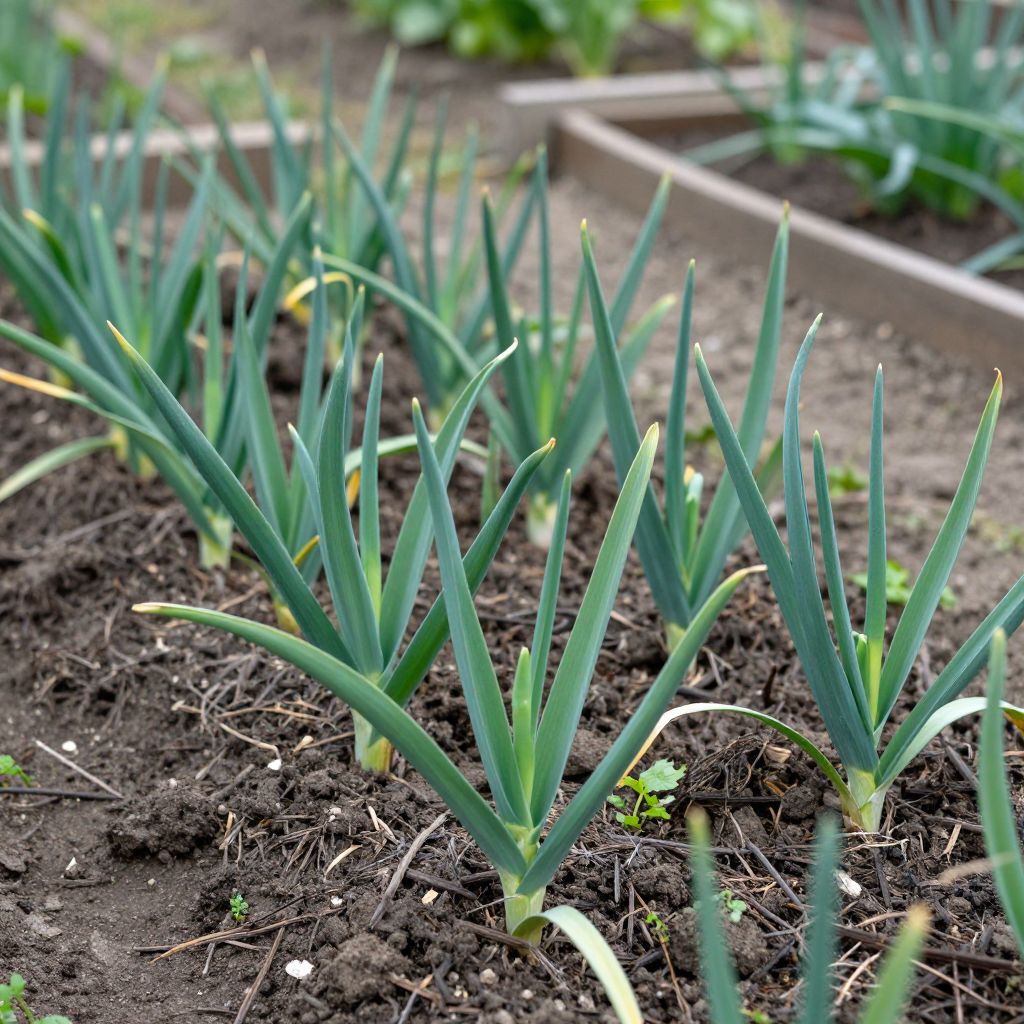
What does garlic look like when growing? If you’re new to the crop, it can be hard to tell whether the plants are healthy, ready to harvest, or even garlic at all. Garlic changes a lot as it grows, from a tiny clove planted underground to a leafy green plant above the soil.
Knowing the growth stages helps you avoid common mistakes like overwatering, pulling too early, or confusing garlic with onions or weeds. Here’s how to पहचानize garlic at every stage and care for it successfully in the garden.
What does garlic look like when growing?
Garlic starts as a planted clove underground, then sends up narrow, flat green leaves that look like grass or onion tops. As it matures, the plant forms a taller leafy clump, and hardneck types may produce a stiff central flower stalk called a scape. The bulb develops below the soil, not above it.
How to identify garlic at each growth stage
1. Right after planting
At first, you won’t see much above the soil. Garlic cloves are planted pointy end up, usually a few inches deep, and they may sit quietly for a while before sprouting.
If you gently brush away soil, you may notice a pale shoot beginning to emerge. This early stage is easy to miss, especially in cool weather.
2. Early green growth
Young garlic looks like a small tuft of flat, strap-like leaves. The leaves are usually blue-green to medium green and grow upright from the center of the plant.
Unlike onion leaves, garlic foliage is typically flatter and broader. The plant may look a little sparse at first, but that is normal.
3. Midseason growth
As garlic grows, the plant becomes fuller and taller, often reaching 1 to 2 feet or more depending on type and growing conditions. The leaves stay narrow and upright, with a waxy or slightly matte surface.
Healthy plants usually have several leaves stacked from the base. Each leaf comes from the center and wraps around the stem as it grows.
4. Bulb development
Most of the action happens underground. The bulb begins swelling later in the season as the plant shifts energy from leaf growth to bulb formation.
Above ground, you may not see a dramatic change right away. A strong leafy plant is what feeds the bulb, so the foliage matters a great deal.
5. Scapes on hardneck garlic
Hardneck garlic types send up a curly flower stalk called a scape. It starts as a straight stem, then often bends and curls into a loop or spiral.
This is a useful clue that your plant is garlic, not an onion. Scapes are edible, but removing them at the right time can help the plant put more energy into the bulb.
What healthy garlic foliage should look like
Healthy garlic leaves are firm, upright, and evenly colored. A little yellowing on the oldest lower leaves can happen later in the season, but the plant should not look limp, collapsing, or heavily spotted.
- Good signs: upright leaves, steady growth, even green color, no mushy stems
- Warning signs: yellowing from the top down, blackened tips, soft base, heavy spotting, or stunted growth
If the plant looks weak early in the season, check soil moisture, drainage, and spacing before assuming disease. Garlic dislikes soggy soil and crowded conditions.
How garlic differs from similar-looking plants
Garlic vs. onions
Onion leaves are usually round and hollow, while garlic leaves are flatter. Garlic also tends to grow from a single clove into a cluster of strap-like leaves, rather than a more obvious bulb top.
Garlic vs. chives
Chives are much thinner and more grass-like. Garlic leaves are broader, sturdier, and usually fewer in number at the base of each plant.
Garlic vs. weeds
Many grassy weeds can resemble young garlic. The difference is that garlic emerges in a neat clump from one planted point, while weeds often appear randomly and lack the same flat leaf structure.
Growing conditions garlic needs to look its best
Garlic grows best in full sun, loose soil, and good drainage. It is a cool-season crop in many climates, and it usually performs best when it has a long growing period before the bulb matures.
Soil and drainage
Garlic prefers fertile, well-drained soil that does not stay wet for long. Heavy clay can work if improved with compost and if water drains away instead of pooling around the roots.
A loose bed helps bulbs expand evenly. Compacted soil can lead to small or misshapen bulbs.
Sunlight
Give garlic as much sun as possible. In partial shade, the plant may still grow, but bulb size is often reduced because the leaves cannot feed the bulb as effectively.
Watering
Garlic needs consistent moisture while it is actively growing, but the soil should never stay waterlogged. Water when the top layer of soil begins to dry, adjusting for rainfall, soil type, and temperature.
Too much water is a common reason garlic looks pale, weak, or stunted. If the bed stays wet, improve drainage before adding more water.
How to plant garlic so it grows correctly
Garlic is usually grown from individual cloves, not from seed in home gardens. Each clove becomes one bulb, so planting quality matters.
- Choose firm, healthy bulbs for planting.
- Separate the cloves just before planting.
- Plant each clove pointy end up.
- Set cloves several inches deep, depending on your soil and climate.
- Space them so each plant has room to develop a bulb.
- Mulch lightly if your climate benefits from insulation and moisture control.
Avoid planting cloves too shallow, because they may heave out of the soil or form poor bulbs. Planting too deep can delay emergence in some soils.
Common problems that change how garlic looks
Yellow leaves
Some lower yellowing late in the season is normal, but early or widespread yellowing can signal poor drainage, nutrient stress, or disease. Check whether the soil is soggy or whether the plants are overcrowded.
Brown tips
Brown tips can come from dry soil, wind, salt buildup, or cold stress. If only the tips are affected and the rest of the plant looks strong, the problem may be minor.
Soft or rotting bases
A soft base often points to excess moisture or rot. Remove badly affected plants so the problem does not spread, and avoid replanting garlic in the same wet spot without improving drainage.
Striped or spotted leaves
Fungal issues can show up as spots, streaks, or blotches on the leaves. Good spacing, clean tools, and avoiding overhead watering can help reduce disease pressure.
Pests and diseases to watch for
Garlic is fairly tough, but it can still be affected by pests and diseases. The most important defense is healthy soil, good airflow, and careful observation.
- Thrips: can cause silvery streaking or rough-looking leaves
- Bulb rot: often linked to wet soil or poor drainage
- Fungal leaf spots: may spread in crowded, damp conditions
- Nematodes or soil pests: can weaken plants and reduce bulb quality
If garlic looks unusual, dig up one plant and inspect the bulb and roots. That is often the fastest way to tell whether the issue is in the soil, the foliage, or both.
When garlic is ready to harvest
Garlic is usually ready when the lower leaves have browned and the upper leaves are still partly green. The exact stage varies with climate, variety, and planting time, so use the plant itself as your guide.
Do not wait until every leaf has dried down. If you do, the bulb may split or the wrapper layers may weaken, which shortens storage life.
Signs the bulb is nearing maturity
- The lowest leaves have dried and browned
- Upper leaves are still green but starting to fade
- The plant looks full-sized and no longer pushing lots of new leaf growth
- Hardneck types may show scapes earlier in the season
To check, gently loosen soil beside one plant and inspect the bulb size. If it is still small, give the crop more time.
How to care for garlic as it grows
Once garlic is established, the goal is steady growth without stress. Keep the bed weed-free, because weeds compete for water and nutrients and can make the plants look thin or weak.
- Pull weeds carefully so you do not disturb shallow roots
- Water during dry spells, especially while bulbs are forming
- Keep the bed well mulched if your climate and soil benefit from it
- Remove scapes from hardneck garlic if your goal is larger bulbs
If you grow garlic in containers, use a deep pot with drainage holes and a loose potting mix. Containers dry out faster than garden beds, so they need closer monitoring.
Quick visual checklist for beginners
If you are standing in the garden wondering whether a plant is garlic, look for these clues:
- Flat, strap-like leaves rather than round hollow stems
- Leaves emerging in a neat clump from one point
- A strong garlic scent when foliage is bruised
- Possible curly scapes on hardneck types
- Bulb swelling below the soil, not above it
Conclusion
Garlic is easy to recognize once you know the signs: flat green leaves, a clumping growth habit, and a bulb that develops underground. Keep the soil loose, the bed sunny, and the moisture steady but not excessive, and your plants should stay on track.
If you want to keep learning, you may also find these guides helpful: when to plant garlic in Ohio and when to pick garlic.