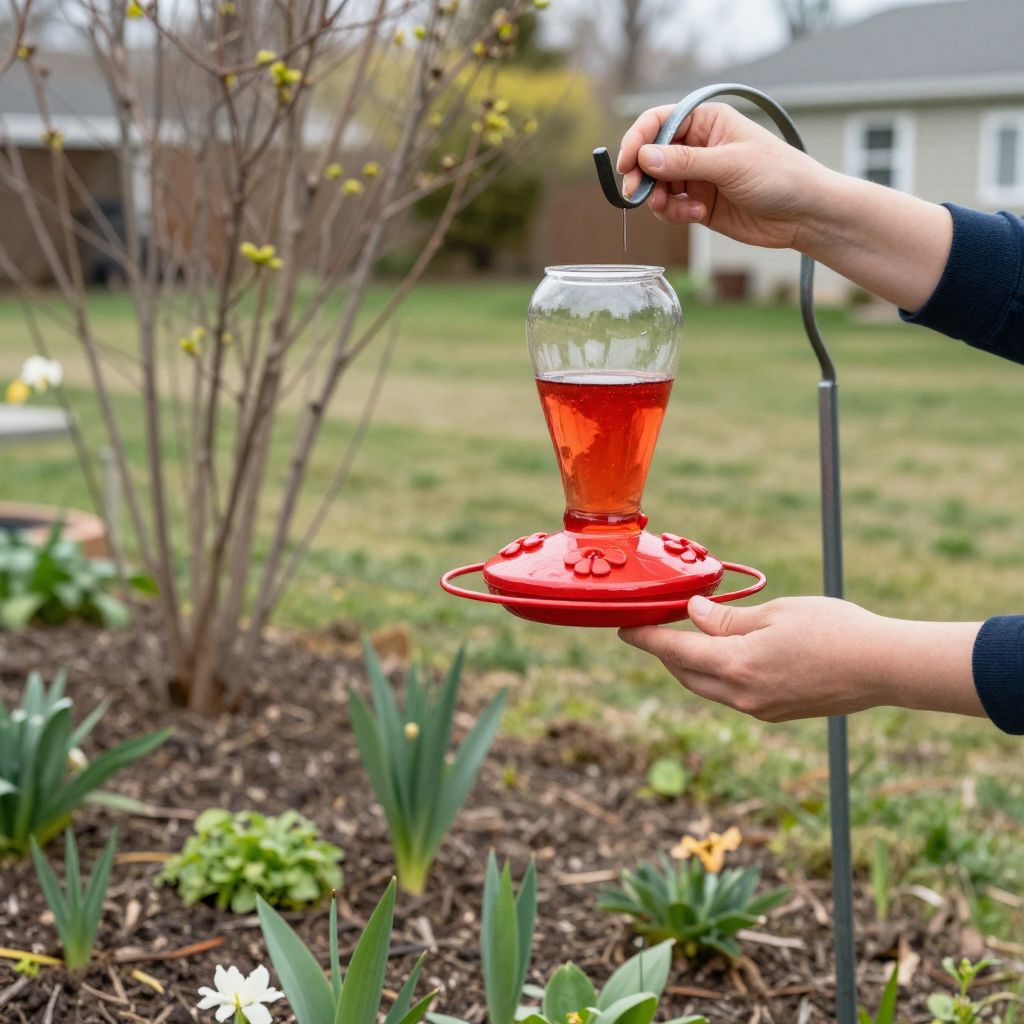
Wondering when to put up hummingbird feeder so it actually attracts birds instead of sitting empty? The best time is usually about 1–2 weeks before hummingbirds are expected to arrive in your area, then keep it up through migration season and a little after the last birds leave.
Exact timing depends on your climate, elevation, and local migration patterns. If you want the best chance of seeing hummingbirds, the feeder should be ready before the first migrants pass through, not after they’ve already moved on.
When to put up hummingbird feeder?
Put your hummingbird feeder out before the first spring arrivals in your region and keep it available until migration is clearly over in fall. In many areas, that means early spring through late autumn, but the right date depends on where you live. If you’re unsure, set it out when daytime temperatures are reliably above freezing and nectar won’t freeze overnight.
How to time it by season
Spring: get it out early
Spring is the most important time to have a feeder ready. Hummingbirds often travel on instinct and may pass through quickly, so if the feeder is already clean and filled, you’re more likely to catch the first arrivals.
- In warmer regions, you may need feeders out by late winter or very early spring.
- In cooler regions, aim for early to mid-spring, before peak migration.
- If local flowers bloom early, put feeders out when those blooms begin.
Don’t wait for hummingbirds to appear before setting up the feeder. By then, you may miss the earliest birds or have fewer visitors overall.
Summer: keep it clean and consistent
Once hummingbirds are feeding regularly, your main job is maintenance. Warm weather can spoil nectar quickly, especially in direct sun, so check feeders often and refresh them as needed.
- In hot weather, nectar may need changing every 1–3 days.
- In milder weather, every few days may be enough.
- Clean the feeder thoroughly whenever the nectar looks cloudy, has debris, or smells fermented.
Summer is also a good time to place feeders near nectar-rich flowers such as salvia, bee balm, penstemon, columbine, and trumpet vine, if those plants suit your garden and climate.
Fall: leave it up longer than you think
Many gardeners remove feeders too soon in autumn. Hummingbirds may still be migrating through long after local nesting has ended, and some individuals linger later than expected.
Keep feeders up until you have not seen hummingbirds for at least a couple of weeks. If you live in a region with a long migration window, leaving the feeder up into late fall is often the safer choice.
Do not take feeders down at the first cool spell. A sudden temperature drop does not always mean migration is finished.
How to know your local timing
The best schedule is based on your own area, not a national calendar. Hummingbird arrival and departure can vary by several weeks depending on latitude, elevation, coastal influence, and local weather patterns.
Use these clues
- Local sightings: If neighbors or local bird groups report arrivals, it’s time to hang feeders.
- Bloom timing: When early nectar plants start flowering, hummingbirds often aren’t far behind.
- Temperature: Freezing nights can make nectar unusable unless you can protect the feeder.
- Migration season: Spring and fall migration windows are the key periods, even if birds are not nesting in your yard.
If you garden in a mild climate, you may be able to keep feeders up much longer than gardeners in colder areas. In frost-prone places, feeding may be more seasonal and require more frequent monitoring.
Where to hang the feeder for best results
Placement matters almost as much as timing. A feeder that is easy for hummingbirds to find, but not too exposed, will usually perform better.
Good feeder placement
- Hang it where you can see it and refill it easily.
- Choose a spot with morning sun and afternoon shade if possible.
- Keep it near shrubs or trees so birds have nearby cover.
- Place it away from strong winds and heavy foot traffic.
Try to avoid placing feeders too close to windows unless you use window-safe placement strategies. Hummingbirds can strike glass, especially if the feeder is reflected in it.
How high should it be?
Most feeders work well at about eye level to a little above, as long as they are easy to reach for cleaning. The exact height is less important than visibility, safety, and convenience.
What kind of feeder setup works best
You do not need a complicated setup to attract hummingbirds. A simple feeder with fresh nectar and regular cleaning is usually enough.
Feeder basics
- Choose a feeder that is easy to take apart and wash.
- Look for feeding ports that are simple to clean.
- Use a feeder that won’t drip excessively, since leaks can attract ants and wasps.
Multiple small feeders can be better than one large feeder if you have several birds or want to reduce competition. Spread them out so one dominant bird cannot guard all the food.
How to keep nectar safe and fresh
Fresh nectar is essential. Spoiled nectar can discourage hummingbirds and may harm them, so cleanliness is part of good feeder care.
Simple nectar mix
Use a basic sugar-water solution made from plain white sugar and water. Avoid dyes, honey, brown sugar, or artificial sweeteners, which are not recommended for hummingbird feeders.
Let the nectar cool before filling the feeder, and store extra solution in the refrigerator for a short time if needed. Always discard any nectar that looks cloudy, slimy, or fermented.
Cleaning routine
- Empty remaining nectar.
- Rinse the feeder with hot water.
- Scrub all parts, especially ports and crevices.
- Rinse thoroughly so no soap residue remains.
- Let it dry or refill with fresh nectar.
In warm weather, a feeder may need more frequent cleaning than you expect. A quick rinse is not enough if mold or fermentation has started.
Common problems and how to fix them
Ants
Ants often find feeders quickly, especially in spring and summer. Use an ant moat if needed and keep the feeder clean so sticky drips do not build up.
Wasps and bees
Wasps and bees may be drawn to leaky feeders or exposed sugar water. Choose a feeder with smaller ports and fix leaks promptly. If necessary, move the feeder to a new location and clean up any spills.
Feeder goes empty too fast
If nectar disappears quickly, you may have more hummingbirds than expected or the feeder may be leaking. Check the seal, the ports, and the hanging angle before assuming the birds are the problem.
No birds are visiting
If your feeder stays untouched, the issue may be timing, placement, or nearby food sources. Try hanging it earlier in the season, moving it to a more visible spot, and planting hummingbird-friendly flowers nearby.
Should you take feeders down in winter?
In cold climates, many gardeners remove feeders once migration is clearly over and freezing conditions make maintenance difficult. In milder regions, feeders may remain useful much longer, but they still need regular cleaning and monitoring.
If you choose to leave a feeder up in cold weather, be prepared to prevent nectar from freezing and to keep the feeder clean. Frozen nectar is useless to birds, and neglected feeders can become unsanitary.
Best companion plants for hummingbirds
Feeders are helpful, but they work best alongside nectar-rich flowers. A hummingbird-friendly garden offers food from plants as well as the feeder, which can support birds through the season.
- Salvia for long bloom periods and tubular flowers
- Bee balm (Monarda) for bright, nectar-rich blooms
- Columbine (Aquilegia) for early-season flowers
- Penstemon for tubular blossoms
- Trumpet vine where it is suitable and can be controlled
Choose plants that fit your soil, sun exposure, and climate. A healthy, well-placed flowering border often brings hummingbirds in even faster than a feeder alone.
Quick seasonal checklist
- Before arrival: clean feeder, mix fresh nectar, and hang it early.
- During migration: check daily in warm weather and refill as needed.
- In summer: keep the feeder clean and watch for ants, bees, and mold.
- In fall: leave it up until hummingbirds have truly moved on.
Final takeaway
The best answer to when to put up hummingbird feeder is simple: set it out before the birds arrive and keep it available through migration. If you time it to your local season, keep the nectar fresh, and place the feeder well, you’ll give hummingbirds a reliable stop in your garden.
If you want to build a fuller hummingbird habitat, consider pairing your feeder with nectar plants and other wildlife-friendly garden features that bloom through spring and summer.