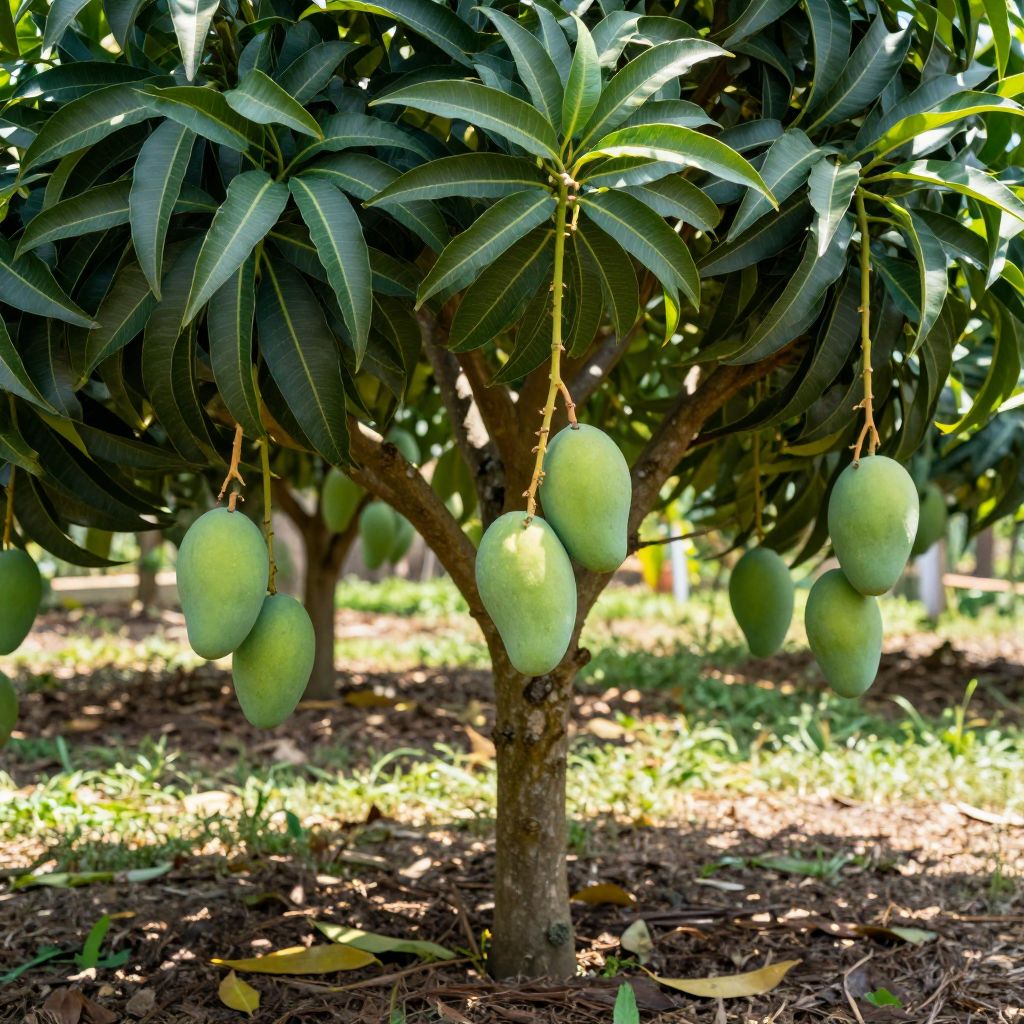
Do mangoes grow on trees? Yes—they grow on evergreen mango trees, Mangifera indica, which can become large, long-lived fruit trees in warm climates. If you want homegrown mangoes, the key is giving the tree enough sun, heat, drainage, and room to mature.
Mango trees can be grown in the ground in frost-free regions or in large containers where winters are cold. Success depends less on fussing and more on matching the tree to your climate and avoiding soggy soil, poor light, and overwatering.
Do mangoes grow on trees?
Yes, mangoes grow on tropical and subtropical trees, not vines or shrubs. A healthy mango tree can produce flower clusters that set fruit after warm weather and good pollination, but fruiting usually takes several years from seed and is more reliable from grafted trees.
What a mango tree needs to grow well
Mango trees are sun-loving, heat-tolerant fruit trees that dislike cold, wet roots. They perform best in full sun, well-drained soil, and a site protected from frost and strong wind.
Light and temperature
Give mango trees full sun for most of the day. In cooler climates, plant them in the warmest, brightest spot you have, such as a south-facing wall or sheltered courtyard.
Mangoes are sensitive to frost, especially when young. Even mild cold can damage flowers, new growth, and fruit set.
Soil and drainage
The most important soil requirement is drainage. Mango roots can decline in heavy, waterlogged soil, so avoid low spots where water collects after rain.
- Best soil: loose, well-drained loam or sandy loam
- Acceptable pH: slightly acidic to neutral soil is generally suitable
- Avoid: compacted clay without improvement, or any site that stays wet
If your soil is heavy, plant on a raised mound or in a raised bed to keep the root zone aerated.
Watering
Young mango trees need regular watering while they establish, but they should never sit in wet soil. Water deeply, then allow the top layer of soil to dry slightly before watering again.
Once established, mango trees are fairly drought tolerant, though fruiting trees may need extra moisture during long dry spells. Overwatering is a common mistake and often causes more harm than underwatering.
How to plant a mango tree
Planting correctly gives your mango tree the best start. Whether you are planting in the ground or in a container, focus on drainage, root spread, and a stable growing site.
- Choose a sunny, frost-free or frost-protected location.
- Dig a hole only as deep as the root ball and wider than it is deep.
- Set the tree so the root flare is not buried.
- Backfill with native soil unless it is extremely poor or compacted.
- Water thoroughly to settle the soil.
- Mulch lightly, keeping mulch a few inches away from the trunk.
Avoid planting too deep. Burying the trunk base can lead to rot and poor long-term growth.
Growing mangoes in containers
If you live where winters are too cold for outdoor planting, a container-grown mango can be a practical option. Use a large pot with drainage holes and a free-draining potting mix designed for containers.
- Choose a pot that allows room for root growth
- Use a well-draining mix, not garden soil alone
- Move the pot to the brightest possible location
- Protect it from cold nights and frost
Container mangoes usually stay smaller than in-ground trees, but they still need strong light and consistent care.
Can you grow mangoes from seed?
You can grow a mango tree from seed, but the result is unpredictable and fruiting may take many years. Seed-grown trees may also differ from the parent fruit in flavor, size, and productivity.
For home gardeners who want fruit sooner and more reliably, grafted mango trees are usually the better choice. They are more likely to produce true-to-type fruit and may begin bearing earlier than seed-grown trees.
Seed-growing basics
- Clean the seed carefully from a ripe mango
- Plant it in warm, moist, well-draining medium
- Keep it consistently warm, not cold
- Expect variable results and a longer wait for fruit
Pruning and training mango trees
Pruning helps mango trees stay manageable, improve airflow, and support fruiting. Young trees benefit from light shaping, while mature trees usually need only selective pruning.
How to prune
- Remove dead, damaged, or crossing branches
- Open the canopy slightly to let in light and air
- Keep the tree at a manageable height for harvesting
- Use clean, sharp tools to make smooth cuts
Do not overprune. Removing too much foliage can reduce flowering and stress the tree, especially in hot weather.
When to prune
Prune lightly after harvest or during a period of active growth, depending on your climate and the tree’s condition. Avoid major pruning just before flowering, because you may remove next season’s fruiting wood.
Fertilizing and mulching mango trees
Mango trees usually do best with moderate feeding rather than heavy fertilizing. Too much nitrogen can produce lush leaves but fewer flowers and fruit.
Compost can be useful as a top dressing if your soil is poor, but keep it light and well incorporated into the root zone surface. A thin layer of organic mulch helps conserve moisture and suppress weeds, while also protecting roots from heat.
- Use compost sparingly around established trees
- Keep mulch away from the trunk
- Avoid overfeeding with high-nitrogen fertilizers
More fertilizer is not always better. For mangoes, balance and drainage matter more than pushing fast leafy growth.
Common mango tree problems
Most mango problems come from climate stress, poor drainage, or pest pressure. Catching issues early makes them much easier to manage.
Pests
Depending on your region, mango trees may attract scale, mealybugs, aphids, mites, or fruit flies. Inspect leaves, stems, and developing fruit regularly.
- Wash off small infestations with water
- Prune crowded growth to improve airflow
- Remove fallen fruit promptly
- Use appropriate controls for your local pest problem
Diseases
Fungal issues are more likely in humid or wet conditions, especially where air circulation is poor. Anthracnose and powdery mildew are common concerns in many mango-growing areas.
To reduce disease pressure, avoid overhead watering, keep the canopy open, and remove diseased plant debris from around the tree.
Why leaves turn yellow or drop
Yellowing leaves can signal overwatering, poor drainage, nutrient imbalance, cold stress, or natural leaf replacement. If the soil feels wet for long periods, drainage should be your first suspect.
When mango trees flower and fruit
Mango trees usually flower in warm conditions, and fruit develops after successful pollination and a stable growing season. Weather matters a great deal: cool nights, excessive rain, or wind can reduce flowering and fruit set.
Fruit maturity varies by variety and climate, so avoid relying on a fixed calendar. Instead, watch for fruit that has reached full size and begins to color or soften slightly, depending on the type.
Harvesting mangoes
Harvest carefully to avoid bruising the fruit or damaging branches. Use clean pruners or a fruit picker if the mangoes are high in the canopy.
- Pick fruit when it is mature, not necessarily fully soft on the tree
- Handle fruit gently to prevent sap burn and bruising
- Let harvested mangoes finish ripening indoors if needed
Best care tips for healthy mango trees
If you want a productive mango tree, focus on the basics that matter most for long-term health.
- Give it full sun and warmth
- Plant in soil that drains quickly
- Water deeply but do not keep soil soggy
- Mulch lightly to conserve moisture
- Prune for airflow and size control
- Watch for pests and disease early
For more fruit-tree growing guidance, you may also want to read about pruning fruit trees for better harvests and how to improve garden soil drainage if your planting site tends to stay wet.
If you are asking, “Do mangoes grow on trees?” the answer is yes—and with the right warmth, sun, and drainage, you can grow a healthy mango tree at home. Start by choosing the sunniest well-drained spot you have, then match your watering and pruning to the tree’s age and climate.