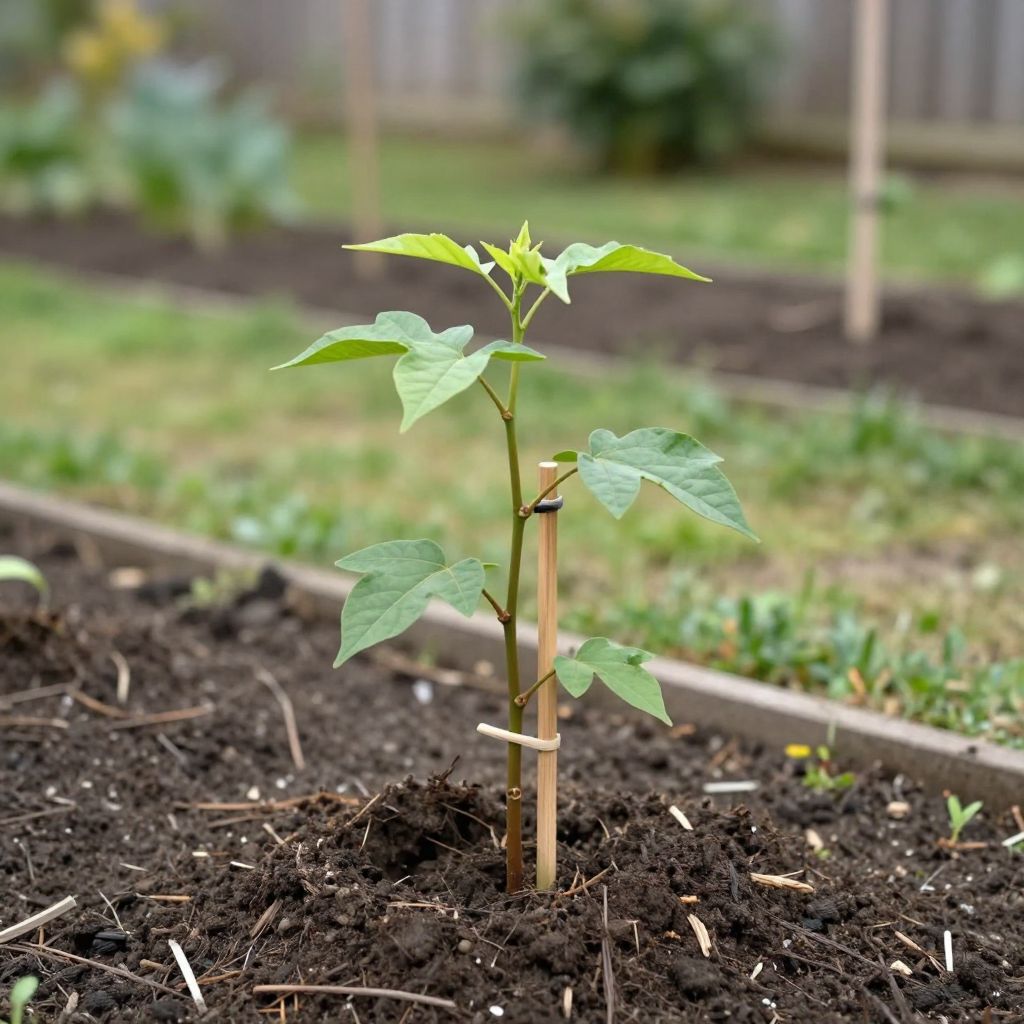
What is a sapling, and how do you tell one from a seedling or a mature young tree? If you’re buying, planting, or caring for one, the term can be a little vague. In gardening, a sapling is a young tree that has moved beyond the seedling stage but is still small, flexible, and actively establishing roots.
Understanding what a sapling looks like and what it needs will help you plant it correctly, avoid transplant shock, and give it the best start in the landscape. The right care depends on the tree species, your soil, and your local climate, but a few basic principles apply to most saplings.
What is a sapling?
A sapling is a juvenile tree, usually with a single main stem and a developing root system, but not yet a mature tree. It is larger and sturdier than a seedling, often taller than a few feet, and still needs regular watering, protection, and training while it establishes.
How to identify a sapling
Most saplings have a clear trunk, young bark that is still relatively smooth, and branches beginning higher up the stem. They may be sold bare-root, in containers, or balled and burlapped, depending on the nursery and species.
Common signs you are looking at a sapling
- Single dominant stem: Most saplings are trained or naturally growing as a young tree, not as a multi-stem shrub.
- Young bark: The bark is usually thin, smooth, or only lightly textured.
- Flexible growth: Branches and the trunk may bend more easily than on an older tree.
- Developing canopy: The top is leafy, but the framework is still small.
- Active root establishment: The root ball or bare roots are not yet fully anchored in the soil.
Sapling vs. seedling vs. mature tree
- Seedling: A very young plant that has recently sprouted from seed and is still tiny.
- Sapling: A young tree that is past the seedling stage and growing into a trunk and canopy.
- Mature tree: A tree that has developed a substantial trunk, root system, and established form.
What a sapling needs to grow well
Most saplings do best in well-drained soil, steady moisture, and enough light for their species. They are vulnerable to drought, heat stress, wind, compacted soil, and competition from grass or weeds, especially during the first one to three growing seasons after planting.
Soil and drainage
Good drainage is essential. A sapling planted in soggy soil may struggle to root properly, while heavy clay can limit oxygen around the roots.
- Work in compost only if the soil is poor or very compacted, and mix it into the surrounding planting area rather than creating a rich pocket in the hole.
- Avoid planting too deep; the root flare should sit at or just above the soil surface.
- If water stands in the planting area after rain, choose a different site or improve drainage before planting.
Sunlight
Match the sapling to the light it needs. Sun-loving trees need full sun, while shade-tolerant species may prefer filtered light or partial shade, especially when young.
- Observe the site for several hours before planting.
- Consider how nearby buildings, fences, and larger trees change light through the day and across seasons.
Watering
Newly planted saplings usually need consistent moisture, but not waterlogged soil. The goal is to keep the root zone evenly moist while encouraging roots to grow outward.
- Water deeply so moisture reaches the root ball and surrounding soil.
- Check soil with your finger or a small trowel before watering again.
- Adjust frequency for rainfall, heat, wind, soil type, and container size.
How to plant a sapling correctly
Planting depth and root preparation matter more than most beginners realize. A well-planted sapling often establishes faster than one that is overwatered, buried too deeply, or set into a hole that is too narrow and glazed.
- Choose the right site. Confirm the tree’s mature size, light needs, and space for roots and canopy.
- Prepare a wide planting area. Loosen the soil in a broad circle rather than digging a deep, narrow hole.
- Inspect the roots. Remove circling or damaged roots on container-grown trees if needed.
- Set the tree at the correct height. The root flare should be visible near the soil surface.
- Backfill with native soil. Firm gently to remove large air pockets, but do not compact heavily.
- Water thoroughly. Soak the area after planting to settle the soil.
- Mulch properly. Apply a 2–4 inch layer of mulch, keeping it several inches away from the trunk.
Mulching tips
Mulch helps conserve moisture, moderate soil temperature, and reduce weeds. Keep it in a flat ring or broad donut shape, not piled against the trunk, which can trap moisture and encourage rot.
How to care for a sapling in the first few seasons
Early care is mostly about helping the sapling establish roots, develop a stable trunk, and avoid stress. The exact routine depends on species and weather, but these basics apply to most young trees.
Watering and monitoring
Check the soil regularly during dry weather. Young trees often need more attention than established trees because their roots have not yet spread widely.
- Water slowly so moisture penetrates deeply.
- Use a hose on a gentle trickle, a watering basin, or drip irrigation if appropriate.
- Reduce watering when the soil stays moist after rain.
Staking only when necessary
Not every sapling needs a stake. If the tree stands on its own, it is usually better to let it move a little in the wind, which helps strengthen the trunk.
- Stake only if the sapling is unstable, in a windy site, or in loose soil.
- Use soft ties and remove stakes once the tree can stand independently.
- Avoid rigid support that prevents natural trunk movement.
Pruning young trees
Prune lightly and only for clear reasons, such as removing dead, broken, or crossing branches. Structural pruning is often best done gradually over several years.
- Keep the central leader if the species naturally grows that way.
- Remove damaged growth with clean, sharp tools.
- Do not remove too much foliage at once, since leaves feed root growth.
Common sapling problems and how to fix them
Most sapling problems come from planting stress, improper watering, or poor site selection. Catching these early can save the tree.
Wilting or leaf scorch
Wilting can mean underwatering, transplant shock, or heat stress. Brown leaf edges often point to dry conditions, wind exposure, or roots that are not yet established.
- Check soil moisture before adding more water.
- Mulch to reduce evaporation.
- Provide temporary shade only if the species and site make that necessary.
Yellowing leaves
Yellow leaves may signal overwatering, poor drainage, nutrient imbalance, or root disturbance. Do not assume the tree needs fertilizer right away.
- Make sure the soil drains well.
- Confirm the tree is not planted too deep.
- Look for compacted soil or root damage.
Broken or rubbing branches
Young trees can develop poor structure if branches cross or compete. Early correction is easier than fixing a mature tree later.
- Remove damaged branches promptly.
- Use clean pruning tools to make smooth cuts.
- Focus on building a strong framework, not a dense canopy.
Pests and diseases
Saplings can be vulnerable to insects, fungal issues, and animal damage because their bark and roots are still tender. The best defense is healthy growth and regular inspection.
- Check leaves, stems, and the trunk for chewing, spotting, or oozing.
- Keep mulch away from the trunk to reduce disease risk.
- Protect trunks from rodents, deer, and mower damage if needed.
When a sapling becomes a young tree
There is no exact calendar date when a sapling stops being a sapling. In practical gardening terms, a tree is moving out of the sapling stage once its trunk thickens, the root system is established, and it can handle normal weather with less frequent intervention.
That transition may take a few years or longer, depending on the species, planting conditions, and care. Fast-growing trees may appear established sooner, but they still need proper pruning, mulching, and protection while they mature.
Best tools for sapling care
A few simple tools make sapling care easier and more accurate. You do not need much equipment, but the right tools help prevent damage.
- Hand pruners for small corrective cuts
- Bypass loppers for slightly larger branches
- Mulch fork or rake for spreading mulch
- Watering hose, watering can, or drip line
- Tree guard or trunk protector where wildlife or mowers are a concern
Common mistakes to avoid
- Planting too deep: This is one of the most common causes of decline.
- Overwatering: Saturated soil can suffocate roots.
- Using too much fertilizer too soon: This can stress roots rather than help them.
- Leaving mulch against the trunk: This can trap moisture and invite rot.
- Ignoring mature size: A small sapling can become a large tree with major space needs.
Conclusion
A sapling is a young tree in its establishment stage, and the best way to help it thrive is to plant it at the right depth, water it consistently, and match it to the site. If you have one in your garden, inspect the root flare, refresh the mulch ring, and check soil moisture this week.
For more practical tree-care guidance, you may also find helpful reading on tree planting basics and how to mulch trees correctly.