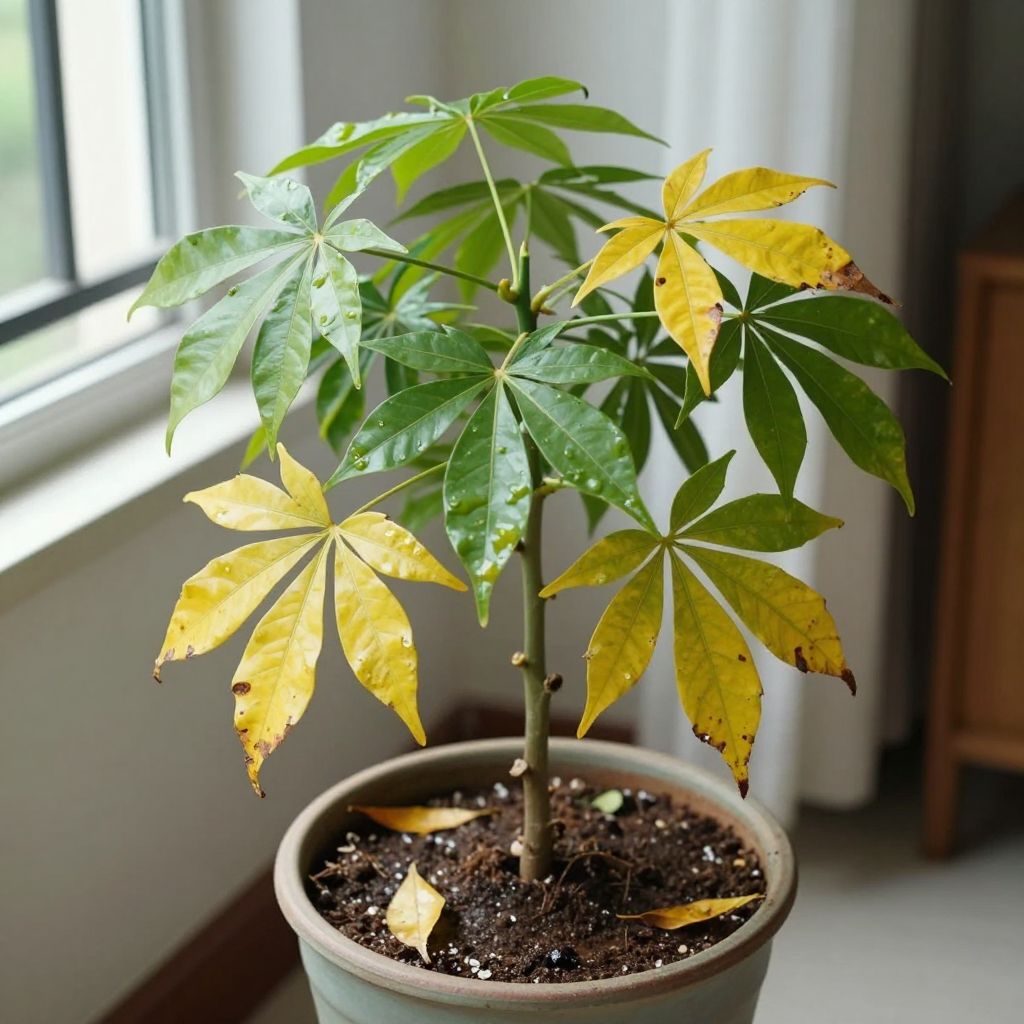
Why is my money tree dying? In most cases, a money tree (Pachira aquatica) declines because of watering mistakes, poor drainage, low light, or stress from sudden changes. The good news is that this plant is often salvageable if you catch the problem early and correct the growing conditions.
Start by checking the roots, soil, and light before assuming the plant is beyond help. Money trees usually recover best when you fix the environment first, then prune damaged growth and adjust care gradually.
Why is my money tree dying?
A money tree usually looks sick because its roots are staying too wet, the pot drains poorly, or the plant is getting too little light. Other common causes include underwatering, cold drafts, pests, root rot, and stress after repotting or moving. The leaves and stems often show clues that point to the real problem.
How to tell what’s wrong with your money tree
Before you treat anything, inspect the plant closely. Different symptoms usually point to different causes, and guessing can make the problem worse.
Leaf symptoms and what they often mean
- Yellow leaves often suggest overwatering, poor drainage, or low light.
- Brown, crispy leaf edges can mean underwatering, low humidity, or salt buildup from fertilizer or tap water.
- Soft, limp stems may indicate root rot or severe overwatering.
- Dropping leaves can happen after a move, in cold drafts, or when the plant is stressed by too much or too little water.
- Pale, stretched growth usually points to insufficient light.
Check the soil before watering again
Push a finger 2 to 3 inches into the potting mix. If it feels wet or cool, wait. If it feels dry at that depth and the pot is light, the plant may need water. A moisture meter can help, but your fingers and eyes are usually enough.
Overwatering is the most common reason money trees fail
Money trees dislike sitting in soggy soil. When roots stay wet too long, they lose oxygen, begin to rot, and can no longer support the leaves and stems.
Signs of overwatering
- Yellowing leaves, especially lower ones
- Soft or mushy stems
- Musty smell from the pot
- Soil that stays wet for many days
- Leaves dropping even though the soil is damp
What to do
- Stop watering until the top few inches of soil dry out.
- Make sure the pot has drainage holes.
- Empty any saucer or cachepot after watering.
- If the soil is sour, compacted, or stays wet too long, repot into a faster-draining mix.
- If roots are brown, slimy, or smell bad, trim the rotted parts with clean pruners and repot in fresh mix.
Important: A money tree in a decorative pot without drainage is much more likely to decline. If you use a cachepot, keep the plant in a nursery pot with holes inside it.
Underwatering can also cause decline
Although overwatering is more common, money trees can suffer if they dry out too much or too often. Repeated drought stress can cause leaf drop, crispy edges, and weak growth.
Signs of underwatering
- Dry, pulling-away soil
- Leaves curling or crisping at the edges
- Drooping that improves after watering
- Lightweight pot with very dry potting mix
How to water correctly
Water thoroughly until excess runs from the drainage holes, then let the pot drain completely. Do not give small sips every day, because that can keep the upper soil damp while the lower roots stay dry or unevenly watered.
In general, water only when the top layer of soil has dried. How quickly that happens depends on light, temperature, pot size, and the season. Plants in brighter, warmer rooms usually dry faster than those in cool, low-light spaces.
Light problems can weaken a money tree
Money trees grow best in bright, indirect light. They can tolerate medium light, but very low light often leads to slow growth, leaf drop, and weak stems. Harsh direct sun can scorch the leaves, especially through glass.
What good light looks like
- Bright room with filtered sun
- Near an east-facing window
- A few feet back from a south- or west-facing window with a sheer curtain
Signs of too little light
- Long, leggy stems
- Small new leaves
- Slow growth
- Leaves dropping from the lower part of the plant
Signs of too much direct sun
- Bleached or scorched patches on leaves
- Crispy brown spots
- Leaves curling in strong afternoon sun
If your money tree is in a dim room, move it gradually to a brighter spot over a week or two. Sudden shifts from low light to strong sun can shock the plant.
Soil and drainage matter more than most people think
Money trees need an airy, well-draining potting mix. Heavy, compact soil holds too much water and suffocates roots. A mix made for houseplants, with added perlite or orchid bark, often works better than dense general-purpose soil alone.
What a better potting mix should do
- Drain quickly after watering
- Hold some moisture without staying soggy
- Allow air to reach the roots
Repot if the soil is the problem
Repotting is worth doing if the mix is broken down, stays wet for too long, or smells sour. Choose a pot only slightly larger than the root ball, because oversized pots hold extra moisture and can make rot worse.
When repotting, gently loosen circling roots, remove dead or mushy roots, and use fresh mix. Avoid packing the soil too tightly.
Temperature, humidity, and drafts can stress the plant
Money trees prefer stable indoor conditions. They dislike cold drafts, hot vents, and sudden temperature swings. Stress from the environment can cause leaf drop even when watering is correct.
Keep conditions steady
- Avoid placing the plant near exterior doors in winter
- Keep it away from heating and cooling vents
- Do not set it next to a cold windowpane in freezing weather
- Use a pebble tray or humidifier only if your indoor air is very dry
Normal household humidity is often acceptable, but very dry air can contribute to brown leaf edges, especially in winter indoors.
Pests and diseases that can make a money tree decline
Weak or stressed money trees are more likely to attract pests. Spider mites, scale, mealybugs, and fungus gnats are the most common indoor troublemakers.
What to look for
- Spider mites: fine webbing, speckled leaves, dusty appearance
- Mealybugs: white cottony clusters in leaf joints
- Scale: small brown bumps on stems and leaves
- Fungus gnats: tiny flies around wet soil
How to respond
- Isolate the plant from others.
- Wipe visible pests off with a damp cloth or cotton swab.
- Rinse leaves gently if needed.
- Let the soil dry more between waterings if fungus gnats are present.
- Repeat treatment as needed, since pests often require more than one round of control.
Root rot is the most serious disease issue for money trees. If the trunk base is soft or the roots are badly decayed, recovery becomes much harder. Catching it early gives you the best chance.
Pruning and cleanup can help a struggling money tree recover
Remove dead, yellow, or heavily damaged leaves so the plant can focus on healthy growth. If stems are soft or blackened, prune back to firm tissue with clean, sharp pruners.
Pruning tips
- Use clean tools to avoid spreading disease
- Do not remove too much at once if the plant is already weak
- Trim only clearly dead or diseased growth
If the plant is leggy but otherwise healthy, you can prune lightly to encourage branching. Do this during active growth if possible, and avoid heavy pruning when the plant is already stressed.
How to revive a dying money tree step by step
If you want a practical rescue plan, work through the plant in order. Fixing the roots and environment matters more than feeding or misting.
- Check the soil moisture. Do not water until you know whether the root zone is wet or dry.
- Inspect the pot. Confirm that it drains freely and is not sitting in water.
- Examine the roots. Healthy roots are usually firm; rotten roots are brown, mushy, or smelly.
- Adjust the light. Move the plant to bright, indirect light if it is too dim.
- Remove damaged growth. Prune dead leaves and soft stems.
- Repot if needed. Use fresh, well-draining mix if the old soil is compacted or waterlogged.
- Wait before fertilizing. Do not feed a stressed plant until you see new healthy growth.
Common mistakes to avoid
Many money trees decline because well-meaning care makes the problem worse. Avoid these common errors while the plant recovers.
- Watering on a strict calendar instead of checking the soil
- Using a pot without drainage holes
- Keeping the plant in low light for long periods
- Repotting into a much larger container than necessary
- Fertilizing a plant with damaged roots
- Ignoring pests until the infestation spreads
When a money tree may not recover
If the trunk is collapsing, the base is mushy, or most roots are gone, the plant may be too far advanced for a full recovery. Even then, you may still be able to save a healthy stem tip for propagation if part of the plant remains firm and green.
For most plants, though, early intervention works. Money trees are resilient when the roots are still viable and the growing conditions improve quickly.
Conclusion: the fastest way to help your money tree
If you’re asking, “Why is my money tree dying,” start with the roots, not the leaves. Check drainage, soil moisture, and light first, then prune damaged growth and correct any pest or temperature stress. If you want, keep a close eye on the plant for the next few weeks and make one change at a time so you can see what helps.
For more houseplant troubleshooting, you may also want to read about how to fix root rot in indoor plants and choosing the right potting mix for houseplants.