If you’re wondering when to plant tomatoes in Tennessee, timing matters as much as variety. Tomatoes need warm soil, steady sun, and protection from late frosts, so planting too early can set them back fast.
The good news is that Tennessee’s long growing season gives you a solid window for success. With the right start date, good soil, and a little frost awareness, you can grow healthy, productive tomato plants in most parts of the state.
When to plant tomatoes in Tennessee?
In Tennessee, transplant tomato seedlings outdoors after the last frost date and when nighttime temperatures stay above about 50°F. In many areas, that means mid-April to early May in West Tennessee, late April to mid-May in Middle Tennessee, and early to mid-May in East Tennessee. Use soil warmth and local weather, not the calendar alone, to decide.
Understanding Tennessee’s tomato planting window
Tennessee stretches across several climate zones, so planting time varies by region. Spring can warm quickly in the west, while mountain and valley areas in the east often stay cooler longer.
Tomatoes grow best when the soil is at least 60°F, and they really take off once it’s closer to 65°F to 70°F. If the soil is cold, roots grow slowly and plants may stall, even if the air feels mild.
General timing by region
- West Tennessee: often safe to transplant from mid-April to early May.
- Middle Tennessee: often safe from late April to mid-May.
- East Tennessee: often safe from early to mid-May, especially in cooler or higher-elevation spots.
These are general guides, not fixed rules. A late cold snap can still happen in Tennessee, so keep row cover, cloches, or buckets handy for protection if the forecast turns chilly.
How to judge the right planting time
The best planting date is the one that matches your local frost pattern and soil conditions. Tomatoes planted too early may survive, but they often grow slowly and are more vulnerable to disease and stress.
Watch these conditions before planting
- No frost in the forecast: Tomatoes are frost-tender and damaged by cold nights.
- Warm soil: Aim for at least 60°F at planting depth.
- Night temperatures above 50°F: Cooler nights can slow growth and reduce fruit set later.
- Dry enough soil to work: Avoid planting into soggy ground, which compacts easily and drains poorly.
If you’re unsure, wait a few extra days rather than rushing. A slightly later planting often catches up quickly once warm weather settles in.
When to start tomato seeds indoors in Tennessee
If you’re growing tomatoes from seed, start them indoors about 6 to 8 weeks before your expected transplant date. That usually means late February through March for many Tennessee gardeners, depending on region and whether you plan to plant under protection.
Seedlings started too early can become leggy and rootbound before the weather is ready. Strong, compact transplants usually outperform oversized, stressed ones.
Indoor seed-starting basics
- Use a sterile seed-starting mix, not garden soil.
- Provide bright light from a sunny window or grow light.
- Keep the mix evenly moist, not soaked.
- Give seedlings good air circulation to reduce damping-off and weak stems.
Before planting outside, harden off seedlings for 7 to 10 days. Start with a few hours of shade and gradually increase sun and outdoor exposure so the plants adjust without shock.
Preparing the soil for tomatoes
Tomatoes do best in loose, fertile, well-drained soil with plenty of organic matter. Tennessee soils vary widely, so a soil test is one of the smartest steps you can take before planting.
Work in compost before transplanting if your soil is thin or heavy. Compost improves drainage in clay and helps sandy soil hold moisture and nutrients better.
Ideal planting site
- Full sun: at least 6 to 8 hours of direct sunlight daily.
- Good drainage: avoid low spots where water stands after rain.
- Room to breathe: good spacing helps reduce disease pressure.
If your soil stays wet after storms, consider raised beds or mounded rows. Tomatoes hate “wet feet,” and poor drainage can lead to root problems and weaker plants.
How to plant tomatoes correctly
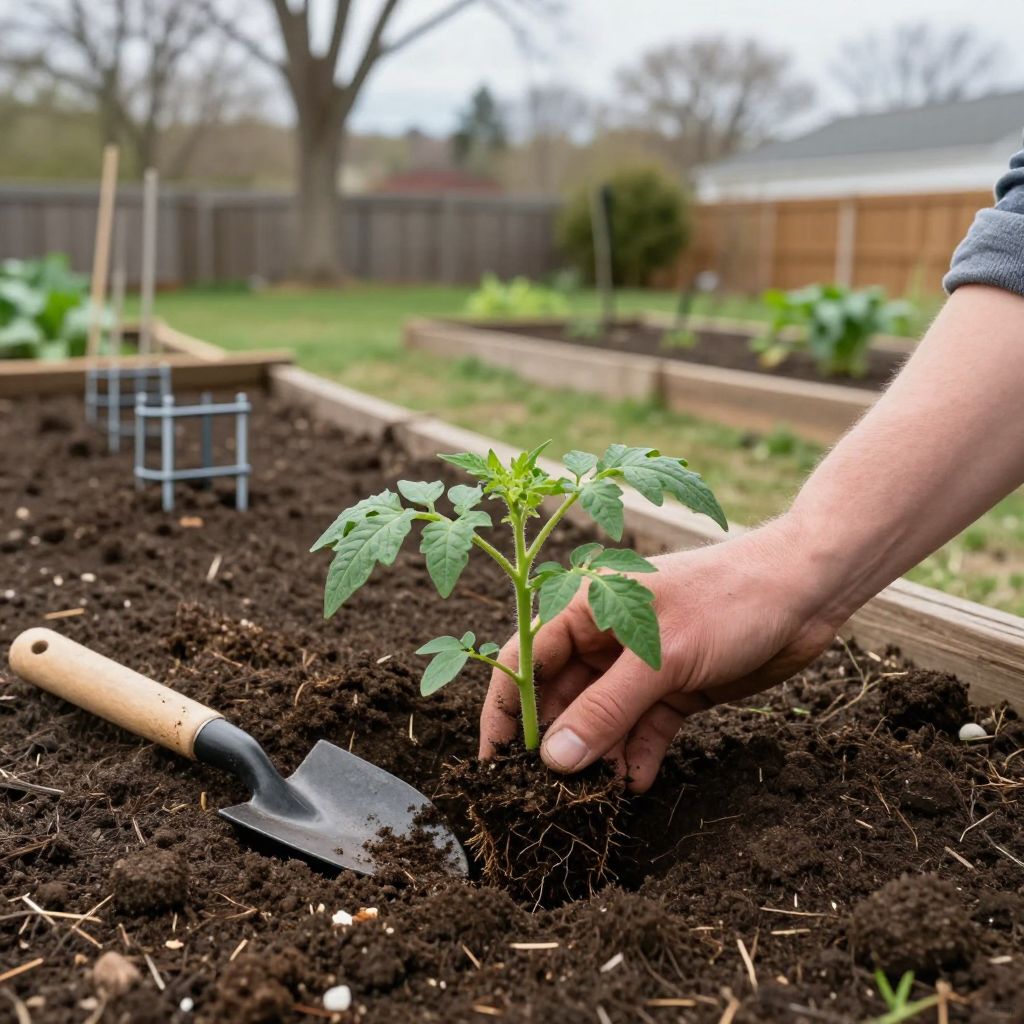
Set transplants deeper than they were growing in the pot. Tomatoes form roots along buried stems, so deeper planting helps create a stronger root system.
- Dig a hole deep enough to bury part of the stem.
- Remove the lower leaves that would sit below the soil line.
- Set the plant in the hole and backfill gently.
- Water thoroughly to settle the soil around the roots.
- Mulch after the soil warms to help conserve moisture and suppress weeds.
Space plants so air can move between them. Crowding encourages fungal disease and makes pruning, watering, and harvesting more difficult.
Staking and support
Install cages, stakes, or trellises at planting time, not after the plant is large. Early support reduces stem damage and keeps fruit cleaner and easier to pick.
- Stakes: good for pruning and training one or two main stems.
- Cages: easier for beginners and helpful for heavier crops.
- Trellises: useful if you want a more vertical garden setup.
Watering and mulching after planting
Tomatoes need consistent moisture, especially while they are establishing roots and setting fruit. Irregular watering can lead to blossom-end rot, fruit cracking, and uneven growth.
Water deeply at the base of the plant rather than spraying the foliage. Wet leaves invite disease, especially during Tennessee’s humid stretches.
Helpful watering habits
- Water early in the day when possible.
- Keep moisture steady, especially during flowering and fruiting.
- Use mulch to reduce evaporation and soil splash.
- Avoid letting plants swing from very dry to very wet.
A 2- to 3-inch layer of mulch works well once the soil has warmed. Keep mulch a little away from the stem to reduce rot and pest hiding spots.
Common tomato problems in Tennessee
Warm, humid weather is great for tomatoes, but it also favors some diseases and pests. Catching problems early makes them much easier to manage.
Diseases to watch for
- Early blight: lower leaves develop dark spots and yellowing.
- Septoria leaf spot: small circular spots on leaves, often after rainy periods.
- Blossom-end rot: dark, sunken area on the bottom of fruit, often linked to uneven watering.
- Fungal wilt and root issues: often worse in poorly drained soil.
Remove badly diseased leaves, keep plants spaced, and avoid overhead watering. If a plant is repeatedly struggling in the same spot, rotate tomatoes to a different area next season.
Common pests
- Hornworms
- Aphids
- Whiteflies
- Stink bugs
Check plants often, especially the undersides of leaves. Hand-picking larger pests early is often enough for home gardens, and healthy plants usually recover better than stressed ones.
Pruning and maintenance for better harvests
Not every tomato needs heavy pruning, but a little maintenance helps. Remove leaves that touch the soil and trim damaged or diseased foliage as needed.
If you grow indeterminate tomatoes, you can remove some suckers to improve airflow and direct energy into fruiting. If you grow determinate types, keep pruning light so you don’t reduce yield.
Keep an eye on these tasks
- Check ties and supports as plants grow.
- Remove weeds that compete for water and nutrients.
- Watch for new disease spots after rainy weather.
- Harvest regularly to encourage continued production.
When to harvest tomatoes in Tennessee
Harvest timing depends on variety and weather, but most tomatoes are ready when they have full color, a slight give when gently squeezed, and easy release from the vine. Flavor is usually best when fruit ripens on the plant.
If a hard rain or late-season cool spell is coming, you can pick tomatoes at the breaker stage and let them finish indoors. Keep them at room temperature, not in the refrigerator, for the best texture and flavor.
Best practices and mistakes to avoid
Success with tomatoes in Tennessee often comes down to avoiding a few common mistakes. Small corrections early can save the whole crop later.
- Don’t plant too early. Cold soil and chilly nights can stunt growth.
- Don’t crowd plants. Poor airflow increases disease pressure.
- Don’t overwater. Saturated soil can cause root stress and fruit problems.
- Don’t skip hardening off. Sudden sun and wind can scorch tender seedlings.
- Don’t ignore support. Tomatoes sprawl fast once they start growing.
Conclusion
For most Tennessee gardeners, the best time to plant tomatoes is after the last frost, when soil and nights have warmed enough for steady growth. If you match your planting date to your region, prepare the soil well, and protect plants from cold snaps, you’ll give your tomatoes a much better start.
For more help planning your tomato patch, you may also want to read when to start tomato seeds indoors and what to plant with tomatoes.