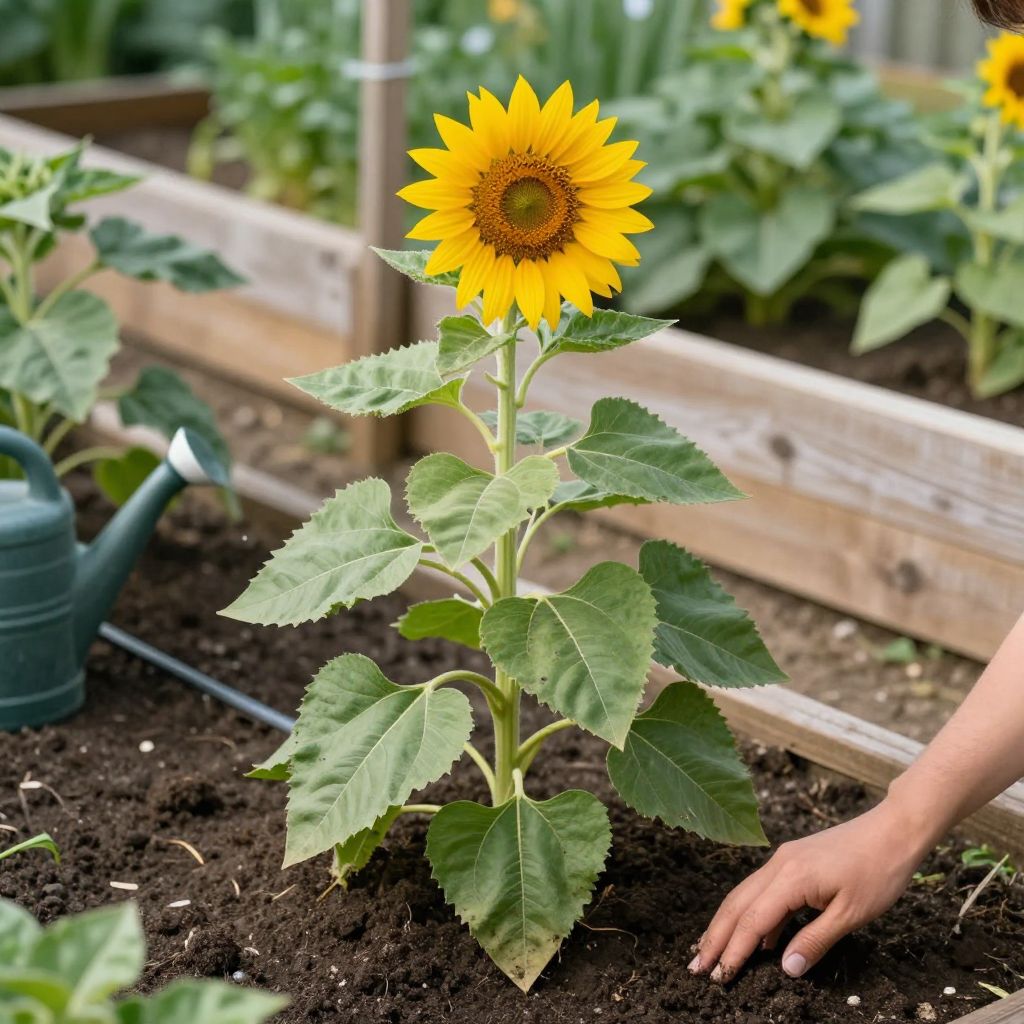
Do sunflowers need a lot of water? The short answer is: they need consistent moisture while they’re getting established, but mature sunflowers are fairly drought-tolerant and usually do not need heavy watering. The key is to water deeply, not constantly, and to avoid both soggy soil and long dry spells.
If you give sunflowers the right soil, full sun, and sensible watering, they grow quickly and flower well. Most problems come from overwatering seedlings, poor drainage, or letting young plants dry out during hot weather.
Do sunflowers need a lot of water?
Sunflowers do not need “a lot” of water in the sense of frequent shallow watering. They do best with deep watering when the top few inches of soil dry out, especially while young, in containers, or during hot, windy weather. Once established, many sunflowers can handle short dry periods better than overly wet soil.
How much water sunflowers actually need
Water needs change as the plant grows. A newly planted sunflower has a smaller root system and needs more regular moisture than a mature plant with roots reaching deeper into the soil.
Seedlings and young plants
Keep the soil evenly moist, not saturated, until seedlings are established. If the surface dries out quickly, they may wilt, stall, or produce weak stems.
- Water when the top 1 to 2 inches of soil feel dry.
- Water gently so you do not wash away seeds or disturb roots.
- In hot weather, check young plants daily.
Mature sunflowers
Once established, sunflowers usually need less frequent watering. A deep soak is better than a light sprinkle because it encourages deeper roots and stronger stems.
- Water deeply when the soil dries several inches down.
- Let the soil dry slightly between waterings.
- Adjust for rainfall, heat, wind, and soil type.
Container-grown sunflowers
Sunflowers in pots dry out much faster than those in the ground. Containers may need water more often, especially in summer, because the root zone is smaller and exposed to heat.
- Check pots daily in warm weather.
- Use containers with drainage holes.
- Do not let pots sit in standing water.
What kind of soil helps sunflowers use water well?
Sunflowers prefer well-draining soil that holds some moisture but never stays waterlogged. Heavy clay soil can trap water around the roots, while very sandy soil may dry too quickly.
Best soil conditions
- Drainage: essential to prevent root rot.
- Organic matter: compost helps soil hold moisture without becoming soggy.
- Loose texture: allows roots to grow deep and access water below the surface.
If your soil is poor, mix in compost before planting. This improves both moisture retention and drainage, which is especially helpful for sunflowers in garden beds.
How to water sunflowers the right way
The best watering method depends on whether your sunflowers are in beds, borders, or pots. In every case, deep watering is better than frequent misting.
- Water at the base of the plant, not over the leaves.
- Soak the soil thoroughly so moisture reaches the root zone.
- Wait until the upper soil begins to dry before watering again.
- Mulch around the plants to slow evaporation.
Why overhead watering is not ideal
Wet foliage can encourage fungal problems, especially in humid weather or crowded plantings. Watering at soil level also wastes less water and sends moisture where the roots need it most.
Signs your sunflower needs more water
Sunflowers often show stress before they suffer lasting damage. If you catch the signs early, a deep watering can usually help quickly.
- Leaves droop or look limp in the heat of the day.
- Lower leaves begin to yellow and dry prematurely.
- Soil pulls away from the sides of the planting hole or pot.
- Flower buds stay small or plants stop growing during dry spells.
Some wilting during the hottest part of the afternoon can happen even in healthy sunflowers. If the plant perks up in the evening, it may just be heat stress. If it stays wilted overnight, check the soil moisture.
Signs you may be overwatering sunflowers
Too much water can be just as harmful as too little. Sunflowers dislike soggy roots, and overwatering often leads to weak growth or disease.
- Leaves turn yellow and feel soft.
- Stems may look weak or floppy.
- Soil stays wet for days after watering.
- Seedlings collapse or rot at the base.
If the soil is still wet, do not water again. Let it dry out before the next watering, and improve drainage if the problem keeps happening.
How weather changes sunflower watering needs
There is no single watering schedule that works everywhere. Your climate, rainfall, soil type, and planting site all affect how often sunflowers need water.
Hot, dry, windy conditions
Plants lose moisture faster in heat and wind. In these conditions, sunflowers may need deeper and more frequent watering, especially if they are young or growing in containers.
Cool or rainy conditions
In cooler weather or after regular rain, sunflowers may need little or no extra water. Overwatering is more likely during these periods, especially in heavy soil.
Clay soil versus sandy soil
- Clay soil: holds water longer, so water less often and watch for drainage problems.
- Sandy soil: drains quickly, so you may need to water more often.
Mulch, compost, and other ways to reduce watering
Good garden setup can reduce how often you need to water. A few simple practices help sunflowers stay evenly moist without stress.
- Mulch: add 2 to 3 inches of organic mulch around plants, keeping it a little away from the stem.
- Compost: work compost into the soil before planting to improve moisture balance.
- Spacing: give plants enough room so they are not competing for water.
These steps are especially useful in summer because they reduce evaporation and help roots access water more efficiently.
Common watering mistakes to avoid
Most sunflower watering problems come from a few predictable mistakes. Avoiding them will improve growth, flowering, and stem strength.
- Watering a little every day: this can keep roots shallow and soil too wet near the surface.
- Letting seedlings dry out completely: young plants can stall or die back.
- Ignoring drainage: sunflowers hate sitting in wet soil.
- Watering on a fixed schedule: always check the soil first.
- Using shallow pots: roots need room and pots dry unevenly.
Do sunflowers need more water when flowering?
Flowering sunflowers may use more moisture because the plant is larger and actively supporting blooms and seed development. Even so, the goal stays the same: keep the soil evenly moist, not saturated.
If a sunflower is producing a large bloom or multiple heads, monitor it more closely during hot weather. A plant under water stress may produce smaller flowers or mature seeds unevenly.
Watering tips for potted sunflowers
Potted sunflowers need extra attention because containers heat up and dry out quickly. This is one of the most common places where gardeners wonder, “Do sunflowers need a lot of water?”
- Choose a pot with drainage holes.
- Use a quality potting mix, not garden soil.
- Water until excess drains from the bottom.
- Empty saucers so roots do not sit in water.
If the pot is very small for the plant, it may dry out too quickly. A larger container usually makes watering easier and more forgiving.
Pests and diseases connected to watering problems
Watering mistakes can make sunflowers more vulnerable to pests and disease. Healthy moisture management is part of plant protection.
Fungal issues
Overly wet soil and wet leaves can contribute to mildew, leaf spots, and root problems. Good spacing, airflow, and careful watering help reduce the risk.
Weak growth and pests
Water-stressed plants can attract pests more easily or recover more slowly from damage. Keep plants growing steadily so they can better handle aphids, chewing insects, and environmental stress.
Simple sunflower watering checklist
Use this quick check before watering:
- Is the top few inches of soil dry?
- Has it rained recently?
- Is the plant young, in a pot, or newly transplanted?
- Is the weather hot, windy, or very sunny?
- Does the soil drain well, or does it stay wet?
If most answers point to dryness, water deeply. If the soil is still moist, wait.
Conclusion: the best watering approach for sunflowers
Sunflowers do not need constant watering, but they do need steady moisture while young and during dry spells. The best approach is to water deeply, let the soil dry slightly between waterings, and adjust for your local weather and soil conditions. Check the soil before you water, and your sunflowers will be much easier to grow well.
If you want to improve your sunflower results even more, it also helps to read about how to prepare garden soil for strong root growth and mulching tips for summer flower beds.