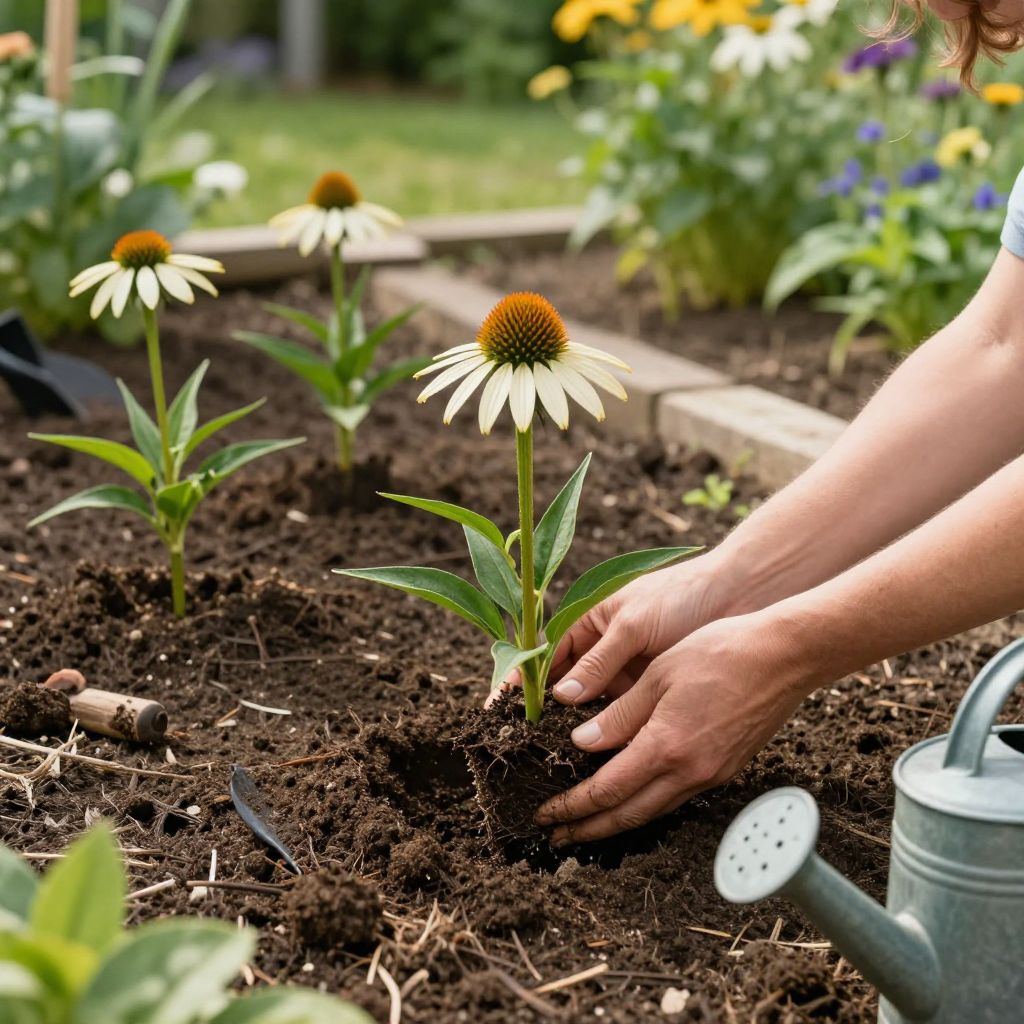
Wondering when to plant coneflowers so they settle in quickly and bloom well? The best time depends on your climate and whether you’re planting seeds, container-grown plants, or divisions. In general, coneflowers establish most reliably in mild weather—spring or early fall—when soil is workable and temperatures are not extreme.
If you match planting time to your local conditions, give them sun, and avoid soggy soil, coneflowers are usually easy to grow. Here’s how to choose the right planting window and help Echinacea thrive from the start.
When to plant coneflowers?
Plant coneflowers in spring after the last frost or in early fall about 6–8 weeks before the ground freezes. Spring planting is best in colder regions because roots have a full season to establish. Fall planting works well where autumn is long and mild, especially for container-grown plants and divisions.
Best planting time by type
Planting coneflower seeds
Coneflower seeds can be sown outdoors in late fall, winter, or early spring, depending on your climate. Many gardeners get the best results by sowing seeds outdoors in fall so they experience natural cold stratification over winter.
If you start seeds indoors, begin about 6–8 weeks before your last expected frost. Use a light seed-starting mix, keep the surface evenly moist, and expect germination to be uneven.
Planting nursery-grown coneflowers
Container-grown coneflowers are easiest to plant in spring or early fall. Avoid planting during hot midsummer weather unless you can water consistently while roots establish.
Choose a cool day if possible, and transplant in the evening or on an overcast morning to reduce stress.
Planting divisions
Dividing mature coneflowers is best done in early spring as new growth begins or in early fall after flowering slows. Divisions need enough time to root before heat or hard frost arrives.
What coneflowers need to grow well
Sunlight
Coneflowers bloom best in full sun, meaning at least 6 hours of direct light per day. They can tolerate light afternoon shade, especially in very hot climates, but too much shade usually leads to fewer flowers and leggier stems.
Soil and drainage
These perennials prefer soil that drains well. Heavy clay or constantly wet spots can cause root problems, especially in winter.
Before planting, loosen the soil to a depth of about 12 inches and mix in compost if the soil is poor or compacted. Compost improves structure, but do not overdo it in rich soils, since coneflowers often perform better in moderately fertile ground than in overly lush conditions.
pH and fertility
Coneflowers are adaptable and usually do fine in average garden soil. If your soil is extremely acidic or alkaline, a soil test can help, but most home gardens do not need special amendments for these plants.
How to plant coneflowers step by step
- Pick a sunny, well-drained spot. Avoid low areas where water collects after rain.
- Prepare the bed. Remove weeds and loosen the soil so roots can spread easily.
- Dig the hole. Make it as deep as the root ball and about twice as wide.
- Set the plant at the right depth. Keep the crown level with the surrounding soil. Do not bury the crown too deeply.
- Backfill and firm gently. Press the soil lightly to remove large air pockets.
- Water thoroughly. Soak the root zone right after planting.
- Mulch lightly. Add 1–2 inches of mulch, keeping it a few inches away from the stem.
Watering after planting
Newly planted coneflowers need regular moisture while roots establish, but they should never sit in wet soil. Water deeply when the top inch or two of soil begins to dry, then let the soil drain well.
After the first growing season, established plants are fairly drought-tolerant. In many gardens, they need only occasional watering during prolonged dry spells.
Common mistakes to avoid
- Planting too late in the season, when roots cannot establish before heat or frost.
- Overwatering, especially in clay soil or poorly drained beds.
- Planting in too much shade, which reduces flowering.
- Burying the crown too deeply, which can encourage rot.
- Using rich, heavily amended soil that stays too moist and leafy.
How climate affects planting time
Your local weather matters more than the calendar. In cold regions, spring planting is usually safest because winter arrives early and young plants need time to root. In milder regions, fall planting can be excellent because the soil is still warm and rainfall often helps plants settle in.
If summers are very hot and dry where you live, avoid planting during peak heat unless you can monitor moisture closely. In humid areas, drainage becomes even more important because wet soil can stress roots.
Pruning and maintenance after planting
Deadheading
Removing spent flowers can encourage more blooms and keep plants tidy, though some gardeners leave seed heads for birds and winter interest. If you want self-seeding, leave a few flower heads in place late in the season.
Cutting back
You can trim coneflowers back in late fall after they finish blooming, or leave the stems standing through winter and cut them down in early spring. Leaving stems up can provide habitat and visual interest, but cutting back in spring is often easier and still works well.
Pests and diseases to watch for
Coneflowers are generally reliable, but crowded plantings and poor airflow can invite problems. Common issues include powdery mildew, leaf spots, aphids, and occasional Japanese beetle feeding.
To reduce trouble:
- Space plants so air can move between them.
- Water at the base rather than overhead when possible.
- Remove badly affected leaves if disease appears.
- Keep beds clean of weeds and debris.
If a plant repeatedly struggles in wet soil, consider moving it to a better-drained location rather than trying to “fix” the same spot with more fertilizer or water.
Spacing, companion planting, and landscape use
Most coneflowers look best when given room to grow into clumps. Space plants according to their mature width so they do not crowd each other as they fill out.
They pair well with other sun-loving perennials that prefer similar conditions, such as ornamental grasses, black-eyed Susans, salvia, and coreopsis. In borders and pollinator gardens, coneflowers add long-lasting color and seed heads that attract birds later in the season.
When to divide or move coneflowers
If a mature clump becomes crowded or blooms decline, divide it in early spring or early fall. Lift the plant carefully, separate healthy sections with roots attached, and replant immediately in prepared soil.
Water the divisions well and keep them evenly moist for several weeks while they reestablish.
Quick answer for the best results
If you want the simplest rule for when to plant coneflowers, use this: plant in spring after frost or in early fall before hard freezes. Then give them full sun, well-drained soil, and moderate water while they establish.
For more practical planting advice, you may also want to read about how to prepare a perennial bed and choosing the best mulch for flower gardens.