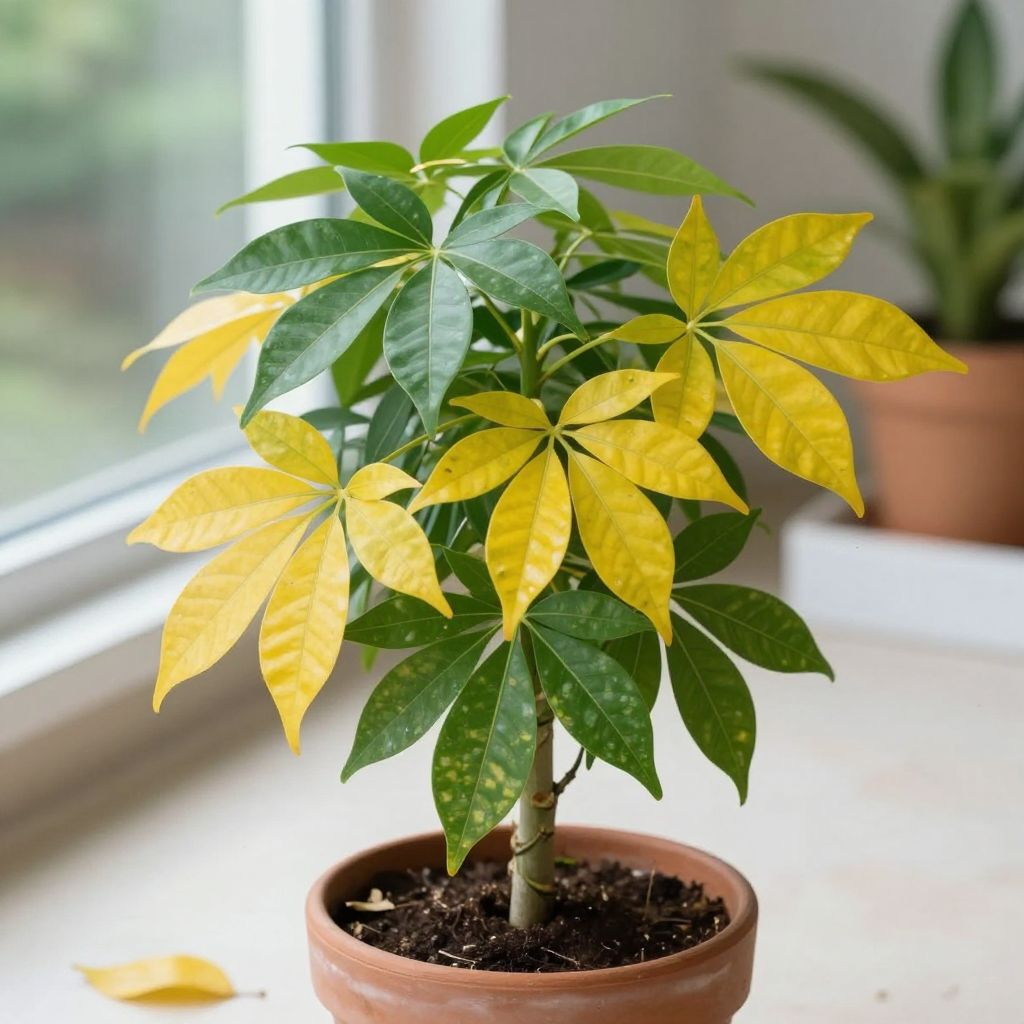
Why is my money tree leaves turning yellow? In most cases, it comes down to watering stress, poor drainage, low light, or a sudden change in growing conditions. Money trees (Pachira aquatica) are adaptable, but they dislike soggy roots and abrupt care mistakes.
The good news is that yellow leaves are often a fixable warning sign, not a death sentence. If you identify the cause early and adjust light, water, and soil conditions, your plant can usually recover and push out healthy new growth.
Why is my money tree leaves turning yellow?
Yellow leaves on a money tree usually mean the plant is stressed by too much water, too little light, poor drainage, temperature swings, pests, or natural aging of older leaves. Start by checking the soil moisture and the plant’s location, because overwatering and low light are the most common causes indoors.
Most common causes of yellow money tree leaves
1. Overwatering and root stress
This is the number one reason money tree leaves turn yellow. When the potting mix stays wet too long, roots lose access to oxygen and begin to decline.
Signs of overwatering include:
- Yellowing leaves, especially lower leaves
- Soft, droopy stems or leaves
- Soil that feels damp days after watering
- A musty smell from the pot
Fix: Let the top 1 to 2 inches of soil dry before watering again. Make sure the pot has drainage holes and never leave the plant sitting in water inside a saucer or cachepot.
2. Underwatering
Money trees can also yellow if they dry out too much between waterings. In this case, leaves may look pale, crisp at the edges, or drop after turning yellow.
Underwatering is more likely if the plant is near a heat vent, in a very bright window, or in a small pot that dries quickly.
Fix: Water thoroughly until excess drains out, then empty the saucer. Going forward, check the soil with your finger rather than watering on a fixed schedule.
3. Low light
Money trees tolerate medium light, but they do best in bright, indirect light. In low light, the plant may slow down, use water more slowly, and develop yellow leaves over time.
Signs light may be too low:
- New growth is small or sparse
- Leaves turn pale before yellowing
- Stems stretch toward the window
Fix: Move the plant closer to a bright window with filtered light. Avoid harsh direct sun, which can scorch leaves, especially in hot afternoon exposure.
4. Poor drainage or compacted soil
Even if you water carefully, dense soil can hold too much moisture around the roots. Money trees need an airy, well-draining potting mix.
If the mix is old, compacted, or peat-heavy and stays wet too long, the roots may struggle. That often shows up as yellow leaves and slow decline.
Fix: Repot into a container with drainage holes using a loose indoor potting mix. You can improve drainage by mixing in perlite or orchid bark if needed.
5. Temperature stress and drafts
Money trees prefer stable indoor temperatures. Sudden cold drafts, hot air from vents, or moving the plant outdoors too quickly can trigger yellowing.
Keep the plant away from:
- Cold windows in winter
- Air conditioners and heating vents
- Frequent temperature swings
Fix: Place it where temperatures stay steady and avoid sudden changes in light or humidity.
6. Natural aging of older leaves
It is normal for an occasional older leaf near the base to yellow and drop as the plant grows. If the rest of the plant looks healthy, this may not be a problem.
What matters is the pattern. A few isolated yellow leaves are less concerning than widespread yellowing, especially if new leaves are also affected.
7. Pests
Spider mites, scale, and mealybugs can weaken a money tree and cause yellowing leaves. These pests are more common indoors, especially in dry air.
Check the undersides of leaves and along stems for:
- Tiny webs or speckling
- Sticky residue
- White cottony clusters
- Brown, bump-like insects on stems
Fix: Isolate the plant, wipe pests off with a damp cloth, and treat consistently with insecticidal soap or horticultural oil according to the product label.
8. Fertilizer issues
Too much fertilizer can burn roots and cause yellowing, while very little feeding over a long period may leave the plant weak and pale. Money trees need only light feeding during active growth.
If you recently fertilized and the leaves yellowed soon after, excess salts may be the issue. If the plant has not been fed in a long time and growth is weak, mild nutrient deficiency may be involved.
Fix: Flush the pot with clean water if you suspect fertilizer buildup, and feed only during the growing season with a balanced houseplant fertilizer at a diluted rate.
How to diagnose the problem step by step
- Check the soil with your finger 1 to 2 inches down.
- Look at the leaf pattern: lower leaves only, all over, or just new growth.
- Inspect the pot for drainage holes and standing water.
- Review the light the plant gets during the day.
- Examine stems and leaf undersides for pests.
- Think about recent changes such as repotting, moving, cold drafts, or fertilizing.
If you make one change at a time, it becomes much easier to tell what helped.
What to do right away
If the soil is wet
- Stop watering until the top layer dries.
- Empty any water collected under the pot.
- Move the plant to brighter indirect light to help it use water faster.
- If the soil stays wet for many days, consider repotting into a better-draining mix.
If the soil is dry
- Water slowly and deeply until excess drains out.
- Soak the root ball evenly if the mix has pulled away from the pot edges.
- Resume watering only when the top 1 to 2 inches dry again.
If light is the issue
- Move the plant to a brighter spot with indirect light.
- Rotate the pot every couple of weeks for even growth.
- Avoid placing it in harsh direct sun all day.
If pests are present
- Isolate the plant from others.
- Remove visible pests by hand or with a damp cloth.
- Repeat treatment as needed, since pests often hatch in cycles.
How to water a money tree correctly
Forget a strict calendar and water based on soil moisture instead. Indoor conditions change with season, pot size, humidity, and light, so the same plant may need water more often in summer than in winter.
A good rule is to water when the top 1 to 2 inches of soil feel dry. Then water thoroughly so the entire root ball is moistened, but never let the pot sit in runoff.
Common mistake: giving small sips of water every few days. That can keep the upper soil damp while the lower roots stay dry, or encourage shallow rooting and root stress.
When to repot a yellowing money tree
Repot if the soil stays wet too long, roots are circling tightly, or the plant has outgrown its container. Choose a pot only slightly larger than the current one, since an oversized pot can hold excess moisture.
Use a fresh, airy mix and gently inspect the roots. Trim away any black, mushy roots with clean pruners if you find them. Healthy roots should look firm and light-colored.
Should you remove yellow leaves?
Yes, you can remove fully yellow leaves if they are loose or nearly ready to drop. That helps the plant look tidier and lets you focus on new growth.
Do not remove many leaves at once unless they are clearly dead. The plant still needs healthy foliage to recover.
How to prevent yellow leaves in the future
- Use a pot with drainage holes.
- Choose a well-draining indoor potting mix.
- Place the plant in bright, indirect light.
- Water only when the top 1 to 2 inches of soil are dry.
- Avoid cold drafts and hot vents.
- Inspect regularly for pests.
- Feed lightly during active growth, not year-round.
Healthy money trees usually respond best to consistency. Once the plant is in the right light and the roots are not staying wet, new growth often looks better than the damaged leaves.
When yellowing is a sign of a bigger problem
If yellow leaves are paired with soft stems, a foul smell from the soil, rapid leaf drop, or blackened roots, the plant may have root rot or severe stress. In that case, act quickly: remove the plant from the pot, inspect the roots, and repot into fresh, well-draining mix if any healthy roots remain.
If the entire plant is declining despite corrected care, reassess light, drainage, and pests before assuming it will recover on its own. Sometimes the best rescue is a careful repot and a period of stable, moderate care.
If you want to keep improving your indoor plant care, it can also help to read about how to choose the right potting mix for houseplants and simple ways to tell when an indoor plant needs watering.