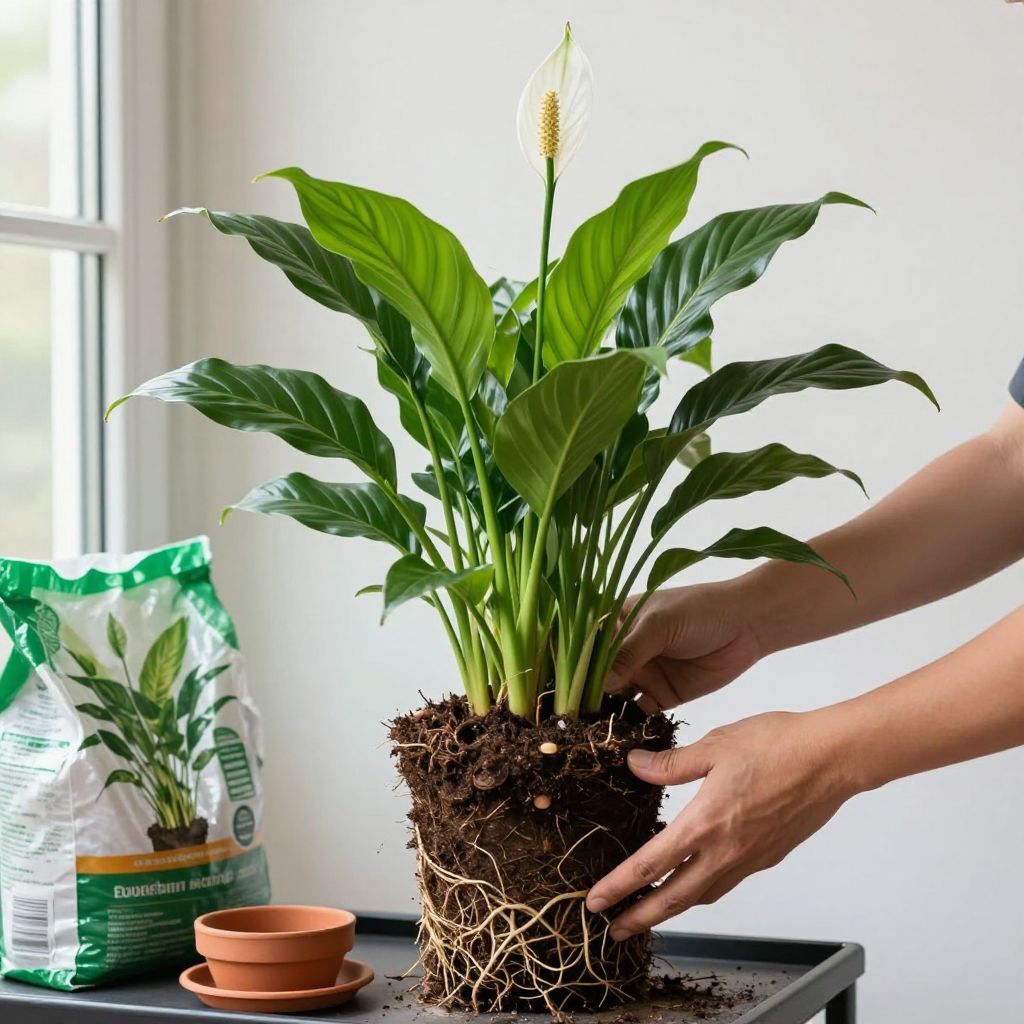
Do peace lilies like to be root bound? Yes, to a point. Spathiphyllum often blooms and grows well when its roots fill the pot slightly, but it does not like being severely cramped for long. A mildly snug pot can encourage flowering, while an overcrowded root ball can slow growth, dry out too fast, and stress the plant.
The key is knowing the difference between “comfortably snug” and “too tight.” If you learn the signs, you can keep your peace lily healthy, flowering, and easier to care for indoors.
Do peace lilies like to be root bound?
Peace lilies usually do best when slightly pot-bound, not tightly root bound. A small amount of root crowding can help trigger blooms, but once roots circle the pot heavily, push the plant upward, or block water from soaking in, it’s time to repot into a slightly larger container.
Why a little root crowding can help peace lilies
Peace lilies often flower better when they are a bit snug in their pots. When the root system fills the container, the plant tends to put more energy into blooming rather than making lots of leafy growth.
This does not mean you should keep it in a tiny pot forever. A mildly root-bound plant is manageable and often healthy. A severely root-bound plant becomes harder to water, less stable, and more prone to stress.
What “slightly root bound” looks like
- Roots are visible at the drainage holes, but not packed into a dense mat.
- The plant dries out a little faster than before, but still waters normally.
- Growth slows somewhat, yet leaves still look firm and green.
- Flowering may continue or improve if light and care are good.
Signs your peace lily is too root bound
When a peace lily becomes overly root bound, the pot can no longer hold enough moisture or air for healthy roots. The plant may look thirsty soon after watering, even if the soil was just soaked.
Common warning signs
- Roots circling tightly around the inside of the pot
- Roots growing out of drainage holes in thick bundles
- Water running straight through without soaking the mix
- Leaves drooping often, even after watering
- Yellowing leaves or stalled new growth
- The plant tipping over because the root mass is too dense for the pot
If you remove the plant and see a thick, tangled root mat with very little loose potting mix left, it is past the “slightly snug” stage.
When to repot a peace lily
Repot when the plant is clearly root bound, not just because it has been in the same pot for a year. Many peace lilies can stay in the same container for a long time if the roots still have room and the plant is healthy.
A good rule is to check the roots when you see one or more of these issues: frequent wilting, poor water absorption, slowed growth, or roots pushing the plant upward. For indoor plants, repotting is often easiest during active growth, but you can correct severe root crowding whenever the plant is struggling.
How much bigger should the new pot be?
Choose a pot only 1 to 2 inches wider in diameter than the current one. Going much larger can leave too much wet soil around the roots, which raises the risk of rot.
How to repot a root-bound peace lily
Repotting a peace lily is straightforward if you work gently. The goal is to give the roots more room without burying the crown too deeply or damaging too many roots.
- Water the plant lightly a few hours before repotting so the root ball is easier to remove.
- Slide the plant out of the pot and loosen the outer roots with your fingers.
- Trim away any dead, mushy, or badly damaged roots with clean scissors.
- If the roots are tightly circling, tease them apart a little so they can grow outward.
- Add fresh, well-draining potting mix to the new pot.
- Set the plant at the same depth it was growing before.
- Fill in around the sides, firming lightly so there are no large air pockets.
- Water thoroughly and let excess water drain away.
Do not bury the crown or stems deeper than before. Peace lilies can rot if the base sits too low in wet soil.
Best soil and pot choice for peace lilies
Peace lilies prefer a potting mix that holds some moisture but still drains well. A heavy, compact soil can make root problems worse, especially in a pot that already has a dense root ball.
What to look for in potting mix
- Light, airy indoor potting mix
- Good drainage without staying soggy
- Enough organic matter to hold moisture between waterings
A pot with drainage holes is essential. Decorative cachepots are fine, but the plant should sit in a nursery pot or another container that allows excess water to escape.
Container material matters too
- Plastic pots hold moisture longer and are lighter.
- Terracotta pots dry faster and can help if you tend to overwater.
- Glazed ceramic pots often behave more like plastic if they have drainage holes.
Watering a peace lily that is root bound
Root-bound peace lilies usually need more careful watering because the soil volume is smaller and dries faster. The plant may wilt quickly, but that does not always mean it needs a huge amount of water every time.
Instead, check the soil with your finger. Water when the top inch feels dry, then water slowly until moisture runs from the drainage holes. Empty any saucer after draining so the roots do not sit in water.
Common watering mistake
Many gardeners mistake a root-bound plant’s fast drying for a need to water more often and more heavily. That can lead to soggy lower soil and root rot. A better fix is often repotting into fresh mix and a slightly larger container.
Light, temperature, and feeding for better growth
Root room matters, but peace lilies also need the right growing conditions to stay healthy. Even a well-potted plant may look weak if light is too low or the air is too dry.
Light
Peace lilies grow best in bright, indirect light. They tolerate lower light, but flowering often becomes sparse. Too much direct sun can scorch the leaves, especially on a stressed or root-bound plant.
Temperature and humidity
Keep the plant in a warm indoor spot away from cold drafts, heating vents, and sudden temperature swings. Moderate humidity helps, but normal home conditions are usually acceptable if watering is managed well.
Feeding
Use a balanced houseplant fertilizer sparingly during active growth if the plant is healthy and not freshly repotted. Do not overfeed a stressed, root-bound plant; excess fertilizer can build up in the limited soil and burn roots.
Pruning and cleanup for crowded peace lilies
Pruning does not solve root crowding, but it can help the plant look tidier and reduce stress. Remove yellow or damaged leaves at the base with clean scissors or pruners.
If flowers fade, cut the spent bloom stalks off near the base. This keeps the plant neat and lets it direct energy into leaves and roots.
Common problems caused by root binding
When peace lilies become too crowded, several problems can appear at once. Knowing the cause helps you avoid treating the wrong issue.
Wilting
A root-bound plant may wilt because the soil dries too quickly or the roots cannot absorb water efficiently. If the plant perks up after watering but wilts again soon, check the root space.
Yellow leaves
Yellowing can come from overwatering, poor drainage, old leaves, or root stress. If the pot is packed with roots and the soil stays wet too long, repotting is often the best fix.
No flowers
Peace lilies may stop blooming if they are too crowded, too dark, or overfertilized. Slight root crowding can help flowering, but severe root binding usually works against it.
Stunted growth
If new leaves are small, slow to emerge, or distorted, the plant may need more root room and fresh potting mix.
Pests and diseases to watch for
Root-bound peace lilies are not automatically pest-prone, but stressed plants are easier targets. Check the leaves and stems regularly, especially if the plant has been crowded for a long time.
Common pests
- Spider mites
- Mealybugs
- Scale insects
- Aphids on new growth or flower stalks
Wipe leaves clean and isolate the plant if you spot pests. Treat early before stress compounds the problem.
Root rot risk
Severely root-bound plants can still rot if they are overwatered, especially in a pot without drainage. If the roots smell sour or look brown and mushy, remove damaged roots and repot into fresh, airy mix.
Can you divide a root-bound peace lily?
Yes. If the plant is large and tightly packed, division can be a practical way to reduce crowding and create new plants. This is especially useful when the root mass is too dense for one pot.
To divide, remove the plant from its pot and gently separate the crowns and roots into sections, making sure each division has healthy roots and several leaves. Pot each section individually in fresh mix. Keep the divisions evenly moist while they recover.
Helpful care routine after repotting
After repotting, give the plant a little recovery time. It may pause flowering briefly while it adjusts to the new pot.
- Keep it in bright, indirect light.
- Water when the top inch of soil dries.
- Avoid heavy fertilizing for several weeks after repotting.
- Watch for drooping, which can happen briefly while roots re-establish.
- Remove any damaged leaves as the plant settles in.
If the plant was severely root bound, expect a short adjustment period before strong new growth resumes.
Conclusion: the best balance for peace lilies
Peace lilies like to be a little root bound, but not cramped to the point where water and air can no longer move through the root ball. The sweet spot is a slightly snug pot with healthy roots, good drainage, and fresh potting mix when needed.
Check your plant today: if roots are circling tightly, water runs straight through, or the lily wilts repeatedly, move it up one pot size and refresh the soil. For more indoor plant care ideas, you may also want to explore related houseplant growing guides on watering, repotting, and light management.