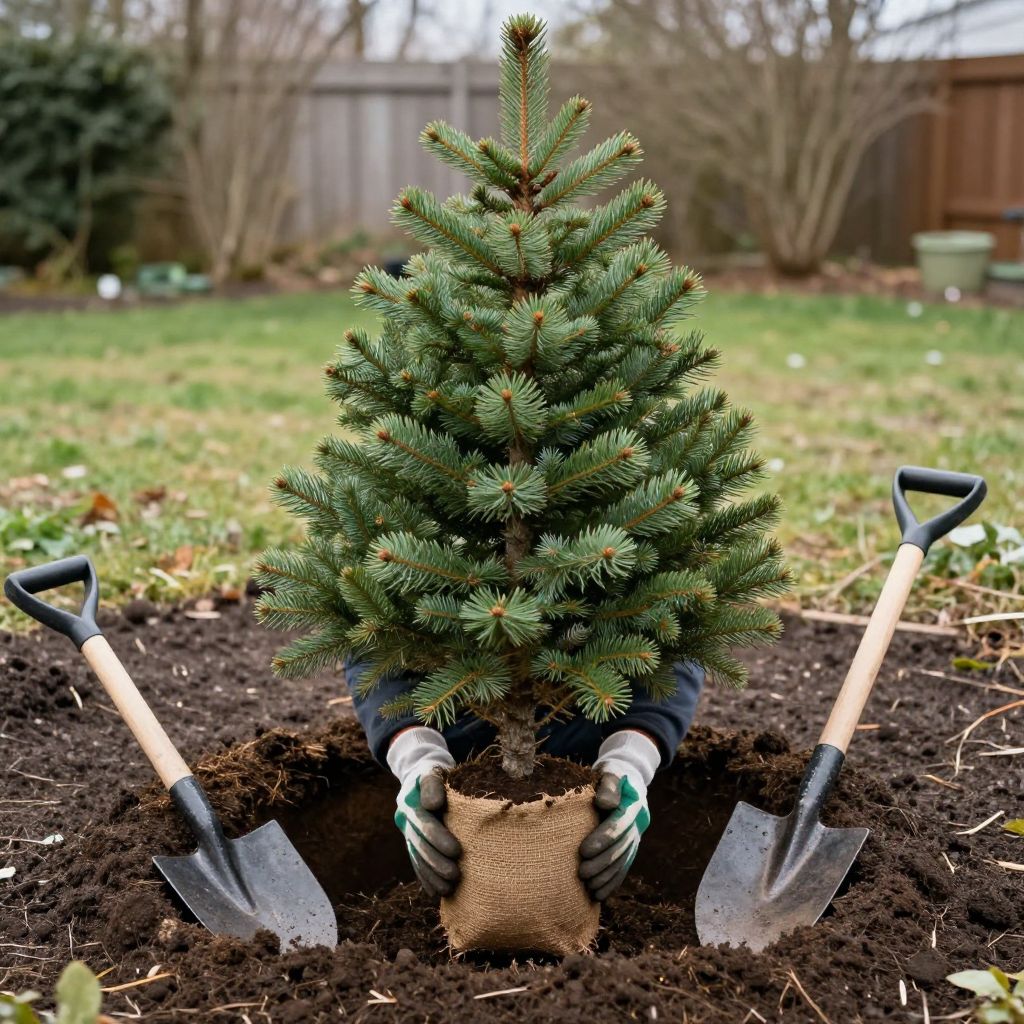
Can you replant a Christmas tree? Sometimes, yes—but success depends on whether the tree still has a healthy root ball and has been handled gently. A cut tree cannot be replanted, but a living tree grown in a container or dug with roots intact can often be transplanted outdoors if you move it quickly and give it the right aftercare.
The key is to treat it like any other evergreen transplant: protect the roots, avoid letting them dry out, and plant it in suitable soil and light for the species. If you wait too long indoors or the tree was only meant to be decorative, the odds drop fast.
Can You Replant A Christmas Tree?
Yes, you can replant a Christmas tree only if it is a living tree with roots, such as a potted tree grown in a container or a balled-and-burlapped tree. A freshly cut tree cannot grow again. Even a living tree may struggle if it stayed indoors too long, dried out, or was root-bound before purchase.
Which Christmas Trees Can Be Replanted?
Not every holiday tree is a good candidate for transplanting. The best choices are trees that were grown specifically as living plants and kept in a pot or lifted with a root ball.
Good candidates
- Container-grown trees with a firm root system and drainage holes
- Balled-and-burlapped trees dug from the ground with intact roots
- Young trees that have spent only a short time indoors
Poor candidates
- Freshly cut trees with no roots
- Trees with dry, brittle needles and a loose root ball
- Large, mature trees that were indoors for weeks
- Trees forced into tiny decorative pots with cramped roots
If you are unsure, gently inspect the base. A living tree should have roots that hold the soil together and a trunk that feels firmly anchored.
How To Replant A Christmas Tree Outdoors
If the tree is alive and the weather is suitable, transplant it as soon as possible after the holidays. The longer it stays indoors, the more stress it experiences from warmth, low humidity, and reduced light.
Step-by-step transplanting
- Choose the planting site first. Pick a spot with enough room for the tree’s mature width and height.
- Check the soil. Most evergreens prefer well-drained soil. Avoid areas that stay soggy after rain.
- Dig a wide hole. Make it at least twice as wide as the root ball, but no deeper than the root ball’s height.
- Handle the roots carefully. Keep the root ball intact and moist. Do not shake off all the soil.
- Set the tree at the same depth. The trunk flare should sit level with the surrounding soil, not buried deep.
- Backfill gently. Use the native soil you removed, breaking up clods and removing large rocks.
- Water thoroughly. Soak the root zone to settle the soil and remove air pockets.
- Mulch around the base. Apply 2 to 3 inches of mulch, keeping it a few inches away from the trunk.
Do not add a lot of compost or fertilizer into the planting hole. In many soils, that can create a “pot effect” that discourages roots from spreading outward.
When Is The Best Time To Replant It?
The best time is usually when the ground is workable and the tree is dormant or nearly dormant. In many climates, that means late winter to early spring, but local conditions matter more than the calendar.
Consider your climate
- Cold climates: Plant when the soil is thawed enough to dig, but before strong spring growth starts.
- Mild climates: Transplant during cool, wet weather when the tree can recover with less stress.
- Frozen ground: Keep the tree in a sheltered, cool place temporarily rather than forcing planting into frozen soil.
If you must hold the tree before planting, keep it outdoors in a protected spot, out of strong sun and drying wind. Water lightly enough to keep the root ball from drying out, but never leave it standing in water.
How To Care For A Replanted Christmas Tree
After transplanting, the tree needs steady moisture, protection from heat, and time to establish new roots. The first year is the most important.
Watering
Water deeply after planting and then check the soil regularly. The root ball should stay evenly moist, not saturated. In dry weather, newly planted evergreens may need extra watering more often than established trees, especially during the first growing season.
Mulching
Mulch helps conserve moisture and moderate soil temperature. Use shredded bark, wood chips, or pine needles in a 2- to 3-inch layer. Keep mulch off the trunk to reduce rot and pest problems.
Sunlight and wind
Most Christmas trees are sun-loving evergreens and do best in full sun to partial sun, depending on species and climate. Protect the tree from harsh afternoon sun and drying winter winds while it recovers.
Staking
Stake only if the tree is unstable in the ground or exposed to strong wind. Use soft ties and remove stakes after the tree has anchored itself, usually within one growing season.
Common Mistakes To Avoid
Many replanted Christmas trees fail because of simple handling errors rather than poor luck. Avoid these common problems:
- Leaving the tree indoors too long. A week or two is often enough to trigger stress in a dormant evergreen.
- Letting the root ball dry out. Dry roots are one of the fastest ways to lose the tree.
- Planting too deep. Burying the trunk flare can lead to decline and rot.
- Using heavy, poorly drained soil. Evergreens dislike waterlogged roots.
- Overfertilizing right away. Fertilizer can burn stressed roots and push weak growth.
- Choosing the wrong species for your site. A tree that looks healthy in the pot may still dislike your local soil or summer heat.
How To Tell If The Tree Is Recovering
Some needle drop after transplanting is normal, especially if the tree spent time indoors. What matters is whether the tree continues to hold most of its foliage and shows new growth later in the season.
Healthy signs
- Needles remain flexible and mostly green
- Branches stay firm rather than brittle
- The root ball stays moist but not soggy
- New buds or fresh growth appear in season
Warning signs
- Needles turn brown rapidly from the inside out
- The root ball dries out and pulls away from the soil
- Branches become brittle and snap easily
- Fungal growth or sour-smelling soil appears around the base
If decline is severe, the tree may have been too stressed to recover. In that case, focus on improving drainage and choosing a better-suited replacement tree next time.
Can You Keep A Replanted Christmas Tree In A Pot?
Sometimes, but only if the tree was already container-grown and the pot is large enough for root growth. A tree that has outgrown its pot will need repotting into a larger container or planting in the ground. Long-term container culture also requires more frequent watering and careful winter protection.
Container care basics
- Use a pot with drainage holes
- Choose a well-draining potting mix, not garden soil alone
- Water when the top layer of mix starts to dry
- Move the pot to a sheltered location in extreme heat or cold
Container-grown evergreens are more vulnerable to root freezing and drying than in-ground plants, so they need closer monitoring.
What About Cut Christmas Trees?
A cut Christmas tree cannot be replanted because it no longer has living roots. If you want a tree you can keep after the holidays, buy a living tree from the start. Look for one sold in a nursery container or with a properly wrapped root ball, and confirm that it was grown for transplanting.
Choosing The Right Species For Future Replanting
If you plan to replant after the holidays, choose a species that matches your local climate and garden conditions. Some evergreens handle transplanting better than others, but the most important factor is whether the tree is suited to your site.
Before buying, ask about mature size, sunlight needs, soil preference, and cold tolerance. A tree that thrives in your landscape is far more likely to establish successfully than one chosen only for appearance.
Conclusion
So, can you replant a Christmas tree? Yes—if it is a living tree with healthy roots and you move it quickly, plant it at the right depth, and keep it evenly watered afterward. Your best next step is to inspect the root ball now and decide whether the tree is a true transplant candidate or simply holiday décor.
If you want to learn more about caring for evergreens after planting, read up on evergreen tree planting and care and how to mulch and water newly planted trees.