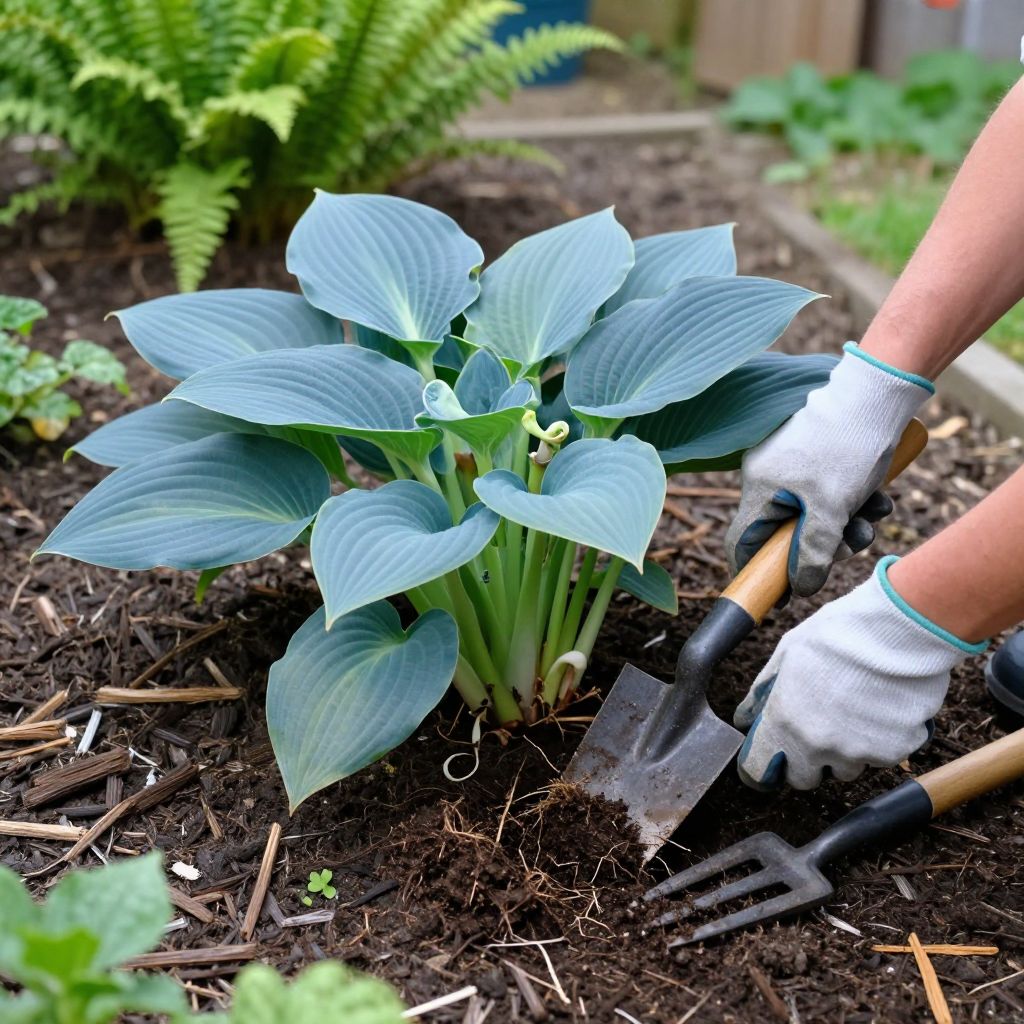
Wondering when to split hostas without stressing the plants or losing a season of growth? The best time is usually in early spring as new shoots emerge or in early fall after the worst heat has passed. Those windows give hostas cooler temperatures and enough moisture to recover well.
You can divide hostas at other times in a pinch, but timing matters if you want fast regrowth and fewer setbacks. The right season depends on your climate, the plant’s size, and whether you’re dividing for propagation, rejuvenation, or to control overcrowding.
When to split hostas?
The best time to split hostas is early spring when the shoots are just poking through the soil, or early fall when temperatures cool and rain is more reliable. Avoid dividing during hot, dry weather unless you can water carefully and protect the plants from stress.
Why timing matters for hosta division
Hostas (Hosta spp.) are hardy perennials that grow from crowns and thick roots. When you split them, you’re creating smaller plants that need time to re-establish before facing heat, drought, or cold.
Good timing helps the divisions root quickly and reduces transplant shock. Poor timing can leave them wilted, slow to leaf out, or vulnerable to rot and pests.
Best seasonal windows
- Early spring: Ideal in many climates, just as shoots emerge and before leaves unfurl fully.
- Early fall: Also excellent, especially where autumn stays mild long enough for roots to settle.
- Late spring to summer: Possible, but only if you can keep the soil evenly moist and temperatures are moderate.
- Late fall: Riskier because roots may not establish before freezing weather.
How to tell if a hosta needs dividing
Not every hosta needs frequent splitting. Many clumps can stay in place for years and still look good.
Divide when the plant is crowded, the center is thinning out, or the clump has grown too large for its space. You may also split hostas if you want more plants for another bed or to share with another gardener.
Common signs it’s time
- The clump is wider than the space you intended for it.
- The center of the plant looks sparse or weak.
- Flowering has declined compared with earlier years.
- Neighboring plants are being crowded out.
- You want to rejuvenate an older clump with better airflow and growth.
How to split hostas step by step
Hostas are forgiving, so division is usually straightforward. The key is to keep the roots moist, make clean cuts, and replant promptly.
- Water the plant the day before if the soil is dry. Moist soil is easier to work with and less stressful on the roots.
- Dig around the clump with a spade or garden fork, staying several inches away from the crown to avoid slicing too many roots.
- Lift the clump and shake or wash off enough soil to see the crowns and root mass.
- Separate the plant into sections. You can pull smaller clumps apart by hand or cut larger ones with a sharp knife, pruning saw, or spade.
- Keep each division healthy by making sure it has roots and at least one growing point, though larger divisions usually establish faster.
- Replant at the same depth in prepared soil, then firm the soil gently around the roots.
- Water thoroughly to settle the soil and remove air pockets.
How small can a division be?
Very small divisions can survive, but they often take longer to fill out. For best results, aim for divisions with several shoots and a decent root mass rather than tiny pieces that may stall for a season.
What kind of soil and site do divided hostas need?
Hostas do best in rich, moisture-retentive soil that drains well. They like consistent moisture, but they do not want to sit in waterlogged ground.
Before replanting, work in compost or well-rotted organic matter if your soil is poor. This improves structure, helps retain moisture, and supports root growth after division.
Light conditions after division
- Shade to part shade: Best for most hostas, especially in warmer climates.
- Morning sun with afternoon shade: Often ideal where summers are hot.
- Heavier shade: Acceptable, though some varieties may grow more slowly.
Freshly divided hostas are more vulnerable to scorch and drying out, so avoid exposing them to stronger sun than they were already receiving.
Aftercare for newly split hostas
After division, the first few weeks matter most. Your goal is steady moisture, stable soil contact, and minimal stress.
- Water deeply after planting and keep the soil evenly moist, not soggy.
- Mulch lightly with shredded bark, leaf mold, or compost to conserve moisture.
- Watch for wilting during warm spells and give extra water if needed.
- Avoid heavy fertilizing immediately after division unless your soil is very poor.
- Remove badly damaged leaves if they are collapsing, but leave enough foliage for the plant to recover.
If you divide in spring, the hosta usually has the whole growing season to recover. If you divide in fall, the plant may look quiet above ground, but roots can still establish before winter if the weather stays mild.
Common mistakes to avoid
Most division problems come from stress, not from the actual cutting. A few simple mistakes can slow recovery significantly.
- Dividing in extreme heat: This increases water loss and transplant shock.
- Leaving roots exposed too long: Keep divisions shaded and moist while you work.
- Replanting too deep: Crowns buried too far can rot or struggle to emerge.
- Using poor drainage: Waterlogged soil can damage roots quickly.
- Making divisions too small: Tiny pieces may take much longer to recover.
- Forgetting to water after planting: New divisions need consistent moisture to settle in.
What if you have to split hostas in summer?
Sometimes the schedule or garden project can’t wait. If you must divide hostas in summer, do it on a cool, cloudy day if possible and prepare to baby the plants afterward.
Water the clump well beforehand, keep the divisions shaded during the process, and mulch after replanting. You may also want to trim back some foliage to reduce water loss, especially if the plant is large and the roots were heavily disturbed.
How often should hostas be split?
There is no fixed schedule. Many hostas only need division every 4 to 8 years, while vigorous varieties may outgrow their space sooner.
Split them when the clump looks crowded or performance declines, not just because a calendar says it’s time. A healthy, attractive hosta can often stay undisturbed for years if it still has room and good soil.
Can you divide hostas in pots?
Yes. Container-grown hostas can be split using the same timing rules, but potted plants dry out faster and may need more frequent watering after division.
Use a pot with drainage holes, fresh potting mix, and a container large enough for the root system. Keep the newly divided plants out of harsh sun until they show active regrowth.
Quick checklist before you split hostas
- Choose early spring or early fall if possible.
- Make sure the plant is well watered beforehand.
- Prepare a planting spot with loose, fertile, well-drained soil.
- Have a sharp spade, knife, or garden fork ready.
- Replant divisions quickly and water them in well.
- Mulch lightly and monitor moisture for several weeks.
Conclusion
If you’re asking when to split hostas, aim for early spring or early fall for the easiest recovery. Divide only when the clump is crowded or needs rejuvenation, then replant promptly in moist, well-drained soil. With the right timing and aftercare, your hostas should settle in and grow back strongly.
For more practical garden care, you may also want to read about how to divide perennials and shade garden plant care for related tips on timing, soil prep, and aftercare.