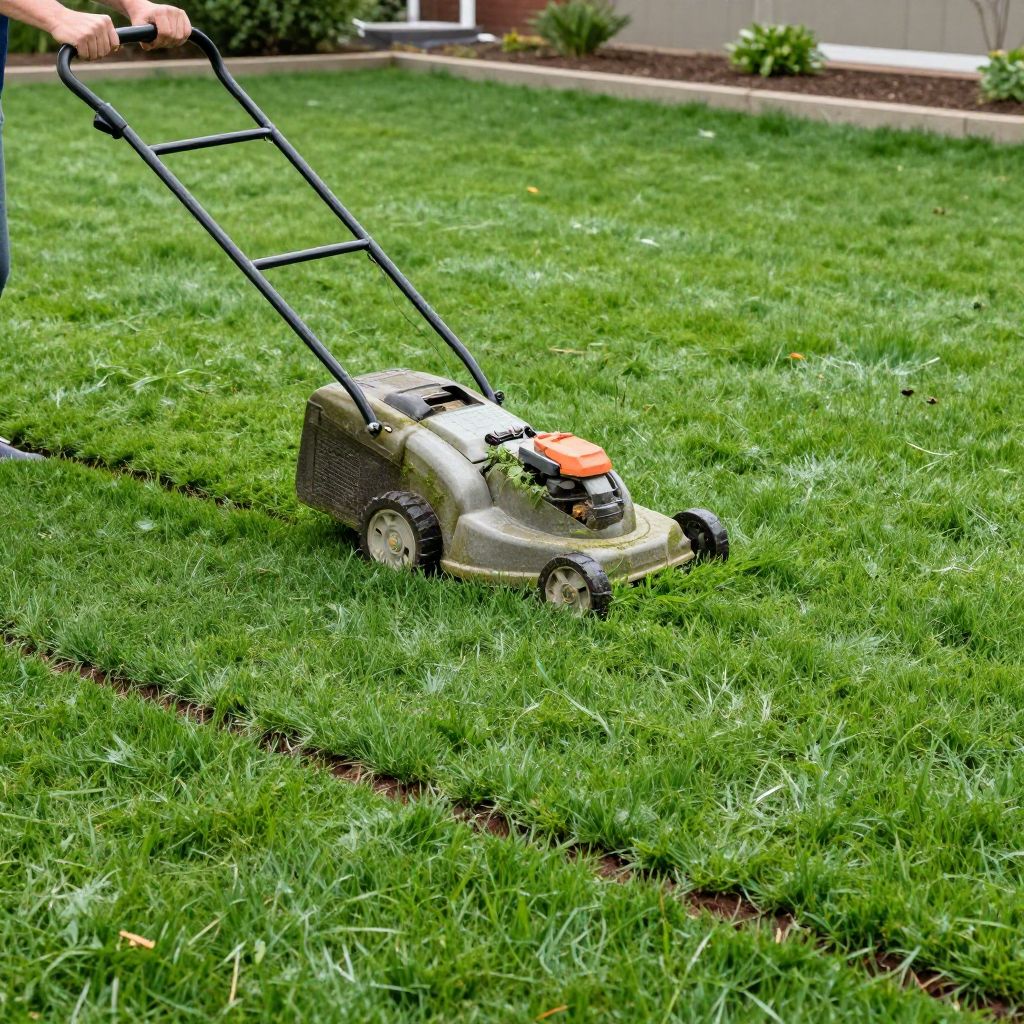
Wondering when to mow new sod without damaging it? The first cut matters because fresh sod is still rooting into the soil below, and mowing too early can pull, tear, or shift the pieces. Wait for the grass to establish enough that it stays anchored when you gently tug on a corner.
The right timing depends on grass type, weather, watering, and how quickly roots grow in your soil. A good mowing plan helps new sod knit together faster, stay level, and develop into a healthy lawn instead of a patchy one.
When to mow new sod?
Mow new sod when the grass reaches about 3 to 4 inches tall and the sod feels firmly rooted, usually after 10 to 21 days, though cool weather or poor soil can slow it down. Never mow if the rolls still lift easily or if the lawn is soggy, because that can disturb rooting and leave uneven seams.
How to tell if new sod is ready for its first mow
Grass height is only part of the decision. The sod should also be anchored enough that it does not shift underfoot or peel up at the edges.
Simple readiness checks
- Gently tug a corner in a few spots. If it resists and stays down, rooting is underway.
- Walk lightly across the lawn. If the sod feels spongy or lifts, wait longer.
- Look for visible growth. New blades should be standing upright and filling in seams.
- Check soil moisture. The lawn should be moist, not saturated, before mowing.
If the sod is tall but still loose, wait. Cutting too soon can slow establishment more than waiting an extra few days.
Seasonal timing: how weather changes the first mow
Season affects how fast sod roots. Warm conditions usually speed establishment, while cooler temperatures slow it down.
Warm-season sod
Warm-season grasses such as Bermuda, zoysia, and St. Augustine generally root faster in late spring and summer when soil temperatures are warm. In these conditions, the first mow may be possible sooner, but only if the sod is firmly anchored.
Cool-season sod
Cool-season grasses such as Kentucky bluegrass, perennial ryegrass, and tall fescue often establish well in spring or early fall. Rooting can be steady, but cooler air and soil may stretch the wait before mowing.
Weather that delays mowing
- Cold snaps slow root growth.
- Heat waves can stress new sod and make it more fragile.
- Heavy rain leaves the soil soft and easy to rut.
- Drought or missed watering can dry the sod before roots take hold.
In any season, let the sod guide you. A calendar estimate is less reliable than a quick rooting check.
How to mow new sod the first time
The first mow should be gentle. Your goal is to trim the grass, not force the lawn to handle a full maintenance routine too early.
- Make sure the lawn is dry enough to walk on without leaving deep footprints.
- Sharpen the mower blade before cutting. A dull blade can shred tender new grass.
- Set the mower high and remove only the top third of the blade length.
- Mow in straight, light passes to reduce turning stress on the sod.
- Empty clippings if they are heavy enough to clump, but light clippings can usually stay on the lawn.
Never scalp new sod. Cutting too short exposes the crown, increases moisture stress, and can slow rooting.
Best mowing height for the first cut
A practical rule is to mow when the grass reaches 3 to 4 inches and cut it back to the normal recommended height for that grass type, but not all at once if it is very tall. If the sod has gotten away from you, mow in two passes over a few days rather than removing too much at once.
What to avoid before and after mowing
New sod is vulnerable to stress from foot traffic, moisture swings, and rough mowing. A few simple mistakes can undo good establishment work.
- Avoid mowing too early when the sod is still loose.
- Avoid mowing wet grass, which can tear blades and clog the mower.
- Avoid sharp turns with the mower on new turf.
- Avoid dragging heavy hoses, furniture, or tools across the lawn.
- Avoid fertilizing heavily right before the first mow unless your local sod installer or soil test recommends it.
After mowing, keep watering based on the sod’s needs and your weather. The lawn should stay evenly moist while roots continue to knit into the soil below.
Watering, rooting, and mowing: how they work together
New sod needs moisture to root, but too much surface water can make mowing difficult. The goal is steady establishment, not constant saturation.
Before the first mow
Water enough to keep the sod from drying out, especially at the seams and edges where it can shrink first. If the soil is muddy or squishes underfoot, wait for a drier window before mowing.
After the first mow
Continue watering according to local conditions, grass type, and soil drainage. Sandy soil dries faster than clay soil, and windy or hot weather increases water loss. If the lawn starts to look dull, curled, or bluish-gray, it may need water.
A well-rooted lawn is easier to mow, easier to walk on, and less likely to develop gaps between sod pieces.
Common problems when mowing new sod
The sod lifts or shifts
This usually means roots are not ready. Stop mowing and give the lawn more time. Check again in a few days, especially if temperatures are warm and the soil is moist but not soaked.
The mower leaves ruts
The soil is too soft. Wait until the surface firms up. If needed, mow during a drier part of the day and avoid overly heavy equipment.
The grass looks torn after mowing
A dull blade is the most common cause. Sharpen or replace the blade and mow only when the grass is dry enough for a clean cut.
Seams are still visible
That is normal early on. Keep watering properly, mow at the proper height, and avoid aggressive traffic. The seams should gradually knit together as roots spread.
Helpful maintenance tips for the first month
Good early care makes mowing easier and improves long-term lawn quality.
- Keep foot traffic light until the sod is firmly rooted.
- Check edges, corners, and slopes more often, since these dry out first.
- Watch for weeds poking through seams and remove them early by hand if needed.
- Inspect for pests or disease if you see thinning, discoloration, or unusual patches.
- Use a sharp mower blade every time you mow young turf.
If your lawn is newly installed on compacted soil or has poor drainage, establishment may be slower. In those cases, patience matters more than sticking to a fixed mowing date.
Quick answer: the safest first-mow rule
If you want one simple guideline, use this: mow new sod only when it is 3 to 4 inches tall, feels firmly rooted, and the soil is firm enough to support you and the mower without sinking. That combination is usually the best sign the lawn is ready.
For more lawn-care timing and establishment guidance, you may also want to read about how to water new sod and how to care for a new lawn.