Wondering when to cut new grass without damaging it? The right time depends on whether you mean newly seeded grass or newly laid sod, but the basic rule is the same: wait until the lawn is rooted, growing actively, and tall enough to mow without stressing the young plants.
Cutting too early can pull seedlings out of the soil or tear sod before it has anchored. Cutting at the right time helps the grass thicken, root more deeply, and form a healthier lawn.
When to cut new grass?
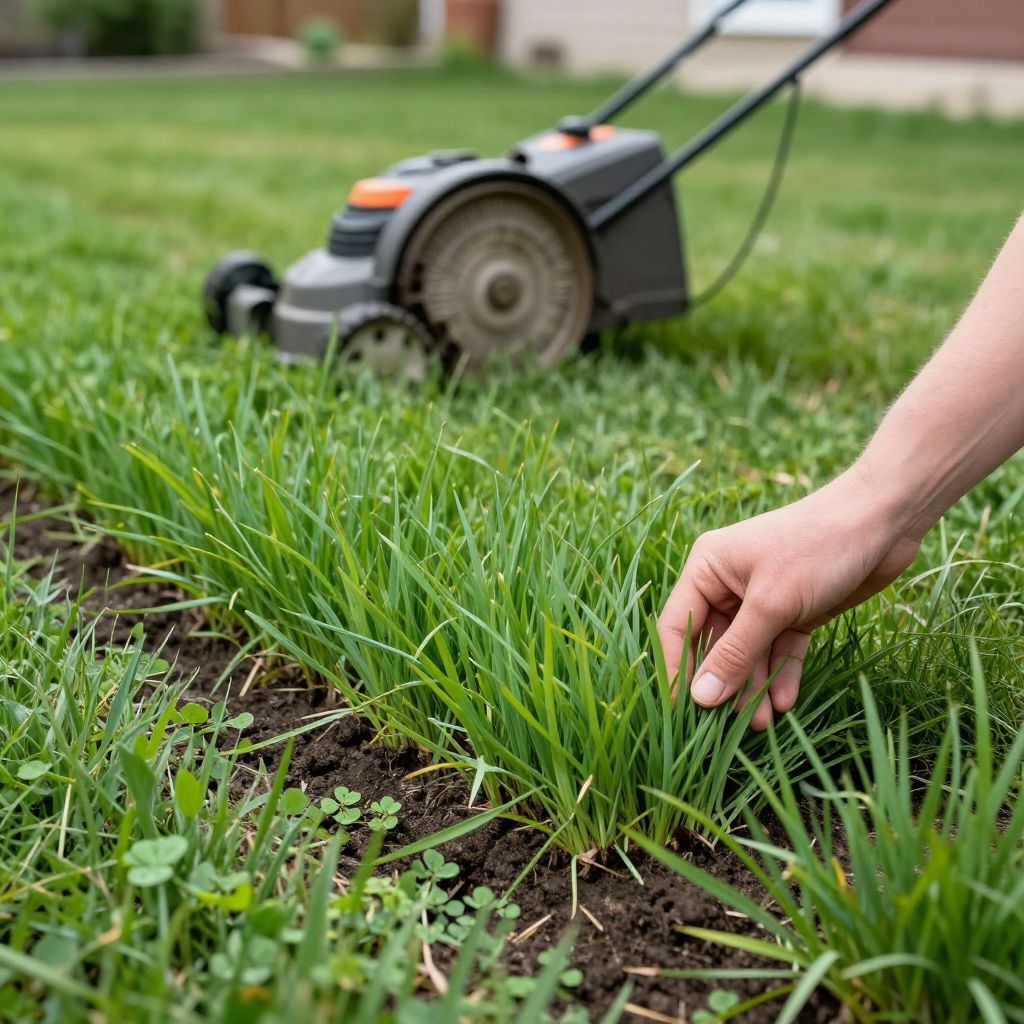
Cut new grass for the first time when it has rooted well and reached about one-third taller than your target mowing height. For most lawns, that means seedlings are around 3 to 4 inches tall, or sod is firmly anchored and no longer lifts easily when you tug a corner. Use a sharp mower blade and remove only the top third of the grass blade.
How to tell if new grass is ready to mow
Height matters, but rooting matters just as much. New grass should be strong enough to handle the mower and stable enough that the roots are doing their job.
Signs seedlings are ready
- The grass has reached at least 3 inches, often closer to 3.5 or 4 inches.
- The soil surface is covered well enough that the mower won’t scalp bare patches.
- When you gently tug a few blades, they resist instead of lifting out easily.
- The lawn has been watered consistently and is not wilted or muddy.
Signs sod is ready
- The sod has knitted into the soil below.
- You can no longer lift a corner without real resistance.
- Roots are visible growing downward into the soil.
- The surface feels firm, not spongy or shifting underfoot.
If you can pull the grass up easily, it is not ready to mow yet. Wait a few more days and test again.
Seasonal timing for new grass
The best mowing time is less about the calendar and more about growth rate. Still, the season affects how quickly new grass establishes and how soon you can cut it.
Cool-season grasses
Cool-season grasses such as Kentucky bluegrass, perennial ryegrass, and tall fescue usually establish best in early fall or spring, depending on your climate. In cool weather, they may take longer to reach mowing height, but they often root well before heat arrives.
Warm-season grasses
Warm-season grasses such as bermudagrass, zoysia, and St. Augustinegrass grow fastest in late spring and summer. They often reach mowing height sooner, but they still need time to root before the first cut.
How weather changes the timing
- Cool, mild weather: slower top growth, slower mowing schedule.
- Warm, active growth: faster recovery after cutting.
- Hot, dry weather: delay mowing if the lawn is stressed or wilting.
- Wet conditions: avoid mowing muddy grass, which can rut the soil and damage roots.
How to mow new grass for the first time
First mowing should be gentle. The goal is to encourage thick growth, not to force the lawn into a normal mowing routine too soon.
- Check the height. Make sure the grass is at least one-third taller than your intended mowing height.
- Sharpen the blade. A dull mower blade tears tender grass and increases stress.
- Set the mower high. Start higher than you would for an established lawn.
- Mow when the lawn is dry. Dry blades cut more cleanly and are less likely to clump.
- Remove only one-third of the blade. Never cut off more than that in a single mowing.
- Leave clippings only if they are light. Heavy clumps should be collected so they do not smother seedlings.
If the lawn is uneven, mow slowly and avoid aggressive turns. Sharp turns can rip up tender roots, especially on new sod.
How long to wait after seeding or laying sod
There is no single number that works everywhere, but these general guidelines help you judge the wait time.
After seeding
New grass seed usually needs several weeks before the first mow, depending on the species, soil temperature, and moisture. Some fast-germinating grasses may be ready sooner, while slower ones take longer. The real test is height and rooting, not the number of days since sowing.
After laying sod
Sod can sometimes be mowed sooner than seed-grown grass because it arrives as a mature mat, but it still needs time to root into the soil. In many cases, that means waiting until the sod is firmly anchored and has grown enough to need mowing.
Do not mow sod just because it looks green. Green top growth does not always mean the roots have settled in.
Common mistakes when cutting new grass
Most problems with new lawns come from mowing too early, cutting too low, or mowing under poor conditions.
- Cutting too soon: can uproot seedlings or shift sod.
- Scalping the lawn: removes too much leaf surface and slows rooting.
- Mowing wet grass: causes clumping, uneven cuts, and soil compaction.
- Using a dull blade: tears tender grass instead of slicing it.
- Turning sharply on new sod: can lift seams and damage roots.
- Skipping irrigation after stress: newly established lawns may need careful watering to recover, depending on weather and soil.
Watering and mowing: how they work together
Water management affects when you can cut new grass. If the soil stays soggy, the mower can rut the lawn and compact the root zone. If it dries out too much, seedlings may wilt and stop growing.
For new grass, aim for evenly moist soil during establishment, then let the surface dry enough to support foot traffic and mowing. If you step on the lawn and leave deep footprints, it is probably too wet to mow.
Good mowing conditions
- The soil is moist but not muddy.
- The grass blades are dry.
- The lawn has recovered from any recent heat or transplant stress.
- The mower tires will not sink into the soil.
What to do after the first cut
After the first mowing, keep the lawn on a steady, gentle schedule. Frequent light mowing is better than waiting too long and then removing too much at once.
- Continue mowing high enough to protect young roots.
- Watch for thin areas that may need reseeding or patching.
- Keep foot traffic light until the lawn fills in.
- Monitor for weeds, which often show up in open soil before the grass thickens.
If weeds appear, hand-pull small ones carefully rather than using harsh treatments too early. A young lawn is still vulnerable, and many herbicides are not ideal for very new grass.
Troubleshooting: if your new grass is not ready yet
Sometimes the lawn looks promising but still needs more time. That is normal, especially in cool weather, poor soil, or uneven moisture.
If the grass is tall but weak
Wait. Tall, floppy grass can still be poorly rooted. Mowing too soon can pull it out or leave bare spots.
If the lawn is patchy
Let the thicker areas grow a little longer so the mower does not scalp the thin spots. You may need to overseed bare patches later.
If the soil is compacted or crusted
New grass may struggle to root deeply. Improve future growth with better seedbed preparation, lighter foot traffic, and careful watering. For established sod, avoid heavy mowing equipment until the lawn has settled.
If disease appears
Check for brown patches, slimy blades, or thinning areas that spread quickly. Hold off on mowing if the lawn is severely stressed, and correct watering or drainage issues first. A healthy, airy lawn is less likely to develop disease problems.
Simple rule to remember
When deciding when to cut new grass, use this three-part check: height, rooting, and dryness. If the grass is tall enough, anchored well, and the lawn is dry enough to mow cleanly, it is usually ready for its first cut.
Start high, cut lightly, and watch how the lawn responds. If you want more help building a healthy yard, read next about how to water newly seeded grass and the best mower height for a healthy lawn.