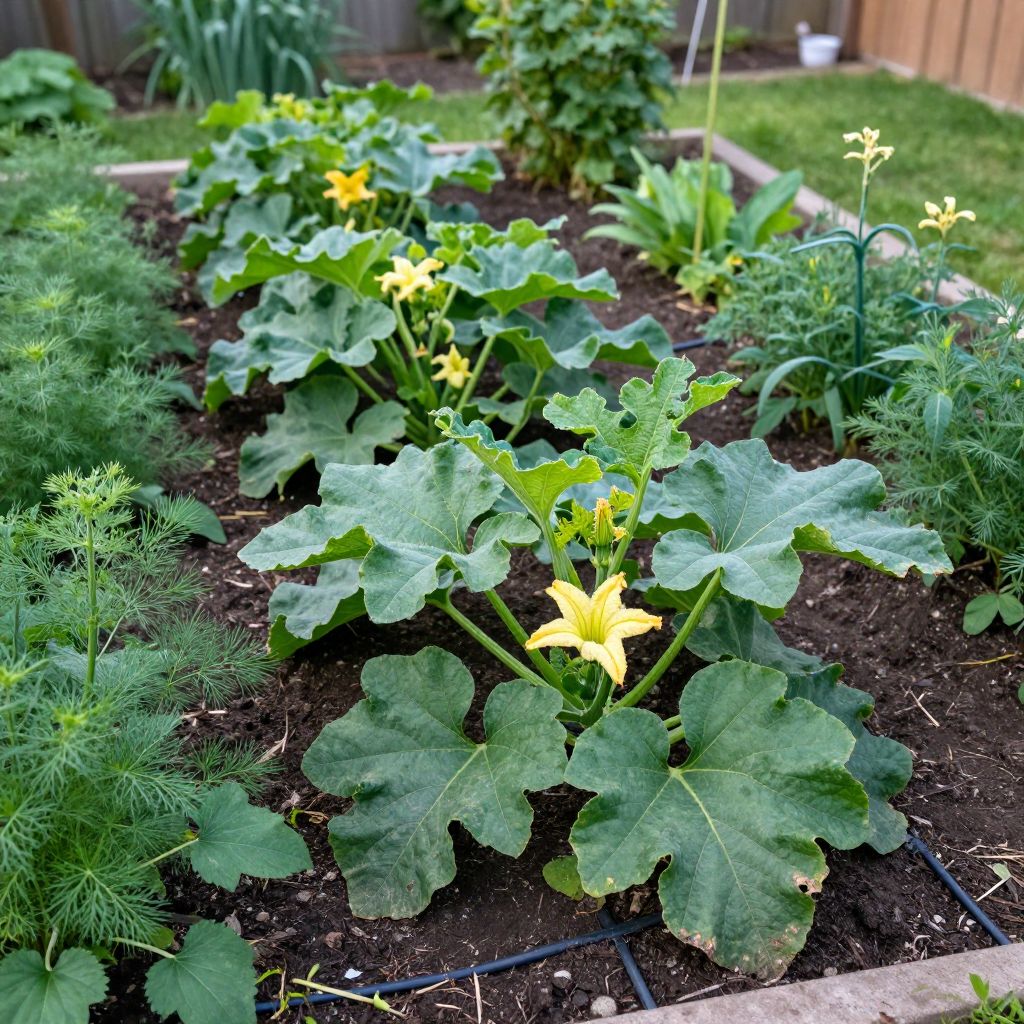
What to plant with squash depends on your space, your season, and how aggressively the vines will spread. The best companions help you use garden space efficiently, attract pollinators, discourage pests, or provide a quick crop before squash fills in.
Squash is a generous but sprawling crop, so good companion planting is mostly about balance: choosing plants that won’t get shaded out, won’t compete too heavily, and can handle the same warm, fertile growing conditions.
What to plant with squash?
Good companions for squash include beans, corn, radishes, nasturtiums, marigolds, dill, oregano, and other low-growing or beneficial insect-attracting plants. Avoid overcrowding and keep companions close enough to help, but not so close that they block airflow or compete with squash roots and vines.
Best companion plants for squash
1. Beans
Beans are one of the classic companions for squash because they can share garden space well and help make efficient use of a bed. Bush beans are usually easier to manage near squash than pole beans, which can tangle in the vines.
Plant beans where they will get sun before the squash canopy closes in. If you grow them together, leave enough room so you can still reach the plants for watering and harvest.
2. Corn
Corn and squash are often paired in traditional “three sisters” plantings, usually with beans as the third crop. Corn provides vertical structure, while squash shades the soil and helps suppress weeds.
This works best in a large bed with rich soil and good moisture. In small gardens, corn can be too space-hungry and may not justify the room unless you are intentionally using a three sisters layout.
3. Radishes
Radishes are a smart early-season companion because they grow quickly and can be harvested before squash plants get large. They also help you use open soil while squash is still small.
Sow radishes around the edges of squash beds or in gaps between young plants. They are especially useful if you want a quick crop while waiting for summer squash to spread.
4. Nasturtiums
Nasturtiums can work well near squash because they trail along the ground and may help distract aphids and other pests. They also add color and can spill over bed edges without taking much vertical space.
Give them enough room so they do not smother young squash seedlings. In very fertile soil, nasturtiums may grow lush and leafy, so watch that they do not crowd the base of the squash plants.
5. Marigolds
Marigolds are commonly planted near squash for their bright flowers and pest-management value. They can help support a more diverse garden, which often means more beneficial insects around your vegetables.
Use compact types near the edges of beds or in nearby borders. Tall marigolds can shade smaller plants, so choose varieties that fit your layout.
6. Dill and other flowering herbs
Dill can attract beneficial insects such as hoverflies and parasitoid wasps, which may help reduce pest pressure in the garden. Other flowering herbs, such as cilantro left to bloom, can serve a similar purpose.
These herbs are best planted nearby rather than directly in the squash root zone. Let them flower if your goal is beneficial insect support, but keep an eye on self-seeding if you prefer a tidy bed.
7. Oregano, thyme, and other low herbs
Low-growing herbs can fit around the edges of a squash bed where they receive enough sun but do not interfere with the main crop. Their compact habit makes them useful in mixed vegetable borders.
Choose herbs that tolerate similar conditions and won’t be buried by squash vines. In hot climates, some herbs may appreciate a little afternoon relief once squash foliage expands.
Plants to avoid growing too close to squash
Squash needs room, airflow, and steady access to water and nutrients. Some plants simply compete too much or create conditions that increase disease risk.
- Other large, spreading crops that will compete for space, such as vigorous melons or sprawling cucumbers, unless you have a very large bed.
- Tall, shading crops that can reduce sun on squash leaves.
- Plants that need very dry conditions if your squash bed is kept evenly moist.
- Anything planted too tightly, which can reduce airflow and encourage powdery mildew.
One of the biggest mistakes is mixing too many plants into a squash bed. Squash can look small at planting time, then quickly take over. Leave more room than you think you need.
How to plan a squash companion planting layout
Start with the squash first
Before adding companions, decide where the squash will go and how much room each plant needs. Summer squash usually needs less room than winter squash, but both can spread widely.
Plant squash where it will receive full sun and where vines can run without blocking paths or crowding neighboring crops.
Use the edges for companions
Low-growing companions often work best along the borders of the bed. That keeps them from being swallowed by squash vines and makes harvesting easier.
Good edge plants include radishes, marigolds, nasturtiums, and small herbs.
Keep airflow in mind
Squash is prone to fungal issues, especially in humid weather or when leaves stay wet. Companion planting should never create a dense thicket around the plants.
Leave enough open space for air to move through the foliage, and avoid planting companions so close that you cannot inspect leaves for pests or disease.
Soil, sun, and watering needs for squash companions
Squash grows best in fertile, well-drained soil with plenty of organic matter. Most companion plants that suit squash also prefer full sun and moderate moisture, but they may not all need the same richness.
- Sun: Aim for at least 6 to 8 hours of direct sun for squash and most companions.
- Soil: Loose, compost-enriched soil helps squash roots spread and supports companion crops.
- Drainage: Avoid soggy beds, which can stress roots and encourage disease.
- Watering: Water deeply at the base rather than wetting the leaves whenever possible.
If you are planting in heavy clay, raise the bed slightly or work in compost to improve drainage. In sandy soil, compost helps hold moisture so squash and its companions do not dry out too quickly.
When to plant companions with squash
Timing matters because squash grows fast once weather warms. Many companion plants are best sown a little earlier or at the same time as squash so they can establish before the vines spread.
Early-season companions
Radishes, some herbs, and other quick crops can be planted early and harvested before squash becomes crowded. This is especially useful in spring gardens with a short window before heat arrives.
Warm-season companions
Beans, marigolds, and nasturtiums can be planted after frost danger has passed and soil has warmed. Squash seedlings dislike cold soil, so wait until conditions are reliably warm in your area.
If you garden in a cooler climate, use local frost dates and soil temperature rather than a fixed calendar date. In warmer climates, squash may be planted over a longer season, but companion plants still need enough time to establish.
Common pests and how companion plants can help
Companion planting is not a cure-all, but it can support a healthier squash patch. The main benefit is often better insect diversity and easier monitoring.
- Aphids: Nasturtiums may act as a distraction crop, but check squash leaves regularly.
- Squash bugs: Keep beds tidy and remove hiding spots around the base of plants.
- Cucumber beetles: Diverse plantings may help, but row covers and good sanitation are often more effective.
- Powdery mildew: Avoid crowding, water at soil level, and choose open, sunny planting sites.
Do not rely on companion plants alone if pest pressure is high. Regular inspection is still the most effective way to catch problems early.
Care tips for squash in a mixed planting
Mulch carefully
A light mulch can help conserve moisture and suppress weeds, but keep it a little away from the crown of the plant. Too much mulch packed against the stem can trap moisture and invite rot.
Train vines if needed
If space is tight, gently guide vines away from companion plants while they are still flexible. Once a squash vine has rooted or sprawled deeply, moving it becomes harder.
Feed moderately
Squash likes fertile soil, but overly rich feeding can push leafy growth at the expense of flowers and fruit. Compost at planting time is often enough for many gardens, with additional feeding based on soil quality and plant vigor.
Harvest often
Frequent harvest keeps summer squash productive and prevents oversized fruit from weighing down the plant. It also makes it easier to reach nearby companion crops before the bed gets too crowded.
Good companion combinations by garden style
Small raised bed
Choose one squash plant, a few radishes, a border of marigolds, and perhaps a low herb at the edge. In a small bed, simplicity usually works better than a crowded mix.
Large in-ground patch
Try squash with bush beans, nasturtiums, and a few pollinator-friendly flowers along the perimeter. If you have enough room, you can also experiment with a three sisters-style planting.
Pollinator-focused garden
Mix squash with dill, marigolds, and nasturtiums nearby to encourage beneficial insects. This can be especially helpful if you have had pollination problems or low fruit set in the past.
Final tips for success
The best answer to what to plant with squash is: choose companions that fit the space, the season, and the growth habit of the squash itself. Favor low, quick, or beneficial insect-friendly plants, and give everything enough room to breathe.
If you want a simple place to start, plant squash with bush beans, radishes, and a few marigolds at the bed edge. Then watch how much space the squash actually uses, and adjust your layout next season for an even better fit.
For more practical vegetable-garden planning, you may also want to read about companion planting basics and how to grow summer squash successfully.