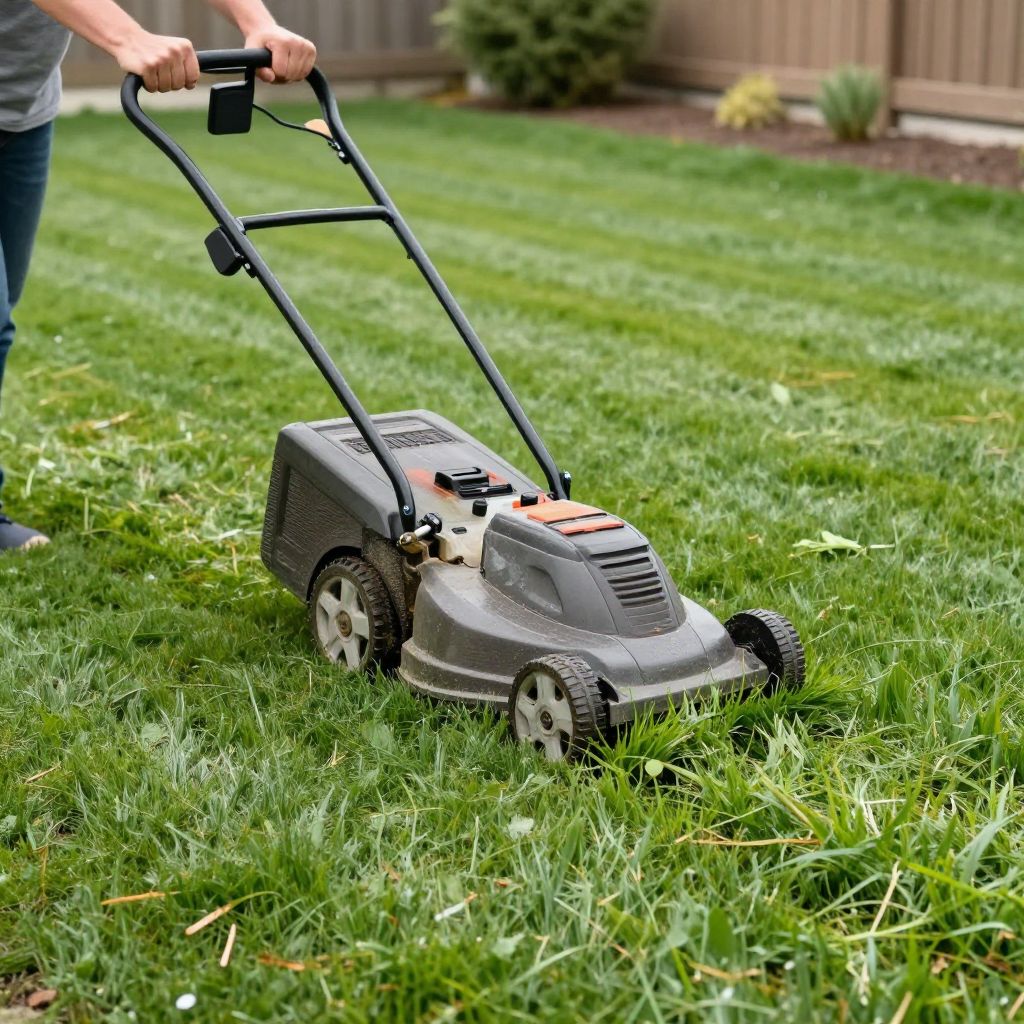
Wondering when to mow new grass without damaging it? The right timing depends on how fast the grass has rooted, how tall it is, and whether the lawn was started from seed or sod.
Mow too early and you can pull seedlings loose or bruise tender sod. Wait too long and the grass can flop over, shade itself, and become harder to cut cleanly. The goal is to mow only when the lawn is established enough to handle light traffic and a sharp mower blade.
When To Mow New Grass?
Mow new grass for the first time when it has rooted firmly and reached about one-third higher than your target mowing height. For seeded lawns, that is often after the grass is 3 to 4 inches tall and has resisted a gentle tug. For sod, wait until the turf is anchored and you can no longer lift a corner easily.
How to tell if new grass is ready for its first mow
Height matters, but rooting matters more. A lawn can look tall enough to mow while still being too fragile underneath.
Signs seeded grass is ready
- The grass is at least 3 to 4 inches tall, depending on species.
- Seedlings stay in place when you give them a light tug.
- The soil surface is firm enough that footprints do not leave deep impressions.
- The lawn has been watered enough to stay healthy, but the top layer is not soggy.
Signs new sod is ready
- The sod has knitted into the soil below.
- You cannot easily peel up a corner by hand.
- The grass blades are upright and actively growing.
- The lawn has been watered well enough for rooting, but the surface is not muddy.
Rule of thumb: if the grass comes up when you test it, it is not ready to mow yet.
Seasonal timing: spring, summer, and fall
The best mowing time changes with the season because growth rate, heat, and soil moisture all affect how quickly new grass establishes.
Spring
Spring is often the fastest establishment period for cool-season grasses such as Kentucky bluegrass, perennial ryegrass, and tall fescue. New grass may reach mowing height quickly, but cool, wet soil can also make it easy to tear seedlings or rut the lawn.
Wait for the lawn to dry slightly after rain or irrigation before mowing. If the soil is soft, postpone the first cut even if the grass looks ready.
Summer
Warm-season grasses such as Bermuda grass, zoysia grass, and St. Augustine grass often establish best in warm weather, but heat stress can slow rooting. In summer, new grass may need extra time before its first mow, especially during hot spells.
Try to mow in the cooler part of the day and avoid cutting when the lawn is drought-stressed, wilted, or recently watered heavily.
Fall
Fall is a strong establishment season in many climates because temperatures are milder and moisture is often more reliable. New grass may be ready to mow before winter, but growth may slow as days shorten.
If you are close to the end of the growing season, do not rush the first mow. A slightly later first cut is usually safer than cutting weak grass too early.
How to mow new grass for the first time
The first mow should be gentle. Your goal is to trim the top, not scalp the lawn or stress the roots.
- Use a sharp blade. A dull blade can shred tender grass and leave ragged tips.
- Set the mower high. Remove only the top third of the blade height.
- Make sure the lawn is dry enough. Wet grass bends, clumps, and tears more easily.
- Use a light mower if possible. Heavy equipment can compact soft soil and disturb seedlings.
- Mow in straight, slow passes. Avoid sharp turns on young turf.
- Leave clippings only if they are light and evenly distributed. Thick clumps should be collected so they do not smother new grass.
For many lawns, the first cut is best done when the grass is around 3 to 4 inches tall and cut back to about 2 to 3 inches, depending on the grass type and your normal mowing height.
How often should you mow new grass after the first cut?
After the first mow, continue mowing often enough that you never remove more than one-third of the blade at a time. That usually means mowing more frequently during active growth and less often when growth slows.
Young lawns often benefit from lighter, more frequent mowing rather than waiting too long between cuts. This helps the grass stay upright, encourages even growth, and reduces stress.
General mowing habits that help new lawns
- Keep the blade sharp throughout establishment.
- Change mowing direction occasionally to reduce ruts and grain.
- Do not mow when the soil is saturated.
- Raise the cutting height during hot, dry weather.
- Avoid heavy foot traffic right after mowing if the lawn is still fragile.
Common mistakes to avoid
Most first-mow problems come from cutting too soon, cutting too short, or mowing under poor conditions.
Mowing before roots are established
If seedlings or sod are not anchored, the mower can pull them loose. This is especially common after heavy watering or rain.
Scalping the lawn
Cutting too low removes too much leaf surface, which weakens young grass and exposes soil to heat and drying. Keep the mower high for the first several cuts.
Mowing wet grass
Wet grass clumps, sticks to the mower, and can be torn instead of cut. It also increases the chance of soil compaction on tender new turf.
Using a dull mower blade
A dull blade can rip the ends of grass blades, leaving them brown and frayed. That makes the lawn look stressed and can slow recovery.
What affects the timing most?
There is no single calendar date for when to mow new grass. Local weather and lawn type matter more than the month on the calendar.
- Grass type: Cool-season and warm-season grasses establish at different times of year.
- Method of starting: Seed usually needs more time than sod before the first mow.
- Soil conditions: Sandy soil drains faster; clay soil stays wet longer and can be easier to damage.
- Sunlight: Full sun speeds growth, while shade often slows establishment.
- Weather: Cool nights, heat waves, wind, and heavy rain all change mowing readiness.
If your lawn is in a cooler climate, spring and early fall are often the easiest times to establish and mow new grass. In warmer regions, warm-season lawns may need to be timed around heat and rainfall patterns.
Aftercare after the first mow
The first cut is only one step in establishment. The lawn still needs steady care to keep rooting and filling in.
- Water deeply enough to support rooting, but avoid keeping the surface constantly soggy.
- Keep traffic light until the lawn thickens.
- Watch for thin spots and reseed or patch them if needed.
- Hold off on aggressive fertilizing unless your grass type and local conditions call for it.
If the lawn looks pale, patchy, or slow to recover after mowing, check the blade sharpness, mowing height, watering pattern, and soil moisture before changing anything else.
Troubleshooting: if new grass looks stressed after mowing
Some browning or slight flattening after the first mow can be normal, but the lawn should not collapse or pull up.
Grass is pulled out by the mower
The lawn was not rooted enough or the soil was too wet. Stop mowing, let the area recover, and test again in a few days.
Blades look shredded or brown at the tips
Your mower blade is likely dull. Sharpen it before the next cut.
The lawn looks scalped
The mower was set too low. Raise the cutting height and let the grass regrow before mowing again.
Clippings are smothering the lawn
Bag the clippings or rake them lightly if they are forming mats. Young grass needs light and air at the soil surface.
Final takeaway
When to mow new grass comes down to one simple test: the lawn should be tall enough and rooted enough to handle a gentle first cut. Start high, cut lightly, and avoid mowing when the soil is wet or the grass is still loose. If you want more guidance on timing for different lawn starts, see when to mow new sod and when to cut new grass.