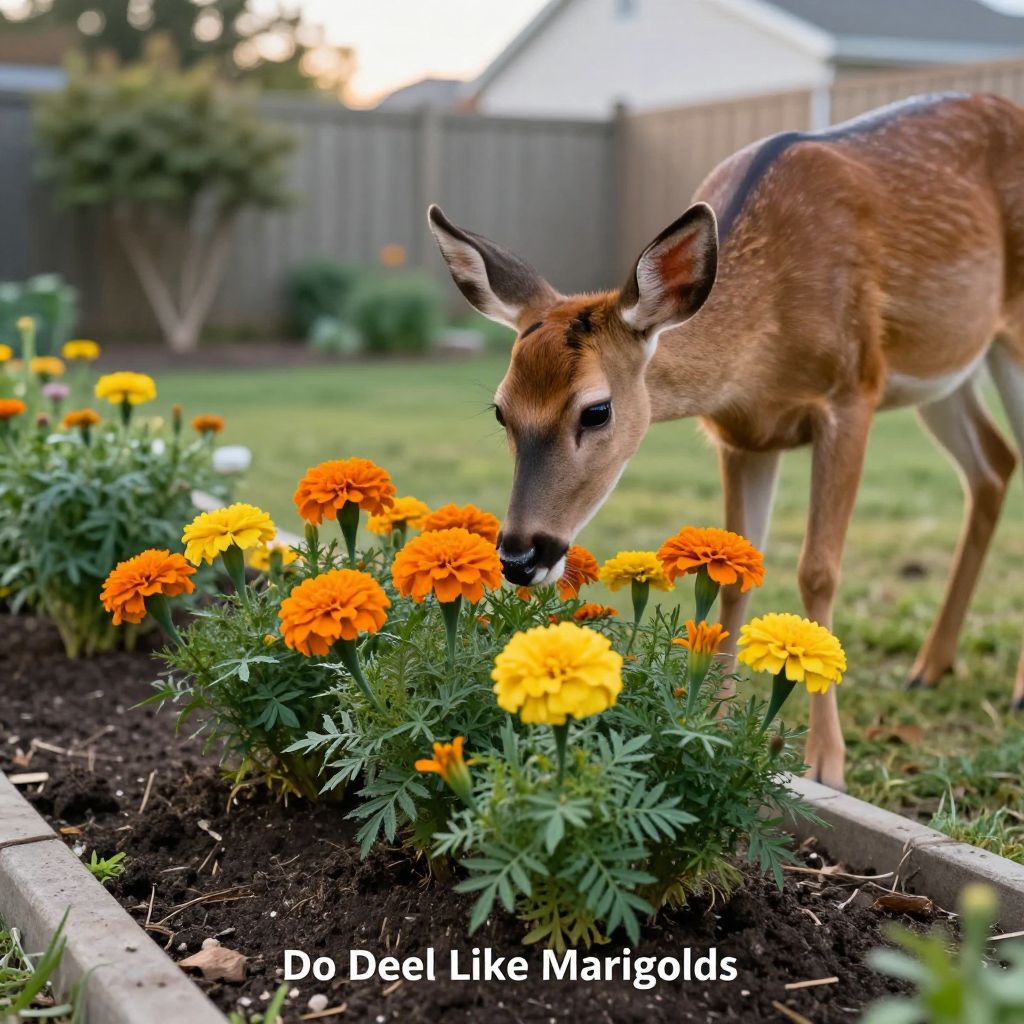
Do deer like marigolds? If you’re hoping marigolds will keep deer out of your beds, the short answer is: sometimes they help, but they are not a reliable deer-proof plant. Deer may avoid marigolds more often than tender, tasty flowers, but hungry deer can still nibble them, especially when food is scarce.
The good news is that marigolds are still useful in a garden because their scent, texture, and bold growth can make them a less appealing target. With the right planting strategy, they can be one part of a broader deer-deterrent plan rather than your only defense.
Do deer like marigolds?
Deer usually do not prefer marigolds, but they are not guaranteed to leave them alone. Marigolds have a strong scent and slightly coarse foliage that many deer find unappealing, yet young plants, stressed plants, or gardens under heavy pressure may still be browsed. Think of marigolds as “less attractive,” not “deer-proof.”
Why deer may avoid marigolds
Deer choose plants based on availability, palatability, and pressure from the local environment. Marigolds are often passed over because they are aromatic and not especially tender compared with many annual flowers.
What makes marigolds less appealing
- Strong scent: The foliage has a noticeable aroma that many gardeners enjoy, but deer often find it less inviting.
- Rougher texture: Marigold leaves are not as soft as many deer favorites.
- Not a preferred food: Deer usually go first for hostas, impatiens, tulips, roses, and other highly palatable plants.
When deer still eat marigolds
- When local deer populations are high
- During drought or winter food shortages
- When marigolds are very young and tender
- If the plants are near a deer pathway or browse line
- When deer are already accustomed to feeding in your yard
How to use marigolds in a deer-resistant garden
Marigolds work best as part of a layered planting plan. They can help discourage browsing around more vulnerable plants, but they should not be your only protection if deer are common in your area.
Best ways to plant them
- Use them as a border: Plant marigolds along the edge of beds, paths, or near entry points deer may use.
- Mix them with less palatable plants: Combine marigolds with herbs, ornamental grasses, or other deer-resistant plants.
- Place them near high-risk plants: They may help distract deer from nearby flowers, though not always.
- Repeat plantings: A few scattered marigolds are less effective than a fuller planting.
What marigolds cannot do
- They will not stop a hungry deer from entering your garden.
- They will not protect all neighboring plants on their own.
- They do not work as a stand-alone fence or barrier.
Growing marigolds so they stay healthy and less tempting
Healthy marigolds are more likely to keep their strong scent and sturdy growth, which can make them less attractive to deer. Weak, leggy, or stressed plants are easier targets and often look less effective in the landscape.
Sunlight and site
Marigolds grow best in full sun, with at least 6 hours of direct light most days. In part shade, they may bloom less, stretch more, and become less useful as a dense border planting.
Soil and drainage
Give marigolds well-drained soil. They tolerate average garden soil well, but they dislike soggy ground, which can lead to root problems and weak growth.
- Work in compost if your soil is poor or compacted.
- Avoid heavy, constantly wet beds unless drainage is improved.
- Do not overdo rich fertilizer, which can produce lots of leaves and fewer flowers.
Watering
Water newly planted marigolds regularly until established, then water deeply when the top layer of soil dries out. Avoid frequent shallow watering, which encourages weak roots and soft growth.
Tip: Water at the base of the plant when possible. Wet foliage can encourage disease, especially in humid weather.
Spacing and airflow
Space marigolds so air can move around them. Crowded plants stay damp longer and are more prone to fungal issues, which can weaken the planting and reduce its usefulness in the garden.
Practical deer control tips that work better than marigolds alone
If deer are a regular problem, use marigolds as a supporting plant, not the main defense. A combined approach is much more dependable.
Better long-term strategies
- Physical barriers: Fencing is the most reliable deer control method.
- Plant selection: Choose more deer-resistant plants for vulnerable areas.
- Garden layout: Put highly palatable plants closer to the house or inside protected spaces.
- Motion and disturbance: Some gardeners use deterrents, but deer often adapt if the pattern never changes.
- Rotate deterrents: If you use repellents, reapply as directed and after rain.
Common mistake to avoid
Do not assume one “deer-resistant” plant will solve the problem. Deer behavior changes with season, weather, and food supply, so a plant that is ignored one month may be sampled the next.
Choosing marigold types for your garden
Different marigold types can be used in beds, borders, and containers, but deer resistance is similar across the group. Your main decision should be based on plant size, bloom style, and how you want to use them in the landscape.
Common garden marigolds
- French marigolds are usually compact and good for edging and containers.
- African marigolds are taller and can make a stronger visual border.
- Signet marigolds are finer-textured and useful where a lighter look is wanted.
Whichever type you choose, remember that deer resistance depends more on local pressure than on the label alone.
How to tell if deer are the problem
Before blaming deer, check the damage pattern. Deer usually leave ragged bites or strip leaves and flowers at a height they can reach while standing.
Signs deer are browsing marigolds
- Cleanly nipped stems or flower heads
- Plants cropped from the top down
- Damage about 2 to 6 feet above ground
- Tracks, droppings, or nearby trampled areas
Other pests that may confuse the issue
- Slugs and snails: Leave irregular holes, often lower on the plant and worse in damp weather.
- Rabbits: Usually feed lower to the ground and leave neat cuts.
- Insects: May chew leaves but usually do not remove whole stems or flowers like deer do.
Keeping marigolds looking good through the season
Well-kept marigolds are more likely to stay full, blooming, and useful in the garden. A tidy planting can also make deer less likely to linger, especially when combined with other deterrents.
Maintenance checklist
- Remove faded flowers to encourage more blooming.
- Trim back leggy growth if plants become stretched.
- Watch for powdery mildew in crowded or humid conditions.
- Replace damaged plants quickly so gaps do not invite more browsing.
If disease appears, improve spacing, reduce overhead watering, and remove badly affected foliage. Healthy plants are more resilient and more attractive as a border planting.
Using marigolds in containers and raised beds
Containers and raised beds can make marigolds easier to protect because you can place them closer to the house, patio, or a monitored area. Deer may still reach them, but elevated or enclosed placements can reduce browsing pressure.
Container tips
- Use a pot with drainage holes.
- Choose a quality potting mix, not heavy garden soil.
- Water more often than in-ground plants, since containers dry faster.
- Place pots where deer are less likely to approach, such as near doors or seating areas.
Raised bed tips
- Keep beds neat and weed-free so marigolds stand out.
- Use the bed edge for a dense border planting.
- Combine marigolds with other deer-resistant flowers and herbs.
Propagation and replacement
Marigolds are usually easy to replace each season, which makes them practical for gardeners dealing with deer damage. If a plant is browsed hard, replacing it quickly can keep the bed looking full.
Simple propagation options
- Seed: A common, inexpensive way to start marigolds.
- Transplants: Useful if you want a quicker start or a more predictable layout.
Start with healthy seedlings if deer pressure is high. Larger transplants are less vulnerable than tiny seedlings, though they still need protection while they establish.
Bottom line: are marigolds worth planting for deer control?
Yes, marigolds are worth planting if you want a colorful, easy annual that deer often avoid. Just do not rely on them as your only deer defense. Use them as part of a broader plan that includes good garden design, healthy growing conditions, and stronger protection for plants deer truly love.
If you want to build a more deer-resistant garden, consider reading more about deer-resistant plants for home gardens and practical ways to protect plants from deer.