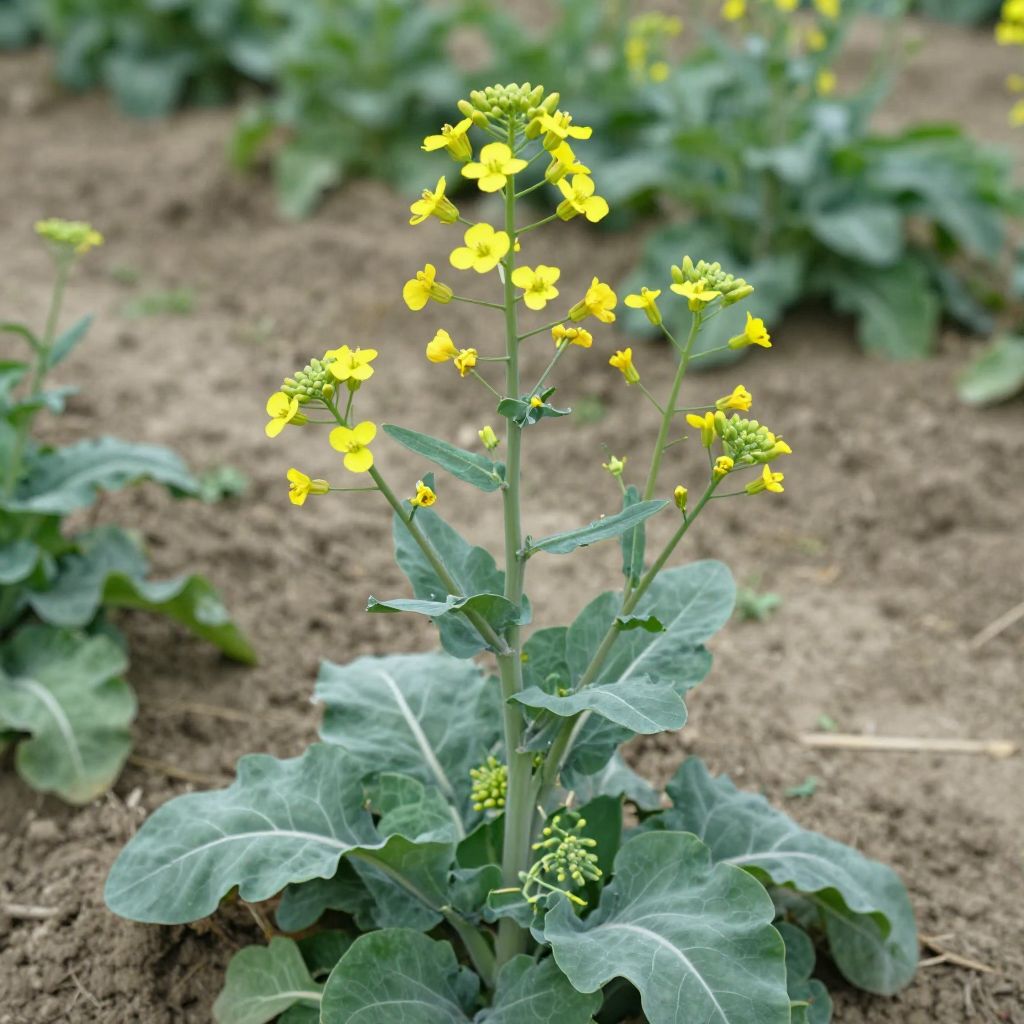
What does a canola plant look like? If you’re trying to identify one in a field, garden, or volunteer patch, canola is easy to recognize once you know the key features: blue-green leaves, a tall branching stem, and clusters of small yellow flowers. In the vegetative stage it can resemble other brassicas, so it helps to look at leaf shape, stem texture, and growth habit together.
Canola is the edible oilseed form of Brassica napus or related Brassica species bred for low erucic acid and low glucosinolates. It’s grown as a cool-season crop, but it can also appear as a volunteer plant in gardens, compost areas, or along roadsides.
What does a canola plant look like?
A canola plant starts as a low rosette of smooth, lobed leaves close to the ground, then sends up an upright, branching stem that can reach several feet tall. Mature plants produce clusters of bright yellow, four-petaled flowers and slender seed pods called siliques. The foliage is often bluish-green with a waxy look.
How to identify canola at each growth stage
Seedling stage
Young canola seedlings have small, rounded to slightly heart-shaped cotyledons, followed by true leaves with shallow lobes or toothed edges. The leaves are usually smooth rather than hairy, and the plant forms a compact rosette before it bolts.
- Cotyledons: two smooth seed leaves
- First true leaves: lobed, slightly wavy, and blue-green
- Growth habit: low and clustered near the soil surface
Vegetative stage
As the plant matures, the rosette becomes larger and the stem thickens. Canola leaves are typically glaucous, meaning they have a pale, waxy coating that gives them a dusty blue-green appearance. Lower leaves may be larger and more deeply lobed than upper leaves.
Flowering stage
When canola flowers, identification becomes much easier. The plant produces loose clusters of small, bright yellow flowers with four petals arranged in a cross shape, a hallmark of the mustard family. Pollinators often visit these blooms heavily.
Seed pod stage
After flowering, canola forms long, narrow seed pods that grow upward or outward from the stems. These pods are thin and green at first, then dry to tan or brown as seeds mature. If left too long, mature pods can split and shed seed.
Key features that separate canola from similar plants
Canola is often confused with mustard, rapeseed, wild radish, or other brassicas. The safest way to identify it is to combine several traits instead of relying on one feature alone.
- Leaf color: often blue-green or gray-green
- Leaf texture: smooth to slightly waxy, not fuzzy
- Flowers: small, yellow, four-petaled clusters
- Stem: upright and branching as it bolts
- Pods: long, slender, and seed-filled
Mustard plants may have more frilly or deeply cut leaves and can vary more in flower color. Wild radish often has rougher foliage and more obvious seed pods with a segmented look. If you are unsure, wait for flowering and pod formation before making a final identification.
Growing conditions canola prefers
Canola is usually grown outdoors in full sun and cool weather. It performs best in fertile, well-drained soil that holds moisture without staying soggy. Because it is a field crop, it is not commonly grown in small ornamental gardens, but the same basic requirements apply if you encounter or cultivate it on a small scale.
Soil and drainage
Canola prefers loose, moderately fertile soil with good drainage. Heavy clay that stays wet can slow growth and increase disease risk. If you are growing brassicas in a garden bed, work in compost to improve structure, but avoid making the soil overly rich with fresh manure.
Sunlight
Full sun is best. In partial shade, canola may become lankier and flower less reliably. If you are identifying a volunteer plant in a shaded bed, check whether it is stretching toward light and compare it with nearby brassicas.
Watering
Young plants need even moisture to establish roots, but mature canola dislikes waterlogged soil. Water deeply when the top few inches of soil begin to dry, adjusting for rainfall, temperature, and soil type. In cooler weather, plants use less water than they do during warm, windy spells.
How to grow canola if you are planting it intentionally
Most home gardeners do not grow canola for a decorative purpose, but it can be grown as a cool-season oilseed or green manure in some settings. If you want to try it, treat it like a brassica crop and plan around your local climate rather than a fixed calendar date.
- Choose a site with full sun and well-drained soil.
- Prepare a fine seedbed and remove large clods and weeds.
- Sow seed at the depth recommended for your seed source or local extension guidance.
- Keep the soil evenly moist until seedlings are established.
- Thin or space plants so air can move around them.
- Watch for pests and diseases as the plants develop.
If you are unsure whether canola is suitable for your area, check local extension recommendations for cool-season brassica crops. Climate, day length, and seasonal temperatures all affect flowering and seed set.
Common pests and diseases to watch for
Canola shares many of the same problems as other brassicas. Early detection matters, especially if you want to keep plants healthy long enough to flower or set seed.
Common pests
- Aphids: cluster on stems and buds, causing curling or sticky residue
- Flea beetles: make small “shot holes” in young leaves
- Cabbage worms and loopers: chew irregular holes in foliage
- Cutworms: can sever young seedlings at the soil line
Common diseases
- Downy mildew: pale patches and fuzzy growth on leaves
- Blackleg: can cause stem lesions and poor plant vigor
- Sclerotinia stem rot: more likely in wet, crowded conditions
To reduce problems, rotate brassicas away from the same bed for several seasons, avoid overcrowding, and remove infected plant debris. Good airflow and clean garden habits make a real difference.
Practical mistakes to avoid when identifying canola
Because canola is often mistaken for other brassicas, a few common errors can lead to misidentification.
- Relying on flower color alone: many mustard family plants have yellow flowers.
- Ignoring leaf stage: seedlings can look very similar before they mature.
- Forgetting about volunteers: canola can appear where seed spilled in previous seasons.
- Confusing it with weeds: some wild brassicas mimic crop plants closely.
If you need a more certain ID, compare the whole plant: leaf shape, stem, branching pattern, flower clusters, and pods. A clear photo of each stage can help you compare it with trusted local plant guides or extension resources.
Harvesting and handling mature plants
When canola is grown for seed, timing matters because dry pods can shatter and drop seed quickly. Mature plants usually turn more yellow-brown overall, and the pods dry from green to tan. Harvesting too late can mean seed loss, while harvesting too early can leave seed immature.
For small-scale growing, cut plants when most pods are mature but before they split. Dry them further in a well-ventilated, sheltered place, then thresh carefully. Wear eye protection and handle dry pods gently to reduce shattering.
Canola in the garden landscape
Canola is not typically used as an ornamental plant, but its bright yellow bloom can be striking in a field or large garden space. Still, it can become weedy if it self-seeds, so do not let it go to seed unless you want volunteers later.
If canola appears unexpectedly in your beds, pull young seedlings when the soil is moist and remove any mature pods before they open. Compost only healthy, non-seeding material unless your compost system reliably reaches high temperatures.
Quick identification checklist
- Blue-green, waxy leaves
- Low rosette when young
- Upright, branching stem as it matures
- Small yellow, four-petaled flowers
- Long, narrow seed pods after flowering
If you are still unsure, wait for the plant to flower and form pods before making a final call. That stage gives the clearest clues and reduces the chance of confusing canola with another brassica.
For more help identifying brassicas and managing cool-season crops, you may also want to read related gardening guides on growing brassicas in the home garden and identifying mustard family plants.