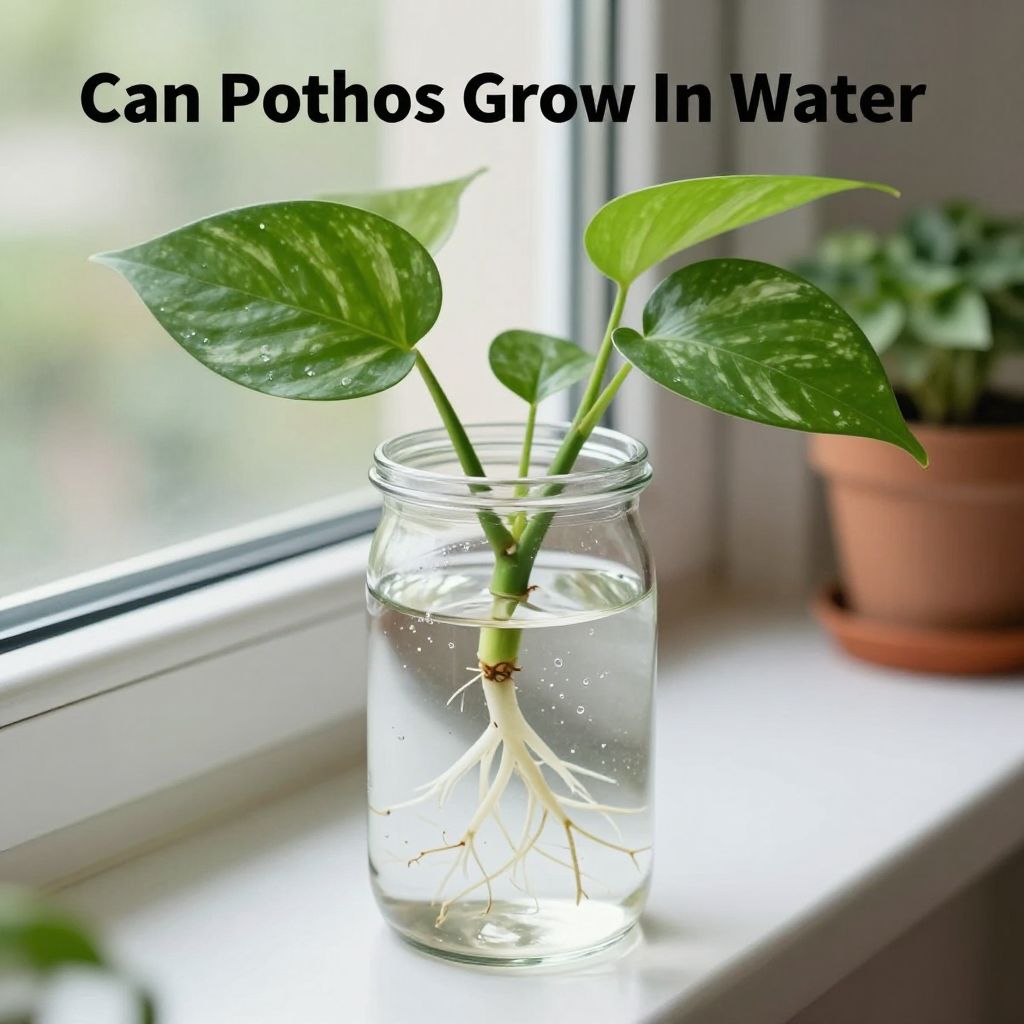
Can pothos grow in water? Yes, pothos (Epipremnum aureum) can live and grow very well in water for a long time, especially indoors. It is one of the easiest houseplants to keep in a vase, jar, or propagation vessel, as long as you give it clean water, bright indirect light, and regular care.
Water-grown pothos is a practical option for cuttings, tabletop displays, and low-maintenance indoor gardening. The key is understanding that it can survive in water, but it still needs oxygen, light, and occasional nutrients to stay healthy and keep growing.
Can pothos grow in water?
Yes. Pothos can root in water and continue growing there for months or even years if you maintain the water properly. It will usually grow more slowly than a plant in potting mix, and it may need occasional feeding because water alone does not provide enough nutrients for long-term vigor.
Why pothos adapts so well to water
Pothos is naturally forgiving and quick to root from stem cuttings. Its nodes easily form water roots, which makes it ideal for propagation and for keeping as a decorative hydro-style houseplant.
What makes water culture work
- Nodes produce roots readily, so a cutting can establish fast.
- The plant tolerates indoor conditions better than many tropical vines.
- Its stems can keep producing new leaves once roots are established.
- It does not need soil to survive, but it does need clean, oxygenated water.
What pothos still needs in water
- Bright, indirect light
- Fresh water changed regularly
- A stable container that supports the stems
- Occasional nutrients if you want longer-term growth
How to grow pothos in water step by step
You can start with a cutting from an existing plant or transfer a rooted cutting from soil. For best results, choose healthy stems with at least one node, because roots emerge from that point.
- Take a cutting just below a node, using clean scissors or pruners.
- Remove the lower leaves so no foliage sits below the waterline.
- Place the node in water, keeping leaves above the surface.
- Set the container in bright, indirect light away from hot sun.
- Change the water regularly to keep it clear and oxygenated.
- Wait for roots to form, then let them grow a few inches before you expect strong top growth.
Best container choices
Clear glass jars and vases are popular because you can monitor root growth and water clarity. Opaque containers also work and can help reduce algae, which often forms when light reaches the water.
- Use a clean container with enough room for stems and roots.
- Choose a vessel with a narrow neck or support if the cutting is top-heavy.
- Avoid containers that tip easily or trap stagnant water in corners.
Best light, temperature, and indoor conditions
Pothos in water grows best in bright, indirect light. A spot near an east-facing window or a few feet back from a sunny south or west window often works well, as long as the plant is not exposed to intense direct sun.
Light guidance
- Too little light can slow growth and cause pale, sparse leaves.
- Direct sun can overheat the water and scorch the foliage.
- Moderate indoor light usually gives the best balance of growth and leaf color.
Temperature and placement
Keep pothos in a normal indoor temperature range and away from cold drafts, heating vents, and air-conditioning blasts. Sudden temperature swings can stress roots and slow recovery after propagation.
How often to change the water
There is no single schedule that fits every home, but most pothos cuttings do best when the water is refreshed regularly. If the water becomes cloudy, smells stale, or develops algae, change it sooner.
- Refresh water when it looks dirty or evaporates low.
- Rinse the container if you notice slime or algae buildup.
- Use room-temperature water when possible to avoid shocking the roots.
Clean water matters more than frequent watering. Stale water can reduce oxygen around the roots and encourage rot, especially in warm rooms.
Do water-grown pothos need fertilizer?
Eventually, yes. A cutting can root and grow for a while using stored energy, but long-term water culture usually benefits from very dilute fertilizer. Without nutrients, growth may become weak, leaves may yellow, and new leaves may stay small.
Feeding tips
- Use a houseplant fertilizer diluted far below the label rate if you choose to feed.
- Feed only occasionally, not every time you change the water.
- If the plant is already stressed or rotting, do not fertilize until it recovers.
Because indoor conditions vary so much, start conservatively and watch the plant’s response. If you see algae, cloudy water, or soft roots after feeding, reduce the strength or frequency.
Can you move pothos from soil to water?
Yes, but it can be a little tricky. Soil roots and water roots are different, so the plant may need time to adjust. Some leaves may yellow as old roots transition, which is normal if the stem remains firm and new roots begin to form.
How to transition a soil-grown pothos
- Gently remove the plant from its pot.
- Rinse soil from the roots with lukewarm water.
- Trim away mushy or damaged roots.
- Place the stem in clean water with the nodes submerged.
- Change the water often during the first few weeks.
If the plant is large or heavily rooted, it may be easier to take a healthy cutting and root that cutting in water instead of converting the entire plant.
Common problems with pothos in water
Most issues come from poor water quality, too much light, or submerged foliage. The good news is that pothos usually gives clear warning signs before it fails.
Yellow leaves
Yellowing can happen when the plant is adjusting, but persistent yellow leaves often point to low light, stale water, or nutrient shortage. Remove badly yellowed leaves and improve the growing conditions.
Brown, mushy stems or roots
This usually means rot. Cut away damaged sections, clean the container, and restart with a healthy node if needed. Rot spreads quickly in stagnant water, so act early.
Algae in the container
Algae thrives when light reaches the water. Use a darker container, move the plant slightly away from direct light, and clean the vessel regularly.
Stunted growth
Slow growth is common in water, especially in winter or low light. If the plant looks healthy but slow, the issue may simply be seasonal. If it also looks pale or thin, it likely needs brighter indirect light or a light feeding.
How to keep pothos healthy long term in water
For a healthy long-term setup, think of water-grown pothos as a low-maintenance indoor system rather than a set-it-and-forget-it display. A few simple habits make a big difference.
- Inspect roots every so often for firmness and color.
- Keep leaves out of the water to prevent decay.
- Remove dead foliage promptly.
- Clean the container before buildup becomes a problem.
- Rotate the plant occasionally so growth stays even.
If you want fuller growth, prune long vines above a node. That encourages branching and gives you new cuttings to root in other containers.
Water-grown pothos vs. soil-grown pothos
Both methods can work well, but they serve different goals. Water is excellent for propagation, display, and simple indoor care. Soil is usually better for stronger long-term growth because it provides more consistent nutrients and root support.
- Water: easier to monitor roots, decorative, low mess, slower growth.
- Soil: better nutrient supply, often faster growth, more forgiving for long-term size.
If your goal is a lush, trailing plant, you may eventually prefer potting it up. If your goal is a clean tabletop plant or propagation setup, water is a great choice.
Practical mistakes to avoid
- Leaving leaves submerged in water
- Using a dirty container or stale water
- Placing the plant in harsh direct sun
- Overfeeding with fertilizer
- Ignoring soft, black, or smelly roots
- Expecting soil-level growth speed in water
Conclusion
Can pothos grow in water? Absolutely, and it is one of the easiest houseplants to succeed with in a jar or vase. Start with a healthy cutting, keep the node in clean water, give it bright indirect light, and refresh the water regularly. If you want to expand your indoor plant collection, take a few cuttings now and root them in water.
For more practical indoor plant care, you may also enjoy reading about how to propagate houseplants and the best indoor plants for low light.