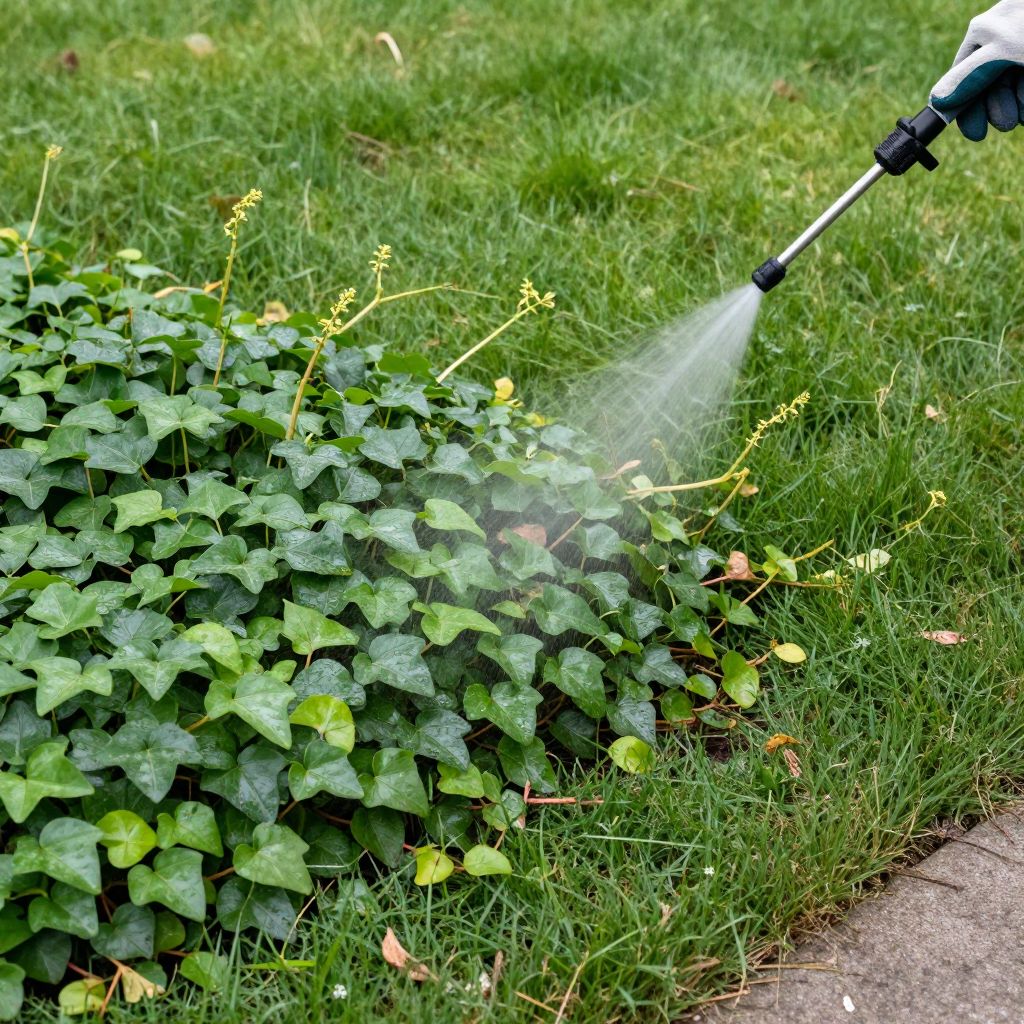
If you’re wondering what kills Creeping Charlie but not grass, the short answer is a selective broadleaf herbicide applied at the right time, plus good lawn care to help the grass outcompete it. Creeping Charlie, also called ground ivy (Glechoma hederacea), is a tough perennial weed, so the best results usually come from combining treatment with mowing, watering, and thicker turf.
You can often reduce it without harming your lawn, but timing, product choice, and application method matter. If you spray too broadly, treat stressed grass, or miss the right growth stage, Creeping Charlie usually rebounds.
What kills Creeping Charlie but not grass?
Selective broadleaf herbicides containing ingredients such as 2,4-D, dicamba, triclopyr, or combinations of these can kill Creeping Charlie while leaving most lawn grasses unharmed when used as directed. They work best on actively growing weeds, usually in mild weather, and often require repeat applications because Creeping Charlie spreads by creeping stems and roots.
Why Creeping Charlie is so hard to remove
Creeping Charlie is a low, mat-forming perennial that roots at nodes along its stems. That growth habit lets it spread under grass and refill thin spots quickly.
It also tolerates partial shade, compacted soil, and damp areas better than many turfgrasses. If your lawn is thin, shady, or frequently wet, it gives Creeping Charlie the opening it needs.
Common conditions that favor it
- Thin or patchy turf
- Shade from trees, fences, or buildings
- Compacted soil
- Overwatering or poor drainage
- Mowing too short
Best control options that spare grass
For most lawns, a selective broadleaf herbicide is the most effective option. These products target broadleaf weeds like Creeping Charlie while preserving common turfgrasses when used correctly.
Active ingredients to look for
- 2,4-D — common in many lawn weed killers
- Dicamba — often combined with other ingredients
- Triclopyr — especially useful on tough broadleaf weeds
- Blended products that include two or more of the above
Read the label carefully. The label is the law for application rates, turf types, temperature limits, and whether the product is safe for your specific grass.
What to avoid
- Non-selective herbicides such as glyphosate, which kill grass too
- “Weed and feed” products applied at the wrong season
- Spraying during heat stress, drought stress, or drought recovery
- Using too much product or overlapping sprays
How to apply herbicide for the best results
Apply only when Creeping Charlie is actively growing and your lawn is not under stress. In many regions, that means spring or early fall, but local weather matters more than the calendar.
- Mow a few days before treatment, but do not scalp the lawn.
- Choose a calm day with little wind to reduce drift onto ornamentals.
- Spray when the weed has enough leaf surface to absorb the product.
- Follow the label exactly for mixing, coverage, and reapplication timing.
- Wait before mowing again if the label recommends it.
Do not spray if rain is expected soon unless the label says the product becomes rainfast quickly. Washoff can reduce control and waste the application.
Spot spraying vs. broadcast spraying
Spot spraying is often the safest choice if Creeping Charlie is in a few patches. It limits chemical use and reduces the chance of stressing healthy grass.
Broadcast spraying may make sense if the weed is widespread, but only if the label allows it and your lawn species are compatible with the product.
Why timing matters so much
Creeping Charlie is easier to control when it is actively moving energy through its leaves and stems. Herbicides work poorly on dormant, drought-stressed, or heat-stressed weeds.
In many lawns, early fall is one of the best times because temperatures are milder, weeds are active, and grass can recover well. Spring can also work, especially if the weed is growing vigorously and the lawn is not stressed.
When results are usually weaker
- During hot summer weather
- During drought or after a dry spell
- When the weed is dusty, wilted, or recently mowed very short
- When the lawn is newly seeded or recovering from damage
Non-chemical ways to weaken Creeping Charlie
Herbicide may be the fastest fix, but lawn care changes are what keep Creeping Charlie from returning. A thicker lawn shades the soil and leaves less room for the weed to spread.
Improve the turf first
- Mow at the correct height for your grass type; taller grass usually shades weeds better.
- Water deeply but not constantly, so roots grow deeper.
- Aerate compacted soil if foot traffic or clay soil is an issue.
- Overseed thin areas with a grass type suited to your site.
- Rake out heavy thatch if it is preventing seed-to-soil contact.
If the lawn is in shade, consider whether the site needs more light pruning from nearby shrubs or trees. Creeping Charlie often thrives where grass struggles for light.
Hand removal for small patches
For small infestations, hand-pulling can help, especially after rain or watering when the soil is soft. Remove as much of the creeping stem and rooted nodes as possible.
Hand removal works best as a follow-up, not a stand-alone cure. Even a few missed nodes can regrow.
How to tell if your weed killer is working
Do not expect Creeping Charlie to disappear overnight. Leaf curl, discoloration, and slowed growth are early signs that the treatment is working.
Some patches may need a second application after the interval listed on the label. That is common with established infestations, especially in shaded or compacted areas.
Signs you may need to reassess
- The weed looks unchanged after the full label-specified waiting period
- Only the top growth is damaged and the patch rebounds quickly
- New shoots appear from the edges of the treated area
- The lawn is still thin enough for the weed to spread back in
Common mistakes that lead to poor control
Many failed treatments come from application errors rather than the weed being impossible to kill. Creeping Charlie is persistent, but it is not invincible.
- Using the wrong product for broadleaf weeds
- Spraying when the lawn is stressed
- Missing the label directions for turf species
- Applying too little coverage to the leaves
- Expecting one treatment to solve a long-term turf problem
If you have a newly seeded lawn, check the label before spraying. Many herbicides should not be used until new grass is established.
How to prevent Creeping Charlie from coming back
Long-term prevention is mostly about growing a dense, healthy lawn. Creeping Charlie usually returns where grass is weak, shade is heavy, or soil conditions stay unfavorable for turf.
Practical prevention checklist
- Keep mowing height appropriate for your grass species
- Address drainage issues and low spots
- Reduce compaction with aeration where needed
- Overseed bare or thin areas
- Monitor shady borders and foundation plantings
- Pull or spot-treat small new patches early
If your lawn is mostly shade and Creeping Charlie keeps returning, you may need to rethink the area rather than fight the same patch every year. In very shady spots, a shade-tolerant groundcover or mulch bed may be a better long-term solution than turf.
What to do next
Start by identifying where the weed is strongest, then choose a selective broadleaf herbicide labeled for your grass type. Treat on an active-growth day, follow the label exactly, and then improve mowing, watering, and soil conditions so the lawn can close the gaps left behind.
For more lawn help, you may also want to read about how to overseed thin lawn areas and simple ways to improve compacted soil in grass.