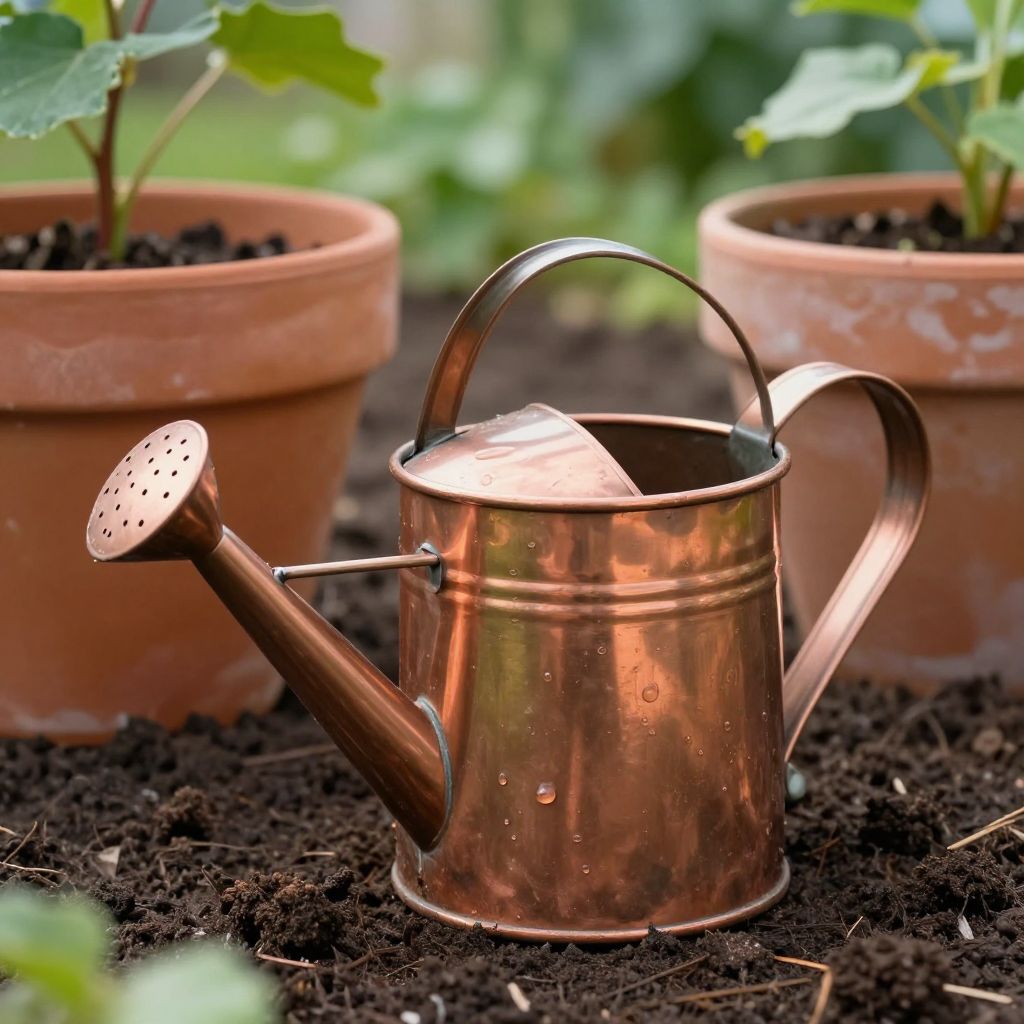
Looking for a copper watering can and wondering whether it is worth using in the garden? A copper watering can can be both a practical tool and a beautiful one, but the real question is how well it waters plants, how to care for it, and when it makes sense to choose copper over other materials.
The short answer: a copper watering can works well for gentle, targeted watering, especially for seedlings, houseplants, containers, and small beds. Choose one with a balanced handle, a comfortable spout, and a rose that gives a fine spray. Keep it clean and dry to prevent mineral buildup and preserve the finish.
What is a copper watering can, and is it good for plants?
A copper watering can is a watering tool made partly or entirely from copper, often chosen for its durability, weight, and attractive appearance. For plants, the material matters less than the design: a good rose, steady flow, and comfortable handling are what make it useful for accurate watering without disturbing soil or roots.
Why gardeners choose a copper watering can
Many gardeners like copper because it feels sturdy and looks attractive in the potting shed, greenhouse, or on a patio. It can also develop a natural patina over time, which many people enjoy.
From a gardening standpoint, the main advantages are practical:
- Controlled watering for seedlings, cuttings, and potted plants.
- Durability if the can is well made and not thin or poorly joined.
- Better handling in smaller sizes, especially for indoor use.
- Decorative value when you want a tool that looks good on display.
There are trade-offs too. Copper cans can be heavier than plastic, and some are more decorative than functional. If you water large borders or many containers, a lighter galvanized or plastic can may be easier on your wrist.
How to choose the right copper watering can
Not all watering cans perform equally well. When buying a copper watering can, look closely at the parts that affect watering quality and comfort, not just the finish.
Check the spout and rose
The rose is the perforated attachment that turns a stream into a gentle shower. For most garden use, you want a rose that produces even droplets rather than a harsh jet.
- Choose a fine, even spray for seedlings and newly planted containers.
- Choose a rose that can be removed if you need a stronger pour for established pots.
- Make sure the holes are not too large, or the water may wash soil away.
Pay attention to balance and capacity
A beautiful can that feels awkward when full will quickly become frustrating. Test the grip and weight if possible.
- Small cans are best for houseplants, trays, and propagation shelves.
- Medium cans suit mixed containers and small beds.
- Large cans are useful outdoors, but only if you can lift and pour them safely when full.
Look at seams and construction
Good construction matters more than a polished finish. Check for solid joints, a secure handle, and a rose that attaches firmly. Leaks at seams or around the spout can waste water and make the can messy to use.
How to use a copper watering can correctly
Using a watering can well is about matching the water flow to the plant’s stage of growth. The goal is to wet the root zone evenly without compacting soil or splashing leaves unnecessarily.
- Fill the can with clean water at a comfortable temperature, ideally close to ambient room or outdoor temperature.
- Attach the rose if you need a gentle shower.
- Tilt the can slowly so the water comes out in a steady, controlled stream.
- Water the soil, not the foliage, unless you are rinsing dust from leaves or intentionally misting a plant that benefits from it.
- Stop when water begins to drain from the bottom of the pot or when the bed is evenly moistened.
Avoid blasting the soil surface. Strong streams can expose roots, flatten seedlings, and create channels that let water run off instead of soaking in.
Best plants and garden uses for a copper watering can
A copper watering can is especially handy where precision matters. It is not the tool for flooding a large vegetable patch, but it is excellent for smaller, more delicate jobs.
Indoor plants
Houseplants often need careful watering because pots vary in size, drainage, and drying speed. A small copper watering can helps you direct water to the potting mix without soaking furniture or overwatering nearby plants.
It is especially useful for:
- Small foliage plants
- Succulents in mixed indoor collections, when watered individually
- Orchids and other plants that need careful, targeted watering
- Seed trays and propagation shelves
Seedlings and cuttings
Young plants are easily damaged by a heavy pour. A fine rose helps settle the potting mix without dislodging seeds or bending stems.
For seedlings, water lightly and more often if the surface dries quickly. The aim is to keep the root zone evenly moist, not saturated.
Containers and raised beds
In pots and raised beds, water can be applied exactly where it is needed. This is useful when some plants are thirsty and others are not, or when you are watering around established stems.
Watering tips that matter more than the can itself
The best watering can in the world cannot compensate for poor watering habits. Good technique protects roots and helps plants grow steadily.
Water the root zone
Most plants absorb water through their roots, so aim at the soil surface near the base of the plant. Wetting the leaves repeatedly can encourage some foliar diseases, especially in crowded or poorly ventilated spaces.
Water deeply when appropriate
For established outdoor plants, a deeper soak is often better than frequent light sprinkles. Deep watering encourages roots to grow downward, which can improve drought tolerance.
That said, soil type matters:
- Sandy soil drains quickly and may need more frequent watering.
- Clay soil holds water longer and can become waterlogged if overwatered.
- Compost-rich potting mix in containers dries faster than garden soil and should be checked regularly.
Check moisture before watering again
Do not water on a fixed schedule alone. Instead, test the soil with your finger about 2 to 5 cm deep for small pots, and deeper for larger containers or beds. If it still feels moist, wait.
How to care for a copper watering can
Good care keeps the can working smoothly and prevents unnecessary tarnish, staining, or clogging. Copper is durable, but it still benefits from routine maintenance.
Clean it after use
Empty any leftover water after watering. Standing water can leave mineral deposits inside the can and around the rose.
- Rinse the inside with clean water.
- Shake out excess moisture.
- Dry the outside with a soft cloth if you want to preserve the shine.
Prevent mineral buildup
If your tap water is hard, white or chalky deposits may form over time. These can clog the rose and reduce flow.
To reduce buildup:
- Rinse the rose regularly.
- Soak the rose in warm water if holes begin to clog.
- Use a soft brush to clear residue, not a metal tool that could damage the perforations.
Protect the finish
Copper naturally darkens and develops patina. That is normal and not a problem for plant care. If you prefer a brighter finish, polish it gently according to the manufacturer’s instructions, but avoid harsh abrasives that can scratch the surface.
Store the can in a dry place when not in use. Leaving it outdoors in rain or damp conditions may speed up tarnish and shorten the life of fittings or soldered joints.
Common problems with copper watering cans
Most watering-can problems are simple to diagnose. The issue is usually flow, weight, or maintenance rather than the copper itself.
Water comes out too fast
This usually means the rose holes are too large, missing, or not suited to delicate plants. Use the rose attachment, or switch to a finer one if available.
The can feels too heavy
A full metal can can strain your wrist or shoulder. Fill it only partway, especially if you have to carry it a distance. For bigger jobs, use a hose with a watering wand or a larger, lighter can.
Leaves are getting spotted
If water droplets sit on leaves in strong sun or in a crowded indoor space, spotting or disease pressure can increase. Water at soil level when possible, and improve airflow around plants.
The rose is clogging
Hard water, algae, or fine debris can block the spray. Rinse the can after use and clean the rose regularly, especially if you collect rainwater that contains debris from barrels or tanks.
Copper watering can vs. other watering cans
Choosing the right watering can depends on the job, not just the appearance. Here is a simple comparison to help you decide.
- Copper: attractive, durable, often heavier, best for precise watering and display.
- Plastic: lightweight, inexpensive, practical for large or frequent jobs.
- Galvanized metal: sturdy and classic, but may rust if the coating is damaged.
- Stainless steel: durable and modern, often more resistant to corrosion than plain steel.
If you garden daily and water many containers, you may want more than one can: a small copper watering can for indoor plants and a larger practical can for outdoor beds.
Seasonal and climate considerations
How you use a copper watering can changes with the season and your local weather. In hot, windy conditions, containers dry quickly and may need more frequent checks. In cool or rainy weather, watering needs drop sharply.
In summer, water early in the day when possible so plants can absorb moisture before heat peaks. In cooler seasons, water more sparingly and make sure pots are not sitting in saucers of leftover water.
For indoor plants, heating systems can dry the air and potting mix faster in winter, while low light may slow growth and reduce water use. Always adjust to the plant’s actual needs rather than the calendar.
Simple buying and maintenance checklist
If you want a copper watering can that will be genuinely useful, use this quick checklist before and after purchase:
- Is the handle comfortable when the can is full?
- Does the rose produce an even, gentle spray?
- Is the capacity appropriate for the plants you water most often?
- Are the seams, spout, and joints secure?
- Will you be able to store it dry and clean after use?
After buying, rinse it regularly, empty it after use, and keep an eye on the rose openings. Those small habits will make the can last longer and perform better.
Conclusion
A copper watering can is a worthwhile tool if you value precise watering, good balance, and a durable, attractive finish. Use it for seedlings, houseplants, and containers, and keep it clean so the rose stays clear and the can remains easy to handle. If you are choosing one today, focus on spray quality and comfort first, then appearance.
For more practical gardening guidance, you may also want to read about choosing the right soil, compost, and mulch and caring for seedlings and young plants.