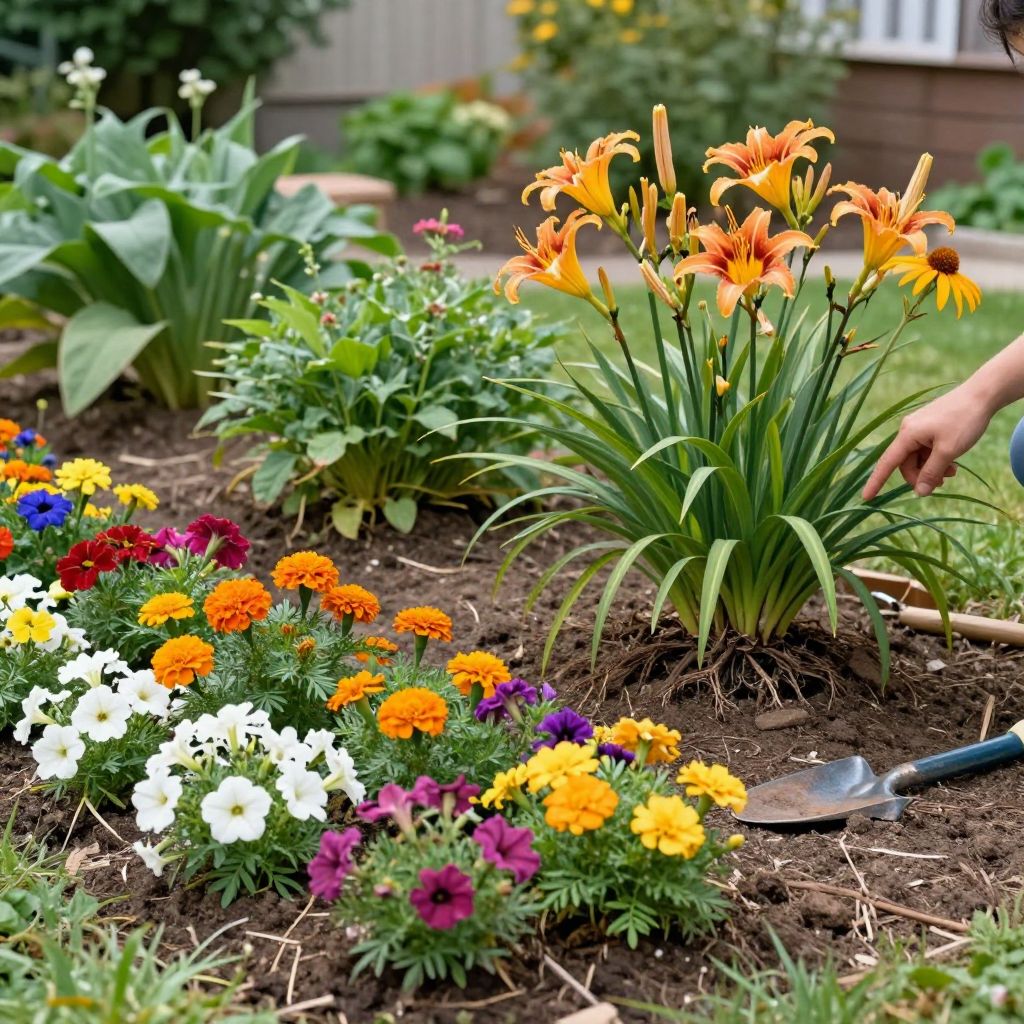
If you’ve ever wondered what is the difference between annuals and perennials, the short answer is that annuals complete their life cycle in one growing season, while perennials return for multiple years. That difference affects how you plant, water, prune, and plan your garden beds.
Knowing which is which helps you choose plants that fit your climate, budget, and maintenance style. It also prevents common mistakes like expecting a tender annual to survive winter or cutting back a perennial at the wrong time.
What is the difference between annuals and perennials?
Annuals germinate, grow, flower, set seed, and die in one season. Perennials live for more than two years and usually regrow from the same root system each spring. Annuals give fast color and long bloom, while perennials offer repeat structure, lower replanting, and seasonal change.
How to identify annuals vs. perennials in the garden
The easiest way to identify a plant is to ask how long it naturally survives outdoors in your climate. If it dies after frost or at the end of the season, it is usually an annual. If it survives winter and returns from roots, crowns, bulbs, or woody stems, it is a perennial.
Quick identification clues
- Annuals often bloom heavily and quickly, then decline after seed set or cold weather.
- Perennials may die back above ground in winter but regrow from the base in spring.
- Woody stems usually suggest shrubs or perennial plants, though not every perennial is woody.
- Bulbs, corms, tubers, and rhizomes are common perennial storage structures.
- Many plants are treated as annuals in cold climates even if they are perennial in frost-free regions.
Always check the plant tag or botanical name if you are unsure. A plant sold as an annual in one region may be a perennial in another, depending on winter temperatures and growing conditions.
Annuals: what they are and why gardeners use them
Annuals are the fast workers of the flower garden and vegetable patch. They are useful when you want quick color, a full bed of blooms, or a crop that finishes in a single season.
Common examples of annuals
- Marigold (Tagetes)
- Zinnia (Zinnia elegans)
- Petunia (Petunia hybrids)
- Sunflower (Helianthus annuus)
- Cosmos (Cosmos bipinnatus)
- Basil (Ocimum basilicum) in most climates
- Beans, peas, lettuce, and many other vegetables grown as annual crops
Best uses for annuals
- Filling gaps in borders and containers
- Adding season-long color
- Testing a new garden design before committing long term
- Growing quick harvest crops from seed
Because annuals invest all their energy into one season, they often need regular watering and feeding to keep blooming. Many also benefit from deadheading, which means removing faded flowers to encourage more blooms instead of seed production.
Perennials: what they are and why they matter
Perennials are the backbone of many gardens. They usually take longer to establish than annuals, but they reward you with repeat growth, less replanting, and often better value over time.
Common examples of perennials
- Hosta (Hosta)
- Echinacea or coneflower (Echinacea purpurea)
- Daylily (Hemerocallis)
- Peony (Paeonia)
- Lavender (Lavandula) in suitable climates
- Salvia (Salvia nemorosa and related types)
- Strawberry (Fragaria) in many gardens
Types of perennial growth habits
- Herbaceous perennials die back to the ground in cold weather and regrow from the crown or roots.
- Woody perennials keep stems above ground year-round, such as shrubs and many small landscape plants.
- Evergreen perennials keep some foliage through winter in mild climates.
Perennials often need a little more planning at planting time. Good soil preparation, drainage, and spacing matter because these plants may stay in the same spot for years.
Annuals vs. perennials: practical gardening differences
The biggest difference is not just lifespan. It also changes how you design, maintain, and refresh your garden through the seasons.
| Feature | Annuals | Perennials |
| Lifespan | One growing season | More than two years |
| Bloom timing | Often fast and continuous | May bloom for a shorter window, depending on species |
| Replanting | Usually every year | Less frequent, though division or replacement may be needed |
| Establishment | Quick | Often slower in the first year |
| Maintenance | More seasonal refresh and deadheading | Pruning, dividing, and long-term care |
How to choose between annuals and perennials
Your best choice depends on your goal. If you want instant impact, annuals are ideal. If you want a garden that matures over time and returns each year, perennials are the better foundation.
Choose annuals if you want:
- Fast color for a new bed or bare spot
- Flexible seasonal changes
- Long bloom in containers and hanging baskets
- Low commitment while you learn your site conditions
Choose perennials if you want:
- A long-term planting structure
- Lower yearly replanting costs
- Plants that return after winter
- Support for pollinators and habitat over time
Many successful gardens use both. A common approach is to build the bed with perennials and shrubs, then tuck annuals into open spaces for extra color and seasonal interest.
Planting and care basics for annuals
Annuals usually grow best in fertile, well-drained soil with consistent moisture. Because they grow quickly, they use water and nutrients faster than many perennials.
Annual planting tips
- Prepare the soil with compost before planting.
- Choose a site that matches the plant’s sun needs.
- Space plants so air can move between them.
- Water deeply after planting to settle the roots.
- Mulch lightly to reduce evaporation and splashing soil.
Annual care mistakes to avoid
- Letting containers dry out completely in hot weather
- Overcrowding seedlings, which invites mildew and weak growth
- Skipping deadheading on plants that rebloom
- Using too much nitrogen, which can produce leafy growth with fewer flowers
If an annual starts to fade early, check for heat stress, root-bound containers, poor drainage, or pest damage. Many annuals decline not because they are “done,” but because their growing conditions are no longer suitable.
Planting and care basics for perennials
Perennials usually reward careful planting. Once established, they often need less frequent watering than annuals, but they still need a strong start and the right site.
Perennial planting tips
- Dig a wide planting hole, not just a deep one.
- Loosen compacted soil and mix in compost if needed.
- Set the crown at the correct level for the plant species.
- Water well during the first season while roots establish.
- Mulch to conserve moisture, but keep mulch off crowns and stems.
Perennial care mistakes to avoid
- Planting in soil that stays soggy after rain
- Cutting back every perennial at the same time without checking species needs
- Dividing too early or too often
- Expecting full flowering in the first year from slow-establishing perennials
Some perennials need division every few years if clumps become crowded or flowering declines. Others prefer to be left alone. Check the growth habit of each plant before dividing or pruning.
Sun, soil, water, and drainage: what both need
Whether you grow annuals or perennials, the basics still matter. Matching the plant to the site is more important than any fertilizer or special treatment.
Use this simple site check
- Sun: Full sun usually means 6 or more hours of direct light; partial shade means some direct sun with afternoon shade or filtered light.
- Soil: Most garden plants prefer loose, crumbly soil with organic matter.
- Drainage: Roots need air as well as water, so avoid spots where water sits for hours after rain.
- Moisture: New plantings need more consistent watering than established ones.
Annuals in containers usually need more frequent watering than those in the ground. Perennials in the landscape may need less frequent watering once established, but young plants still need regular attention during dry spells.
Pruning, deadheading, and seasonal maintenance
Maintenance differs because annuals and perennials grow on different timelines. Annuals are often managed for maximum bloom right now, while perennials are cared for with next season in mind.
Annual maintenance
- Deadhead spent flowers if the plant reblooms
- Pinch young plants to encourage bushier growth, if appropriate for the species
- Remove diseased foliage promptly
- Replace tired plants as the season ends
Perennial maintenance
- Cut back dead stems according to the plant’s needs and local climate
- Remove winter-damaged leaves in spring
- Divide crowded clumps when flowering declines
- Top-dress with compost if the soil needs improvement
Not every perennial should be cut back in fall. In some gardens, leaving seed heads and stems standing through winter can provide structure and shelter for beneficial insects. Clean up diseased material, but do not rush to remove everything if the plant benefits from winter protection.
Pests and diseases: what to watch for
Annuals and perennials can both get pests and diseases, but the timing and impact may differ. Fast-growing annuals can be damaged quickly, while stressed perennials may show problems year after year if the underlying issue is not fixed.
Common problems
- Powdery mildew in crowded or poorly ventilated plantings
- Slugs and snails on tender annuals and shade perennials
- Aphids on soft new growth
- Root rot in soil that stays too wet
- Leaf spot where foliage stays wet for long periods
The best prevention is healthy spacing, clean tools, proper watering at the soil line, and removing badly infected leaves. If a perennial repeatedly gets sick in the same spot, the site may be the problem rather than the plant.
Propagation: how annuals and perennials are multiplied
Annuals are usually grown from seed each year, which makes them easy and economical to start. Perennials may also be grown from seed, but many are propagated by division, cuttings, or offsets to keep the parent plant’s traits.
Simple propagation differences
- Annuals: Often direct-sown or started indoors from seed, depending on the crop and climate.
- Perennials: May be divided, rooted from cuttings, or grown from seed, depending on the species.
If you are a beginner, annuals are often the easiest way to practice seed starting. Perennials take a little more patience, but division can be a reliable way to expand a planting once it is established.
Common mistakes gardeners make
- Assuming every flower that comes back each year is a perennial in every climate
- Planting sun-lovers in shade and expecting the same bloom
- Overwatering newly planted perennials in heavy soil
- Letting annual beds dry out in hot, windy weather
- Not reading the plant tag for mature size and spacing
- Forgetting that some “annuals” are only annual in cold regions
A plant’s label is a guide, but your local climate decides the outcome. A tender perennial may behave like an annual where winters are cold, while some annuals can self-seed and appear to “come back” even though the original plant died.
Conclusion: build your garden with both
Once you understand what is the difference between annuals and perennials, it becomes much easier to plan a garden that fits your time, climate, and style. Use annuals for quick color and flexibility, and use perennials for structure and long-term value. Start by identifying the plants you already have, then match each one to the right care routine for your local conditions.
For more practical planting help, you may also want to read about choosing the right soil and improving garden drainage before you add new annuals or perennials.