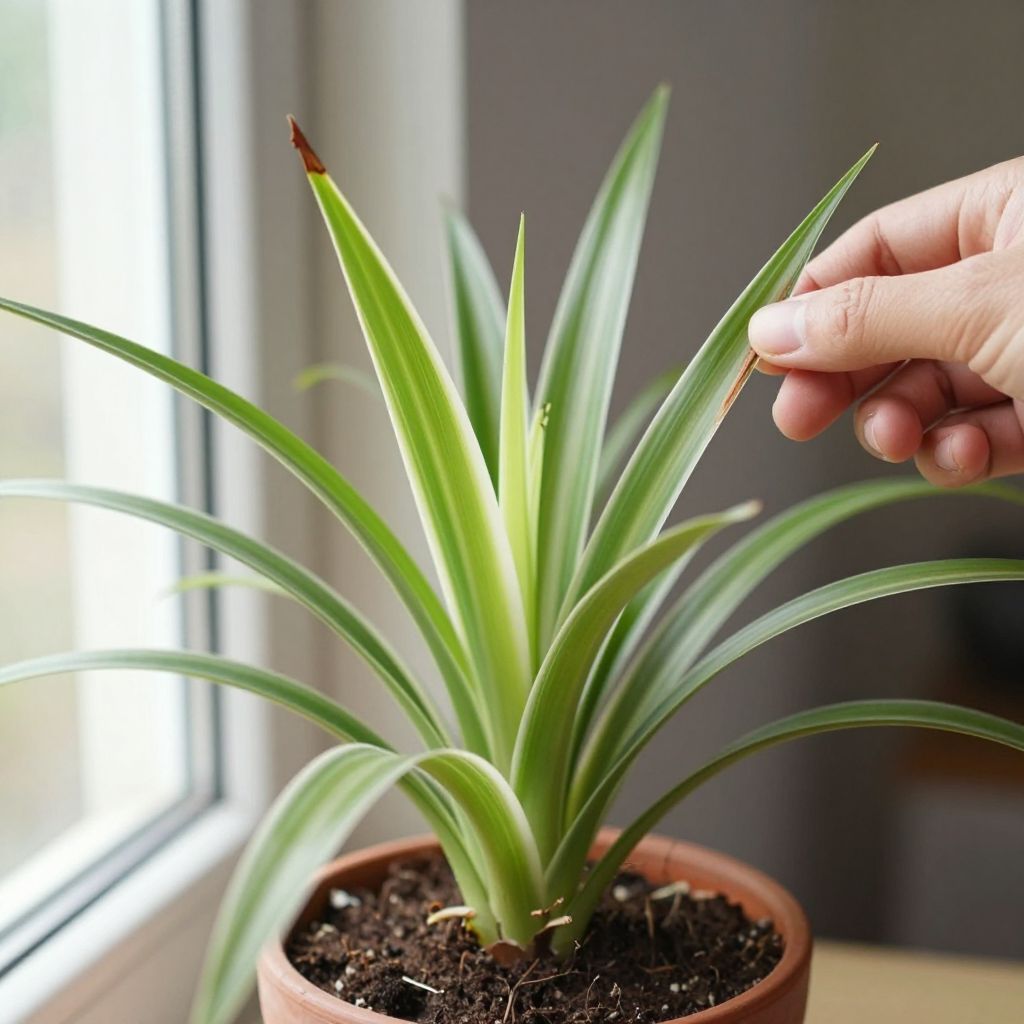
Why are the tips of my spider plant turning brown? In most cases, it’s a sign of a care issue rather than a serious disease. Spider plants are tough, but they can react to fluoride or salt buildup, inconsistent watering, very dry air, too much direct sun, or root stress by browning at the leaf tips.
The good news is that brown tips are usually manageable. Once you identify the cause, you can adjust care and help your spider plant (Chlorophytum comosum) put out healthier new growth.
Why are the tips of my spider plant turning brown?
Spider plant tips usually turn brown because the plant is under stress from water quality, watering habits, low humidity, excess fertilizer salts, or too much sun. The damage won’t turn green again, but you can stop it from spreading by correcting the growing conditions and trimming the browned tips cleanly.
Common causes of brown spider plant tips
1. Fluoride or mineral buildup in water
One of the most common causes is tap water with fluoride, chlorine, or dissolved minerals. Spider plants are especially sensitive to this, and the leaf tips often brown first.
If your water is hard or heavily treated, try using:
- Filtered water
- Rainwater
- Distilled water
- Water that has sat out overnight, if your local water quality is the issue and not heavy mineral content
Important: If salts have built up in the potting mix, simply changing water may not be enough. You may also need to flush the soil or repot the plant.
2. Overfertilizing or salt buildup in the potting mix
Spider plants do not need heavy feeding. Too much fertilizer can leave salt residue in the soil, and that can burn the leaf tips.
Signs of salt buildup include:
- Brown leaf tips and edges
- White crust on the soil surface or pot rim
- Drooping or dull-looking leaves despite regular watering
To fix it, stop fertilizing for a while and flush the pot thoroughly with clean water until it drains freely from the bottom. If the soil is old and crusty, repotting may be the better choice.
3. Inconsistent watering
Spider plants like evenly moist soil, but not soggy roots. If the plant dries out too much between waterings, the tips may brown. If the roots stay wet for too long, the plant can also suffer and show stress symptoms.
A better approach is to water when the top 1 to 2 inches of soil feel dry. Then water deeply until excess drains out. Empty the saucer so the pot does not sit in water.
Watch for these watering mistakes:
- Letting the plant wilt before watering
- Watering on a fixed schedule without checking the soil
- Leaving the pot in standing water
- Using a pot without drainage holes
4. Low humidity or very dry indoor air
Dry air can cause the tips to crisp, especially in winter when heating systems run often. Spider plants tolerate average indoor humidity, but very dry rooms can still lead to browning.
If your home is dry, try these simple fixes:
- Group plants together to create a slightly more humid microclimate
- Use a pebble tray with water under the pot, keeping the pot above the waterline
- Move the plant away from heating vents, radiators, and drafty windows
- Run a humidifier if the air is consistently dry
5. Too much direct sunlight
Spider plants prefer bright, indirect light. Harsh direct sun can scorch the leaves and contribute to dry, brown tips, especially through a hot window.
If the plant sits in strong afternoon sun, move it back from the window or filter the light with a sheer curtain. A brighter location is fine as long as the sun is not intense and direct for long periods.
6. Root stress or a pot that is too small
When spider plants become rootbound, the roots fill the pot and the plant may dry out too quickly. That stress can show up as brown tips and slower growth.
Check the drainage holes. If roots are circling tightly, pushing out of the pot, or the plant dries out very fast after watering, it may be time to repot into a container just one size larger.
Tip: Spider plants often do well when slightly snug, so avoid jumping to a much larger pot. A pot that is too big can hold excess moisture and create new problems.
7. Physical damage or natural aging
Sometimes the brown tips are not a major problem at all. Leaves may get nicked by handling, brushed against walls, or damaged by dry air. Older leaves can also develop browning at the tips as they age.
If the plant is otherwise healthy and producing new leaves, a few brown tips are usually cosmetic rather than serious.
How to fix brown tips on a spider plant
Step 1: Check the water and soil
- Feel the top 1 to 2 inches of soil.
- Look for soggy soil, crusty buildup, or a strong fertilizer smell.
- Check whether the pot drains freely.
- Review what kind of water and fertilizer you’ve been using.
This quick check usually points to the most likely cause.
Step 2: Flush the pot if salts may be the issue
If you suspect fertilizer or mineral buildup, water the pot slowly with plenty of clean water and let it drain completely. Repeat until the runoff is clearer. This helps wash excess salts from the root zone.
If the soil is old, compacted, or heavily crusted, repot the plant into fresh, well-draining indoor potting mix.
Step 3: Adjust watering habits
Water thoroughly when the top layer of soil feels dry, then let the excess drain away. Spider plants do best with a rhythm of moist but not wet soil.
In cooler months or low-light conditions, the plant usually needs less water than it does during active growth in spring and summer.
Step 4: Improve light and humidity
Move the plant to bright, indirect light if it is in harsh sun. If the air is dry, raise humidity gently rather than misting heavily and expecting it to solve the problem on its own.
Misting can offer only brief relief. For lasting results, a humidifier or pebble tray is usually more effective.
Step 5: Trim the brown tips neatly
Once the cause is addressed, you can trim the brown portions for appearance. Use clean scissors or pruning snips and follow the natural shape of the leaf tip.
- Cut only the brown area when possible
- Leave a thin brown margin if needed to avoid cutting into healthy tissue
- Remove entire leaves if they are mostly brown or damaged
Trimming won’t cure the underlying issue, but it can make the plant look much better while new growth develops.
How to prevent brown tips from coming back
Use the right potting mix and container
Spider plants do best in a light, well-draining potting mix. A standard indoor potting soil with good drainage is usually enough. Make sure the container has drainage holes so excess water can escape.
Feed lightly
Spider plants are not heavy feeders. If you fertilize, do so sparingly during active growth and avoid overdoing it. Too much fertilizer is a common reason for tip burn.
If you are unsure, it is safer to underfeed slightly than to overfeed.
Water consistently, not automatically
Instead of watering on a strict calendar, check the soil first. Indoor conditions change with season, temperature, light, and pot size, so the plant’s needs will change too.
Use better water if needed
If your tap water is hard or heavily treated, switching to filtered, rain, or distilled water can make a noticeable difference over time. This is especially helpful if the plant keeps browning despite good general care.
Repot when necessary
Repotting every couple of years, or when roots become crowded, can refresh the soil and reduce stress. Choose a pot only slightly larger than the current one and use fresh mix.
When brown tips are not the main problem
Brown tips alone are usually not a sign of disease. But if you see widespread yellowing, mushy roots, blackened crowns, webbing, sticky residue, or distorted new growth, look closer for pests, root rot, or another issue.
Common pests on spider plants include spider mites, aphids, and mealybugs. These usually cause more than just brown tips, such as speckled leaves, sticky leaves, or visible insects on the undersides of foliage.
If the plant is declining overall, check the roots. Healthy roots are firm and pale; rotten roots are dark, soft, and smell unpleasant. In that case, repotting into fresh mix and removing damaged roots may be necessary.
Quick troubleshooting guide
- Brown tips with white crust on soil: likely salt buildup or fertilizer burn
- Brown tips in dry winter air: likely low humidity or inconsistent watering
- Brown tips near a sunny window: likely too much direct sun
- Brown tips despite frequent watering: check drainage and root health
- Brown tips on older leaves only: may be normal aging plus minor stress
Conclusion
If you’ve been wondering why are the tips of my spider plant turning brown, start with the most common causes: water quality, fertilizer salts, watering habits, and light. Correct those first, then trim the damaged tips and watch for healthier new growth. A spider plant usually rebounds well once the stress is removed.
For more houseplant care help, you may also want to read about indoor plant care basics and how to spot common houseplant pests.