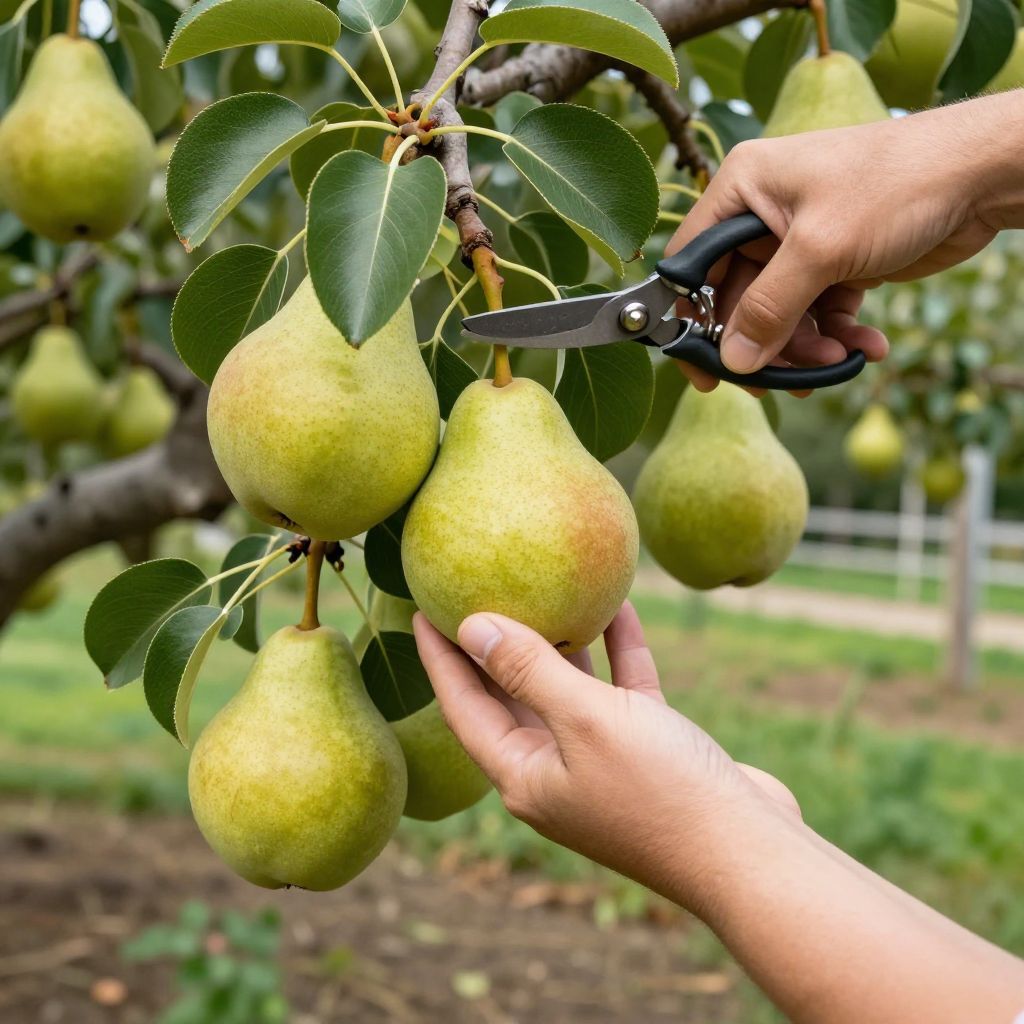
If you’re wondering when to pick pears, the short answer is: harvest them before they fully ripen on the tree. Most pears are picked when they are mature, firm, and easy to lift from the spur, then allowed to ripen indoors for the best texture and flavor.
Pick too early and they may stay hard and bland; pick too late and they can turn grainy or drop and bruise. The right timing depends on variety, climate, and weather, so the best harvest method is to check a few reliable signs rather than relying on the calendar alone.
When to Pick Pears?
Pears are usually ready to pick when the fruit has reached full size, the background color begins to lighten, and the pear comes away with a gentle upward lift. Most European pears ripen best off the tree, while many Asian pears are harvested when fully mature and eaten crisp straight away.
How to Tell Pears Are Ready
Because pears ripen from the inside out, appearance alone can be misleading. Use a combination of fruit feel, stem behavior, and seasonal timing to decide when to harvest.
Check the “lift test”
Hold the pear in your palm and lift it gently upward. A ready pear usually separates cleanly from the spur with little effort. If you have to tug, twist hard, or pull downward, it is probably not ready yet.
Watch the background color
Many green pears shift from a deep dark green to a lighter green or yellow-green as they mature. You are looking for the background color, not the red blush on some varieties. Blush can appear before the fruit is actually ready.
Look at the seeds and flesh
Cutting open a sample pear is one of the most dependable checks. Mature pears usually have brown seeds and firm flesh that is no longer hard and starchy. If the flesh is still very gritty and the seeds are pale, wait a little longer.
Use your calendar as a guide, not a rule
Different pear varieties ripen at different times, from late summer into fall. Weather can shift harvest by days or even weeks, especially in cooler summers or at higher elevations. Start checking fruit regularly once the expected season begins.
European Pears vs. Asian Pears
The type of pear matters because harvest timing and ripening behavior are different.
European pears
Common European pears such as Bartlett, Bosc, and Anjou are usually picked when mature but still firm. They ripen off the tree and should be allowed to soften indoors at room temperature before eating.
Asian pears
Asian pears are generally harvested when fully mature and eaten crisp. They do not soften much after picking, so if they are left too long on the tree they can become overripe, mealy, or prone to damage.
Seasonal Timing for Harvest
Pear harvest season usually falls from late summer through autumn, but exact timing depends on your climate and the variety you grow. Warm regions may see earlier harvests, while cooler sites often delay ripening.
- Early-season pears: often harvested in late summer.
- Mid-season pears: commonly ready in early to mid-autumn.
- Late-season pears: may need cool autumn weather before picking.
If you are unsure, begin checking fruit every few days once pears approach mature size. A few extra days on the tree can make a big difference, especially during a warm spell.
How to Harvest Pears Properly
Harvesting pears gently is just as important as picking them at the right time. Bruised fruit ripens unevenly and stores poorly.
- Choose a dry day if possible, since wet fruit is more likely to bruise and store poorly.
- Support the pear in your hand and lift upward to release it from the spur.
- Place fruit into a shallow basket or picking container rather than dropping it.
- Handle each pear carefully to avoid stem punctures and skin damage.
- Sort fruit as you pick, setting aside any with insect damage, cracks, or bruises for immediate use.
If the pear resists, leave it for a few more days and test again. Forcing fruit off the tree can tear spurs and reduce next year’s crop.
Ripening Pears After Picking
Most European pears need a short ripening period after harvest. This is normal and often improves texture and flavor far more than leaving them on the tree until soft.
Room-temperature ripening
Place pears in a single layer at room temperature, away from direct sun. Check them daily. Depending on variety and maturity, they may soften in a few days to a week or more.
How to tell when they are ripe enough to eat
Press gently near the stem end with your thumb. A ripe pear yields slightly there, even if the rest of the fruit still feels firm. Once ripe, refrigerate pears if you are not eating them right away.
Speeding up ripening
You can place pears in a paper bag with a ripe banana or apple to encourage ripening. Check often, because pears can move from firm to overripe quickly once they start to soften.
Why Pears Sometimes Stay Hard or Turn Grainy
Not every pear ripens well, even when picked at the right time. Growing conditions, variety, and storage all affect the final texture.
- Picked too early: fruit may stay hard, starchy, and flavorless.
- Picked too late: fruit may become soft on the tree, grainy, or prone to internal breakdown.
- Uneven watering: drought stress can reduce fruit quality and cause poor sizing.
- Hot weather near harvest: can speed ripening and shorten storage life.
If your pears repeatedly turn grainy, try harvesting a little earlier next season and ripening them indoors. This often gives a better texture than waiting for softness on the tree.
Growing Conditions That Affect Harvest Timing
Healthy trees produce better fruit and more predictable ripening. Pear trees do best in full sun, well-drained soil, and a site with good air movement.
Soil and drainage
Pears dislike waterlogged roots. Plant in soil that drains well and has moderate fertility. If your site stays soggy after rain, improve drainage before planting or choose a raised area.
Watering
Young trees need regular watering to establish roots, and mature trees benefit from consistent moisture during fruit development. Irregular watering can stress the tree and affect fruit size and quality.
Pruning
Light, regular pruning helps keep the canopy open so fruit receives enough light and air. Better light exposure can improve color development and make harvest easier.
Pests and Diseases That Can Complicate Harvest
Some problems can make it harder to judge when to pick pears or reduce the quality of the crop.
- Codling moth: can damage fruit internally, so inspect pears for entry holes or frass.
- Pear scab: causes spotting and blemishes that may not affect eating quality but can reduce storage life.
- Fire blight: can weaken branches and reduce fruiting; prune out affected growth promptly according to best local practice.
- Bird damage: pecking can lead to rot, so harvest promptly once fruit is ready.
Remove damaged fruit from the tree and ground to reduce pest pressure. Clean-up matters, especially in home orchards where fallen fruit can attract insects and disease.
Common Mistakes to Avoid
When learning when to pick pears, a few simple mistakes cause most harvest problems.
- Waiting for pears to feel soft on the tree.
- Relying only on color, especially with green-skinned varieties.
- Pulling fruit downward instead of lifting it gently.
- Harvesting after a storm when fruit has been bruised or shaken loose.
- Storing damaged pears with sound fruit.
The biggest mistake is assuming all pears ripen the same way. Once you know your variety and watch for maturity signs, harvest becomes much easier.
Simple Harvest Checklist
Use this quick checklist when you are deciding whether to pick pears:
- The fruit has reached full size for the variety.
- The background color has lightened.
- The pear releases with an easy upward lift.
- Seeds are brown in a sample fruit.
- The season is right for your climate and cultivar.
If most of these signs match, start harvesting a few fruits and ripen them indoors. That gives you a better read on the rest of the tree.
Conclusion
Knowing when to pick pears comes down to maturity, not softness on the tree. Check for full size, a lighter background color, and the easy lift test, then ripen most European pears indoors for the best eating quality.
For more help managing a productive fruit tree, you may also want to read about pruning fruit trees for better harvests and how to care for young orchard trees.