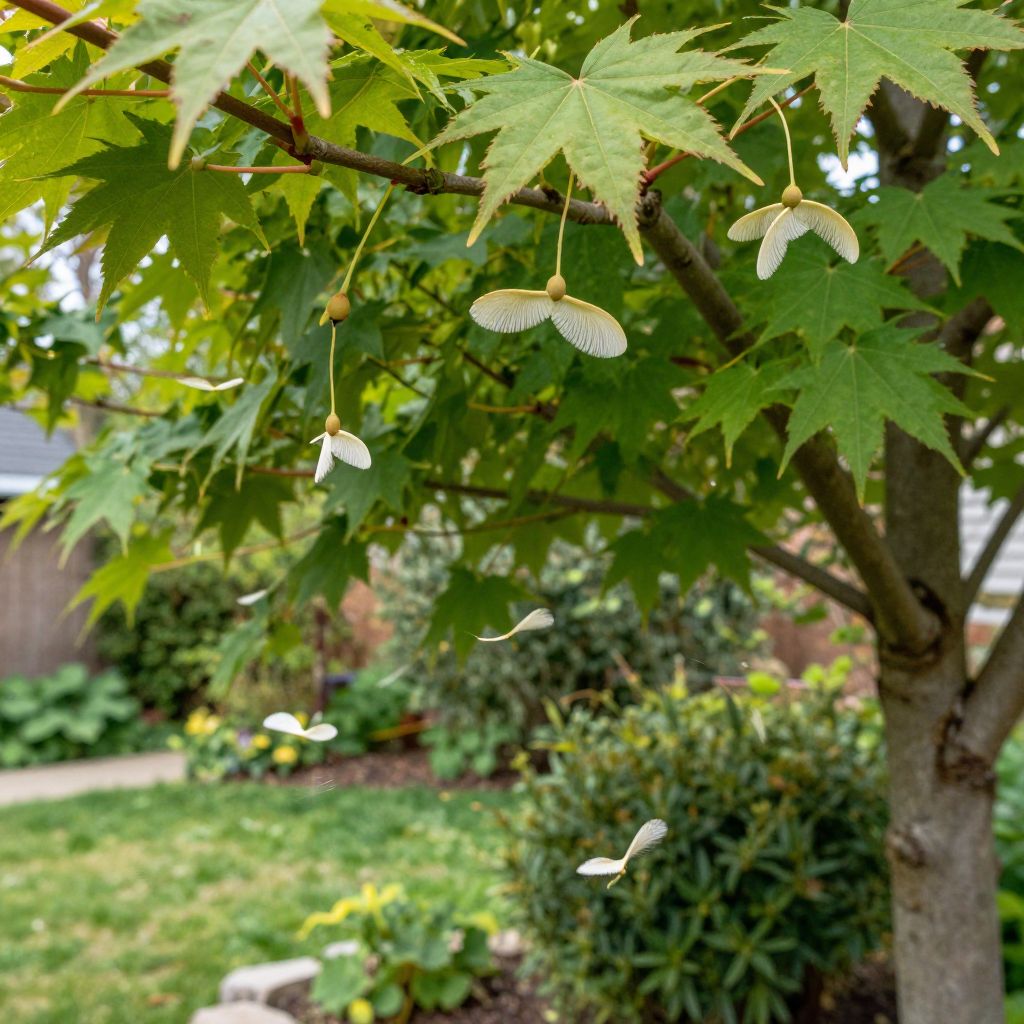
Wondering what tree has helicopter seeds? The most common answer is a maple tree. Those spinning seeds are called samaras, and many maples produce them in pairs that twirl to the ground like little helicopters. A few other trees and shrubs make similar winged seeds, but maples are the classic example gardeners notice most often.
If you’re trying to identify a tree in your yard, understanding helicopter seeds can help you narrow it down quickly. It can also help you decide whether to keep, prune, or replace a tree that’s dropping seeds everywhere.
What tree has helicopter seeds?
Most helicopter seeds come from maple trees (Acer species). Their paired winged seeds, called samaras, spin as they fall and help the tree spread its offspring. Boxelder, Norway maple, silver maple, red maple, and Japanese maple are all common examples, though seed shape and timing vary by species.
How to identify a maple by its seeds
Maple samaras are usually easy to spot because they come in pairs joined at one end, forming a V-shape. When ripe, they dry out, turn tan, brown, or reddish, and spin in the wind.
Common maple clues
- Leaves: Usually lobed and opposite on the twig.
- Bark: Varies by species, from smooth to furrowed.
- Seeds: Paired winged samaras that often drop in spring or early summer.
- Branching pattern: Often opposite branching, which is a useful ID clue.
If you see helicopter seeds under a tree, look up at the leaves and branching pattern. That combination is often more reliable than the seeds alone, because a few other trees can produce similar winged fruits.
Other trees with helicopter-like seeds
Maples are the best-known source, but they are not the only trees with winged seeds. Some species produce single samaras or winged fruits that also spin or glide in the air.
Look-alikes to know
- Ash trees (Fraxinus): Single-winged seeds, often hanging in clusters.
- Elm trees (Ulmus): Rounder winged seeds that may flutter but do not usually spin as neatly as maples.
- Hoptree (Ptelea trifoliata): Papery winged fruits, more decorative than helicopter-like.
- Hornbeam (Carpinus): Small winged nutlets, though less obviously “helicopter” shaped.
If you are identifying a tree for planting or removal, don’t rely on seed shape alone. Use the leaves, bark, branching, and overall size together for a more accurate match.
Why do trees make helicopter seeds?
Winged seeds are a smart dispersal strategy. The spinning action slows the seed’s fall, helping wind carry it farther from the parent tree. That gives seedlings a better chance to find light, water, and space instead of competing directly under the canopy.
For gardeners, this means helicopter seeds are not a sign of disease or damage. They are a normal part of the tree’s reproductive cycle.
What to do if your tree drops lots of helicopter seeds
Heavy seed drop can be messy on patios, lawns, gutters, and decks, especially from mature maples. The best approach depends on whether you want to keep the tree and simply manage the cleanup, or reduce future seed production.
Practical cleanup tips
- Rake or sweep seeds when dry so they are easier to gather.
- Use a leaf blower on hard surfaces if the area is large.
- Collect seeds before they get wet and stick into turf or mulch.
- Compost them only if your compost pile gets hot enough to break down plant material well.
On lawns, helicopter seeds are usually more annoying than harmful. They can cover grass briefly, but they rarely cause lasting damage unless they pile up thickly and stay damp.
Reducing future seed drop
- Prune selectively: Light pruning can improve structure, but it will not stop a healthy maple from producing seeds.
- Choose the right tree for the site: If seed litter is a major concern, avoid large seed-producing maples near patios, pools, and driveways.
- Consider female vs. fruiting trees carefully: Some trees produce more noticeable seed litter than others, depending on species and sex.
Do not overprune a mature tree just to reduce seeds. Heavy topping or severe cutting can weaken the tree, create decay, and make future maintenance harder.
Growing conditions for maples in the landscape
If you are planting a maple or caring for one already in the ground, good site selection matters more than seed drop. Healthy trees are more attractive, more resilient, and usually less prone to stress-related problems.
Soil and drainage
Most maples prefer soil that is moist but well drained. They do poorly in waterlogged ground, where roots can struggle with low oxygen and rot.
- Improve heavy clay with organic matter only if drainage is already adequate.
- Avoid planting where water stands after rain.
- Mulch the root zone with 2 to 4 inches of organic mulch, keeping it away from the trunk.
Good drainage matters especially for young trees. Newly planted maples need consistent moisture, but their roots should never sit in soggy soil.
Sunlight
Many maples grow best in full sun to partial shade, though exact needs vary by species. In hotter climates, afternoon shade can reduce stress, especially for young trees and Japanese maples.
Watering
Water newly planted trees deeply and less often, rather than giving shallow daily sprinkles. The goal is to moisten the root zone, then let the soil surface begin to dry before watering again.
For established trees, water during dry spells, especially in the first few years after planting or during drought. Check soil moisture with your finger or a small trowel before watering.
Pruning and maintenance basics
Pruning can improve tree structure, remove dead wood, and reduce rubbing branches, but it should be done for tree health first, not just to control seeds. The best time depends on species and climate, so avoid making major cuts without understanding the tree’s growth cycle.
Good pruning habits
- Remove dead, damaged, or crossing branches first.
- Use clean, sharp tools to make smooth cuts.
- Do not remove more than necessary in a single season.
- Keep cuts outside the branch collar to help healing.
Maples can bleed sap from pruning cuts if pruned at the wrong time of year. That sap flow is usually more of a cosmetic issue than a serious injury, but it is still wise to prune thoughtfully and avoid unnecessary cuts.
Common pests and diseases to watch for
Helicopter seeds themselves are not a pest problem, but the trees that produce them can still face stress from insects or disease. A healthy tree is less likely to decline or drop seeds prematurely.
Watch for these issues
- Aphids: Can cause sticky honeydew on leaves and surfaces below.
- Scale insects: Small bumps on stems or branches that weaken trees over time.
- Leaf spot and tar spot: Often unsightly, usually not fatal in mild cases.
- Verticillium wilt: A more serious soil-borne disease that can cause dieback in some maples.
If you notice thinning canopy, branch dieback, or unusual leaf discoloration, check whether the tree is stressed by drought, compacted soil, root damage, or poor drainage. Many problems start with site conditions rather than the seeds themselves.
Can you grow a maple from helicopter seeds?
Yes, many maples can be grown from seed, but results vary by species and seed viability. Some seeds need natural cold exposure before they sprout, while others germinate more readily after a period of moist chilling.
Simple propagation overview
- Collect ripe samaras when they dry and begin to fall.
- Separate the seed from the wing if needed.
- Sow in a well-draining seed-starting mix.
- Keep the mix evenly moist, not soggy.
- Provide the cold period required by the species if germination is slow.
Seed-grown maples do not always look exactly like the parent tree, especially if the parent was a named cultivar. If you want a tree with the same traits, cuttings or grafting may be more reliable, though those methods are more advanced.
When helicopter seeds are a landscaping advantage
Not every gardener sees seed drop as a problem. In the right place, maples provide shade, seasonal color, wildlife value, and attractive structure. Their seeds also feed birds and small wildlife in some settings.
If you want a tree with ornamental value, maples can be excellent choices. Just place them where falling seeds, surface roots, and mature size will not create maintenance headaches later.
Quick troubleshooting guide
- Seeds are everywhere: Rake regularly, mulch beds well, and avoid planting seed-heavy trees over patios.
- Tree is dropping seeds early: Check for drought stress, pests, or poor soil conditions.
- Leaves look unhealthy: Inspect for leaf spot, scale, aphids, or root problems.
- Tree is too large for the space: Consult an arborist before major pruning or removal.
Conclusion
If you are asking what tree has helicopter seeds, the answer is usually a maple. Those spinning samaras are normal, useful for seed dispersal, and often easy to identify once you know what to look for. If the tree is already in your yard, focus on proper care, sensible pruning, and cleanup rather than fighting the seeds themselves. For more tree care basics, look for related guidance on choosing the right tree, pruning safely, and improving soil drainage around established landscape trees.