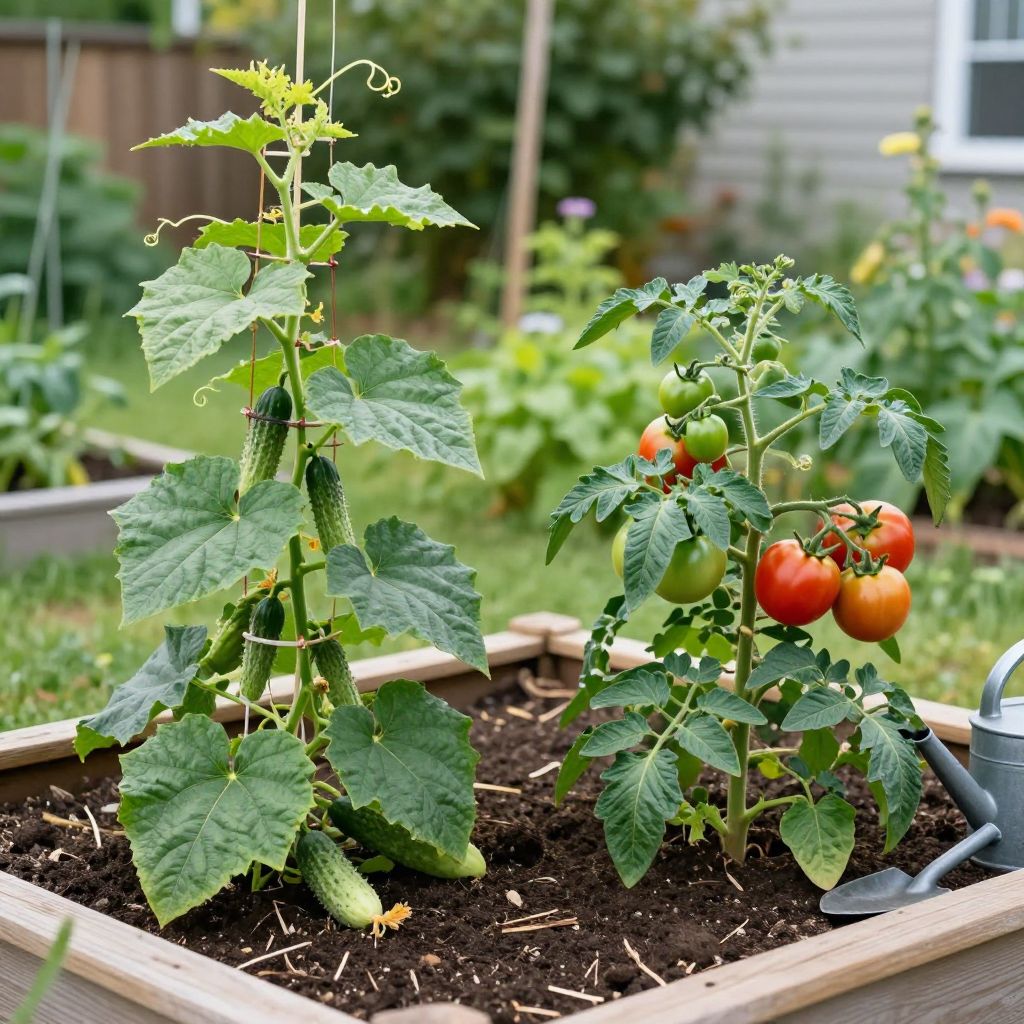
Can you plant cucumbers and tomatoes together? Yes, you can grow them in the same garden bed or large container, but they are not perfect companions. They share similar warmth and sunlight needs, yet they differ in spacing, watering habits, and disease pressure, so success depends on good planning.
If you give each crop enough room, strong support, and careful watering, they can grow side by side quite well. The key is to reduce crowding, keep foliage dry, and watch for pests and fungal diseases that can spread quickly in a dense planting.
Can You Plant Cucumbers And Tomatoes Together?
Yes, cucumbers and tomatoes can be planted together if you manage spacing, airflow, and watering carefully. Both are warm-season crops that like full sun and rich soil, but tomatoes need more vertical support and cucumbers sprawl or climb aggressively. The main challenge is preventing overcrowding and disease in a shared space.
Why They Can Work Well Together
Tomatoes and cucumbers have overlapping growing needs, which makes them practical garden neighbors in many home gardens. They both prefer warm soil, steady moisture, and fertile ground that drains well.
Shared growing requirements
- Full sun: Aim for at least 6 to 8 hours of direct sunlight daily.
- Rich soil: Both perform best in soil improved with compost or well-rotted organic matter.
- Consistent moisture: Irregular watering can affect fruit quality and increase stress.
- Warm conditions: They are both sensitive to cold soil and frost.
Because their basic needs overlap, they can fit into the same raised bed, in-ground plot, or large container system if you plan the layout well.
Where the pairing can go wrong
The problems usually come from crowding, not from the plants themselves. Tomatoes can shade cucumbers, cucumbers can climb into tomato foliage, and both can suffer if airflow is poor.
They also share some of the same disease risks, especially fungal issues that thrive in humid, tightly packed plantings. If your garden already struggles with blight, powdery mildew, or poor air movement, this pairing needs extra care.
How To Plant Cucumbers And Tomatoes Together Successfully
To grow them together well, treat them as neighboring crops rather than interplanted companions. Give each plant its own space, support, and access to light so neither crop overwhelms the other.
1. Choose the right site
- Select a location with full sun and good drainage.
- Avoid low spots where water collects after rain.
- Pick a bed where you can reach plants easily for pruning, harvesting, and pest checks.
If you garden in a hot climate, a spot with morning sun and some light afternoon relief can help reduce stress. In cooler regions, prioritize maximum sun exposure.
2. Prepare fertile, well-drained soil
Work compost into the top 6 to 8 inches of soil before planting. This improves structure, moisture retention, and nutrient availability without making the bed soggy.
Tomatoes and cucumbers both dislike compacted soil. If your ground is heavy clay, consider raised beds or mounded rows to improve drainage.
3. Space them generously
Spacing is one of the most important parts of growing cucumbers and tomatoes together. Crowding creates shade, humidity, and tangled vines.
- Plant tomatoes with enough room for mature growth and airflow.
- Give cucumbers space to sprawl or a trellis to climb.
- Keep the two crops separated enough that cucumber vines do not smother tomato stems.
As a general rule, use the spacing recommended for each crop on the seed packet or plant tag, then add extra room if both are in the same bed. If space is tight, vertical growing is the best solution.
4. Use trellises or cages
Support is especially important when growing these crops together. Tomatoes do best with cages, stakes, or trellises, while cucumbers grow more cleanly on a sturdy trellis.
Vertical growth improves airflow, keeps fruit cleaner, and makes harvesting easier. It also reduces the chance that cucumber vines will crawl through tomato foliage and create a tangled, disease-prone mass.
Watering Tips For Shared Beds
Both crops need regular moisture, but they do best when water goes to the roots rather than the leaves. Wet foliage encourages fungal disease, especially in warm, humid weather.
Best watering practices
- Water deeply at the base of each plant.
- Use drip irrigation or a soaker hose if possible.
- Water early in the day so leaves dry quickly if they get splashed.
- Mulch around plants to help hold moisture and reduce soil splash.
Do not assume both crops need the same amount at the same time in every climate. Hot, windy weather dries soil faster, while cool or rainy periods may require much less irrigation. Check soil moisture with your finger before watering.
Why mulch helps
A 2- to 3-inch layer of organic mulch, such as straw, shredded leaves, or untreated grass clippings, can stabilize soil moisture and reduce disease spread from splashing soil. Keep mulch a little away from stems to avoid rot.
Feeding Tomatoes And Cucumbers In The Same Area
Both crops are heavy feeders, especially once they begin flowering and setting fruit. Compost is a good base, but in many gardens that alone will not carry the plants through the season.
Use a balanced, garden-appropriate feeding approach based on your soil and plant condition. Too much nitrogen can produce lots of leaves and fewer fruits, especially in tomatoes.
What to watch for
- Too much nitrogen: lush vines and leaves, but fewer flowers and fruit.
- Nutrient shortage: pale leaves, slow growth, and weak fruiting.
- Uneven moisture: blossom-end issues in tomatoes and bitter or misshapen cucumbers.
If your soil is already rich, avoid overfeeding. A soil test is the most reliable way to know whether your bed needs additional nutrients.
Common Problems When Growing Them Together
Most issues come from shared space, shared pests, and poor airflow. Catching problems early is much easier than trying to fix them after the plants are overgrown.
Pests to watch for
- Aphids: cluster on tender growth and can weaken plants.
- Whiteflies: often hide under leaves and fly up when disturbed.
- Cucumber beetles: can damage cucumbers and spread disease.
- Spider mites: thrive in hot, dry conditions and cause stippled leaves.
Inspect the undersides of leaves regularly. If you catch pests early, hand removal, a strong water spray, or insecticidal soap may help, depending on the pest and severity.
Diseases to watch for
- Powdery mildew: a white coating on leaves, common in crowded plantings.
- Blight: causes leaf spotting, yellowing, and decline in tomatoes.
- Downy mildew: can affect cucumbers in humid conditions.
- Root rot: happens when soil stays too wet or drains poorly.
To reduce disease pressure, avoid overhead watering, remove badly affected leaves, and keep plants pruned enough for light and air to move through the canopy.
Pruning And Training For Better Airflow
Pruning is not about making the plants small; it is about helping them stay healthy in a shared bed. Good airflow matters more when cucumbers and tomatoes are close together.
Tomato pruning basics
- Remove lower leaves that touch the soil.
- Train indeterminate tomatoes to one or two main stems if you prefer a tidier plant.
- Remove crowded side shoots only if your growing style and plant type call for it.
Do not over-prune determinate tomatoes, since they naturally grow to a set size and still need enough foliage to support fruit development.
Cucumber training basics
- Guide vines onto a trellis early.
- Redirect wandering stems before they tangle with tomatoes.
- Remove damaged or diseased leaves as needed.
Training cucumbers vertically is one of the easiest ways to make this pairing work well in a small garden.
Best Layout Ideas For Small Gardens
If you only have one bed, the layout matters as much as the plant care. A thoughtful arrangement can prevent the crops from competing too heavily for light and space.
Good layout options
- Opposite ends of a bed: place tomatoes on one side and cucumbers on the other.
- Vertical divider: use trellises so each crop grows upward instead of outward into the other.
- Large containers: grow one tomato per container and place a separate cucumber trellis nearby.
In very small spaces, it may be better to grow one tomato plant and one cucumber plant rather than several of each. Fewer plants often produce healthier harvests than an overcrowded bed.
When You Should Not Plant Them Together
There are times when separating them is the better choice. If your garden has a history of disease, poor airflow, or limited sun, mixed planting may create more problems than it solves.
Consider separate beds if:
- Your space is too small to provide proper spacing.
- You cannot use trellises or cages.
- Your area is very humid and disease-prone.
- You have trouble keeping soil evenly moist without wetting foliage.
In those conditions, growing each crop in its own dedicated space is often easier and more productive.
Harvesting And Ongoing Care
Harvest cucumbers frequently so fruits do not become oversized and reduce new production. Pick tomatoes as they ripen on the vine or at the breaker stage, depending on weather and pest pressure.
Keep checking plants every few days during peak season. Regular harvesting, pest scouting, and vine training help both crops stay productive in a shared space.
Final Verdict
So, can you plant cucumbers and tomatoes together? Yes, as long as you give them enough space, strong support, and careful watering. They can share a bed successfully, but they are not a carefree pairing. The best results come from vertical growing, good airflow, and consistent maintenance.
If you want to try this combination, start by planning your spacing and support before planting. For more practical growing help, you may also want to read about how to trellis cucumbers and tomato pruning and support basics.