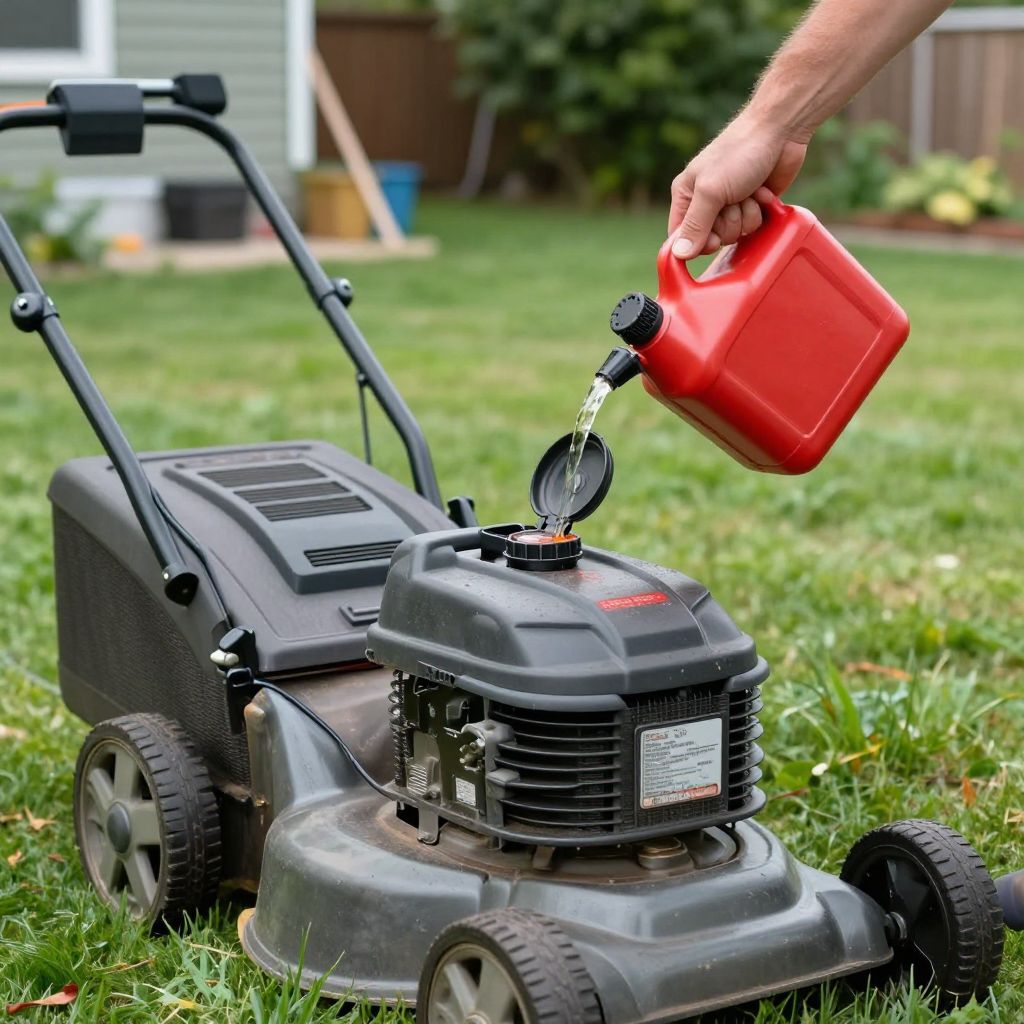
Do lawn mowers take regular gas? In many cases, yes—but not always. The right fuel depends on the mower’s engine type, whether it’s a 2-stroke or 4-stroke model, and what the manufacturer recommends in the owner’s manual.
Using the wrong fuel can lead to hard starting, poor performance, or engine damage, so it’s worth checking before you fill the tank. A few simple fuel habits can also help your mower start easier, run cleaner, and last longer through the mowing season.
Do lawn mowers take regular gas?
Most modern gas lawn mowers use regular unleaded gasoline, usually 87 octane, with up to 10% ethanol if the manual allows it. However, some older engines, specialty equipment, and all 2-stroke mowers need different fuel or a fuel-oil mix. Always confirm the label or manual before fueling.
What kind of gas lawn mowers usually need
Most walk-behind mowers, push mowers, and many riding mowers are designed for regular unleaded gas. That usually means the same fuel you’d buy for a car, but without guessing at premium grades or additives unless the manufacturer specifically calls for them.
4-stroke engines
Most lawn mowers today have 4-stroke engines. These use straight gasoline in the tank and engine oil in a separate crankcase. If your mower has a dipstick and an oil fill cap, it is likely a 4-stroke model.
2-stroke engines
Some smaller or older mowers use 2-stroke engines. These do not use plain gas alone; they require a gasoline-and-oil mix in the correct ratio. Using straight gas in a 2-stroke engine can cause serious damage.
Ethanol content matters
Many gas stations sell fuel with ethanol, often labeled E10. Most newer mowers can handle it, but ethanol can absorb moisture and go stale faster than non-ethanol fuel. If your mower sits unused for long periods, fuel quality becomes especially important.
How to choose the right fuel for your mower
The safest approach is simple: read the owner’s manual, then match the fuel to the engine’s needs. If the manual is missing, look for the fuel label on the mower itself or check the engine manufacturer’s information.
- Use regular unleaded gas if the manual says “unleaded gasoline” or “regular gasoline.”
- Use the recommended octane if the manual specifies one.
- Avoid high-ethanol fuel unless your mower is designed for it.
- Never guess on 2-stroke mix ratios; use the exact ratio listed by the manufacturer.
When premium gas is not necessary
Premium gasoline usually does not improve mowing performance unless the engine specifically requires it. In many cases, using premium in a mower that only needs regular gas is simply extra cost without a real benefit.
Why fuel choice affects mower performance
Fuel is not just about starting the engine. The wrong gas can affect combustion, spark plug condition, carburetor cleanliness, and how smoothly the mower runs under load. That matters when you’re mowing thick grass, damp turf, or uneven ground.
Common fuel-related symptoms
- Hard starting or repeated pull starts
- Engine surging or uneven running
- Stalling when the mower is under load
- Rough idle or black smoke
- Clogged carburetor from stale fuel
If you notice these problems, fuel quality is one of the first things to check before assuming the mower needs major repairs.
Best fueling practices for lawn mower care
Good fuel habits help your mower perform better and reduce maintenance headaches. These steps are especially useful if you only mow seasonally or store the mower for part of the year.
- Use fresh fuel. Buy only what you expect to use within a reasonable time.
- Store gas in a clean, approved container. Keep it tightly sealed and away from heat.
- Fill the tank on a cool engine. This reduces spill risk and vapor issues.
- Wipe up spills immediately. Gasoline is flammable and can damage plastic or painted surfaces.
- Run the mower after fueling. This helps move fresh fuel through the system.
Should you use fuel stabilizer?
Fuel stabilizer can help if you store gas for more than a few weeks, especially during off-season storage. It does not revive old fuel, but it can slow degradation in fresh gasoline and reduce carburetor problems later.
Seasonal considerations for mower fuel
Your local climate and mowing season affect how long fuel stays usable. In hot weather, fuel can degrade faster. In cooler climates, the mower may sit unused for months, which makes storage practices even more important.
During the active mowing season
- Use fresh gas regularly.
- Check fuel before each mow if the mower has been sitting.
- Top off only what you need if you mow infrequently.
Before winter or long storage
- Use up old fuel if possible.
- Add stabilizer to fresh fuel if recommended.
- Follow the manual’s storage guidance for draining or leaving fuel in the tank.
- Store the mower in a dry, sheltered place.
Some engines are best stored with treated fuel in the tank, while others may call for draining fuel systems. The manual is the safest guide because storage advice can vary by engine design.
Common mistakes to avoid
Most gas-related mower problems come from a few avoidable errors. If you want fewer starting issues and a longer engine life, watch out for these.
- Using old gas that has sat too long and lost volatility.
- Mixing fuel types without checking whether the engine is 2-stroke or 4-stroke.
- Overfilling the tank, which can cause leaks or fuel expansion problems.
- Ignoring ethanol limits in the owner’s manual.
- Storing fuel improperly in open or unapproved containers.
How to tell if your mower has a fuel problem
If the mower won’t start, fuel is only one possible cause, but it is a very common one. Before replacing parts, check the basics in a logical order.
- Confirm there is fresh fuel in the tank.
- Check that the fuel shutoff valve is open, if your mower has one.
- Inspect the fuel line for cracks or leaks.
- Look at the air filter and spark plug condition.
- Consider whether the carburetor may be clogged by stale fuel.
If the mower ran fine last season but now struggles after storage, stale gasoline is often the first thing to suspect.
Can you use gas from the car in a lawn mower?
Usually yes, if it is regular unleaded gasoline and the mower manual allows that fuel. The main caution is that car fuel may contain ethanol, and mower engines are often more sensitive to stale fuel than car engines are.
Also, never use fuel from a container that may have been contaminated with dirt, water, or old oil. Clean fuel matters more in small engines than many gardeners realize.
Practical mower fuel checklist
Before you mow, a quick fuel check can save time and frustration. This is especially useful at the start of the season or after the mower has been stored.
- Check the fuel type listed in the manual.
- Make sure the gas is fresh and clean.
- Confirm whether the engine is 2-stroke or 4-stroke.
- Use the correct oil mix only if the mower requires it.
- Inspect the tank, cap, and fuel line for leaks.
Conclusion: the safest answer is to match the manual
So, do lawn mowers take regular gas? In most cases, yes—regular unleaded gasoline is the right choice for many mowers. The key is to verify the engine type, avoid stale fuel, and follow the manufacturer’s instructions so your mower starts reliably and runs well.
If you want to keep your mower in good shape, the next helpful step is to learn about oil as well; you can read more in what kind of oil a lawn mower takes.